• Bio
  • Contact
  • Events and Resources
  • My Writing

Jessica Jonas

Jessica Jonas

Category Archives: Books

The Search for Substance

13 Tuesday Sep 2011

Posted by jessicamjonas in Art, Books, Goals, Work, Writing

≈ Leave a comment

Tags

coetzee, disgrace, goals, nobel prize, oedipus, sometimes goals are hard, substance, writing, writing life

The first thing that’s struck me about my literature seminar this fall is how amazingly substantial the books are. That is, they offer something more than an entertaining story, or even a thoughtful one, and instead get at the kind of human truths that transcend their time or place. Oedipus is still current in the way that it raises questions of whether the gods are just, whether and where fairness comes into play regarding crimes and punishment, and how to understand the concept of a good man and a good life.

Disgrace, by J. M. Coetzee, is about men and women and sex, and the uses of sex. It’s about animals and obligation and the problems of how to live a life that has to involve giving and receiving a certain amount of cruelty. We’re going to spend hours tonight talking about meaning, not in a “what is the author trying to say” way, but in the “how does this book change our understanding of how we live our lives” way.

Perhaps (just perhaps) it’s unfair for me to compare myself to a Nobel Prize-winning writer, but I’ve always had a tendency to set my personal bar high.  I started by getting up early to write, took the next jump to sign up for 750words.com and its monthly writing challenge (I’ve only made it to 750 twice, but I’ve written every day this month and am pushing for the full 750), and I’m gearing up for NaNo. With word count building, my next logical step is to reconsider what it is that I’m writing. Again, I am aware Nobel Prize is a smidge high for a yardstick, but on the other hand, if you fail to reach it, you’re still probably going to be turning out something pretty good.

I’ve got some writing exercises I’ll be trying out in the next few days to find a way to add more of that delicious, meaty, philosophical substance to my writing. I’ll post them here. Stay tuned!

Tale of Two Kings

07 Wednesday Sep 2011

Posted by jessicamjonas in Books, Writing

≈ 2 Comments

Tags

class, oedipus, oedipus rex, reading, sophocles, translation

For my first week of class, we read Oedipus the King, by Sophocles. Being a frugal student, I had ordered almost all my books off Amazon, and being a bit of a procrastinator, I had ordered them a little late, and my copy of Oedipus didn’t make it in on time. I wasn’t sure about the translation my professor preferred (I didn’t see the class version at the library or in the Kindle store), so I picked up two versions. It turned out to be a great choice–I happened to find two radically different versions of the story, which made for a great side-by-side reading experience.

The first place I turned to was my trusty Kindle, where I picked up a copy for $0.99. Despite its modern format, the text was proudly old-school, with near-Shakespearean language and perfectly metered lines. It was a slightly less accessible read than the library version I found, but it read like poetry. Many of the lines actually held more power for me due to their formal language–sometimes I feel the old stories get a little watered down when they’re brought into present day vernacular. This one was glorious:

(Kindle version)
Creon (reacting to Oedipus’s accusation that he is a traitor): …the calumny/ Hits not a single blot/ But blasts my name

Library version: This is no minor charge.

The library had an anthology of Sophocles’s plays, Oedipus included, and the version came complete with blocking directions and some costuming notes. The text, though, didn’t come off particularly theatrical at all. It felt, surprisingly, almost Biblical in places–something a Psalmist might say, or one of the gloomier prophets. When it moved away from the prophetic, though, the modern language felt a little flat. On the other hand, one of my favorite lines was a moment of “wait for it…” irony that feels most natural when you read it in everyday language:

(Library version)
Chorus (introducing Jocasta to the messenger): This is his wife and mother…of his children.

Kindle version: This is his wife the mother of his children. (That one word and a well-placed ellipsis makes all the difference.)

What I like about translations of works is the way they illustrate the flexibility of language. Both versions of Oedipus I read (Oedipi?) tell the same story, the same way. There’s no radical experimentation in tone or format. The word choice is the only thing that changes how each version feels, and what a difference it makes! Reading a translated work lets you know what matters to the translator in a story: accessibility, beauty, maintaining purity of rhyme or of word meaning, and many other elements start to show in the move between languages.

The final project for this class will have to do with translation. We’ll be working with Madame Bovary (supposedly the “perfect novel,” so expect more on that in November), either from the original French for those who speak it (alas, my French only extends as far as “pomme de terre” and “la bebe es sur la table”), or from the two different English versions we’ll read in class. It’s going to be interesting to create my “ideal” version by borrowing someone else’s words.

Do you think about the translation when you read something originally written in another language? What are your experiences reading multiple versions of a work, or reading an original and translated version?

Games to Play After Dark

31 Wednesday Aug 2011

Posted by jessicamjonas in Books, Family, Reading

≈ 1 Comment

Tags

abuse, books, games to play after dark, love, reading, relationships, sarah gardner borden, what I'm reading

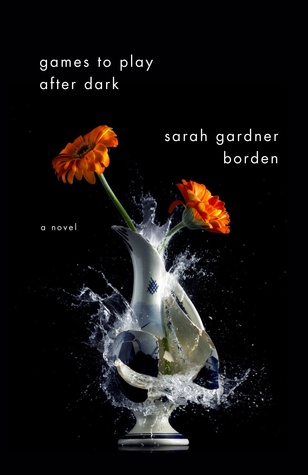
One of the awesome benefits to quitting my TV habit is that I’m finally tackling some of my backlogged reading list. I grabbed Sarah Gardner Borden’s Games to Play After Dark on a whim. It had a neat cover, and the back seemed suspenseful and vaguely reality-TVish.

You'd pick it up and read the back, too.

The novel chronicles the marriage of Kate and Colin, whose initial drunken encounter after a party turns into a whirlwind relationship, wedding, and suburban migration. The cracks start as mildly kinky sex games–she likes her hair pulled or her butt smacked.

From there, the story gets dark, but the gradations are so subtle that I almost didn’t catch what was happening. Kate’s father dies, for example. Colin wants her to talk about it, but she’s still in a state of shock and unwilling to talk. So instead she invents an elaborate story about taking the neighbor down to the laundry room and screwing his brains out while Colin is at work. So Colin, meaning to snap her out of it, throws her in the shower and turns the cold water on.

Even when she started volunteering at a shelter for domestic abuse victims, you are on her side, easily assuming their situation is completely different, black and white, while hers is justified as a rough patch, or an overreaction. It’s hauntingly subtle, and absolutely perfect. I was glad that Borden avoided the typical ending of having Spouse A (usually the woman) triumphantly walk out on Spouse B. I realize that’s the feel-good thing to do, but I can’t help feeling like it’s often a bit of a cop-out. Games to Play After Dark gives an ending that’s not quite happy, not quite dark, but honest.

Published!

31 Wednesday Aug 2011

Posted by jessicamjonas in Books, Goals, Poetry, Publishing, Reading, Writing

≈ 3 Comments

Tags

books, Dumb Little Man, published, publishing, reading, top-shelf, when the writing's going well, writing

I did it! Check out my article, “7 Simple Steps to Becoming Well-Read,” on Dumb Little Man (one of my favorite sites for quick, fun personal development articles).

Speaking of being well-read, this is going to be a great semester. I’m taking a Seminar on Literature and Writing with the scary Russian professor at my school (most of the time she’s really nice, but she does have a reputation for bringing a student to tears in class at least once a semester), and we are reading 11 books in 15 weeks. Expect my What I’m Reading section to get real highbrow, real fast, people. This week? Sophocles’ Oedipus the King, and a book of poetry called Supernatural Love. Stay tuned…

The Case for Slow Reading

29 Monday Aug 2011

Posted by jessicamjonas in Books

≈ 3 Comments

Tags

books, reading, taking it slow

It seems to me that often, when people talk about how much they read, they make a point to note how fast they can polish off a book. When the Harry Potter books came out, people got the most bragging rights for whizzing through a 400- or 600- or 700-page book in less than a day. Other times, friends use speed to try to convince me to take their recommendation.

“It’s such a quick read,” they say. “I finished it in a day. You’d probably finish it in a half hour.”

I’m no exception here. I do take some pride in the fact that I read fast (about 2-3 times the average adult pace). I can comfortably read 100-150 pages a day if I don’t have too many other obligations.

The problem is that sometimes we readers get so wrapped up in our own reading stats that I feel like we miss the point. Yes, there are thousands of books out there, and it can feel like we’ll never get the time to read everything we want to, but I checked out a new book a few weeks ago and only realized later that I’d read it before, and didn’t remember anything beyond the introduction.

My professors in the MFA program advocate a different approach: read widely, and often, but read slowly. Break away from the urge to devour a book and try to savor it. Let yourself read paragraphs over and over to figure out what it is about this set of words that makes the characters and emotions so wonderful. Stop. Reading. Fast.

It’s not easy. Like many others, I’ve got a competitive streak, and my impulse is to push my own limits. Plus, I’m reading a self-help book by this really insufferable man who claims to be able to speed-read 1,300 words a minute, and I bristle to think someone I can’t stand can finish more books than me.

Reading slowly, though, captures what reading is about. In the ideal scenario of curling up with a cup of tea, a fire, and thick book, do you imagine reading at a frenzied pace, fingers constantly itching to turn the next page? Or do you envision something more luxurious–reading particularly elegant sentences aloud to yourself, pausing for a few moments to form your own guesses about what will happen next? Reading slowly gives you more chance to befriend the author and make the story your own.

If you’re interested in writing, reading slowly becomes even more important. The ubiquitous advice to read is based on the assumption that writer/readers will pay attention to the structure of the story. That means reading closely enough to recognize what makes dialogue effective, what changes in style make a passage elegant or suspenseful or terrifying or romantic. You have to be in deep enough to see the abstract, fictional story and the concrete words and grammar simultaneously. You can’t do that when you’re speed-reading.

Anyone else share my struggle? Do you notice a change in quality of reading depending on how fast or slow you read?

The Help

10 Wednesday Aug 2011

Posted by jessicamjonas in Books, Uncategorized

≈ Leave a comment

Tags

canary review, guest posts, kathryn stockett, the help, what I'm reading

First off, I have exciting news: I’ve been invited to write my very first guest blog post! The Canary Review has just posted the first article in a series about the best and worst books people have read, written by yours truly. I’m completely thrilled, and I invite you to check out the Canaries and what they have to offer!

Conversely, should you happen to have made your way here from The Canary Review, I am happy you are here! I would put out cookies and juice for you, but I can’t, because we are on the Internet.

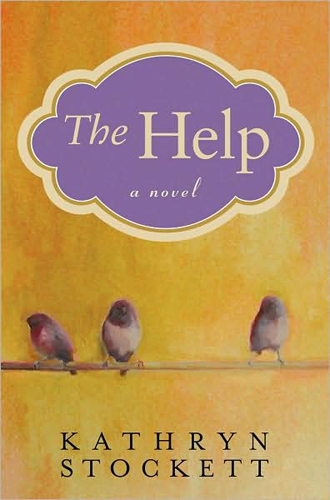
So instead, I will tell you about a book. I just finished The Help, by Kathryn Stockett, and I feel a little awkward about the timing of this announcement, since it’s pretty obvious that I’m reading it in order to go see the movie properly, but whatever. It’s an awesome book, and I want to tell you about it, so you can read it and see the movie properly.

The original cover of a book is always better than the movie cover.

The Help moves between the voices of three women living in Jackson, Mississippi in the 1960s: Aibileen, Minny, and Skeeter. Aibileen and Minny are both black maids–Aibileen is caring for her seventeenth white child, which sometimes slightly eases and sometimes amplifies the pain of losing her only child a few years before. Minny is working to support her own family, but has cycled through multiple jobs because she cannot be the calm, restrained, half-invisible person her employers want her to be (which, incidentally, makes her tremendous fun to read). Skeeter is white and newly returned to Jackson from college with dreams of being a writer. Distance has given her a little needed perspective, and she has come up with an idea.

Skeeter’s idea to write a tell-all book about the lives of black domestic help, interviewing maids to get her stories, doesn’t start out as an altruistic project. She has a vague idea that the book could change things, but sees this as a warm, positive benefit to the larger story of her own developing success. This isn’t so much because she is selfish as it is her continuing naivete, but it makes her transformation particularly interesting. As she realizes the possible consequences the maids face by helping her, even anonymously (various penalties either happen or are suggested, from being blacklisted from work and therefore forced into eventual homelessness, to having tongues cut out by racists), Skeeter begins to see herself as only playing a role in a larger issue of justice.

Minny and Aibileen deepen, too, of course. Telling their stories, seeing the effect of the project on other maids, and ultimately seeing the book published is a kind of liberation and a kind of danger that neither woman expected to experience in her life. There are moments of sacrifice and courage and a richer, more meaningful maturity in each of these adult women’s lives by the end of the book. Not because they were immature or complacent before–quite the opposite–but because for them, this story is about claiming power and justice directly, instead of using pranks (Minny) or secret attempts to teach equality and kindness (Aibileen) as substitutes for what they really need. Admittedly, as substitutes go, these are great ones to read–Minny’s revenge is a hair-raiser, and Aibileen’s interactions with Mae Mobley, the two-year-old daughter of her employer, are both tender and powerful.

The story is compelling, the characters are meaningful, but I always note the writing style. I am happy to report that The Help is solidly written, as well! One thing in particular was Stockett’s use of dialect. It is incredibly difficult to write eye dialect effectively, without it sounding hokey and condescending. Stockett has the ear, though, and the tact, and Aibileen and Minny get voices that are distinctive and authentic and respected by their author. Major kudos there.

In short, as always, I would recommend reading the book before seeing the movie. It’s not just a matter of principle here, though–I can’t speak to the film adaptation (yet) but The Help, the novel is a beautiful, masterful story and well worth every attention and award it can get.

3 Ways to Distinguish Between Fantasy and Magical Realism

30 Saturday Jul 2011

Posted by jessicamjonas in Books, Uncategorized, Writing

≈ 9 Comments

Tags

fantasy, genre, magical realism

I’ve read a fair amount of fantasy in my day, enough to understand that the genre is split into sub-categories and sub-sub-sub-categories that look as different next to each other as a Western novel and a psychological thriller. The fact that Robert Jordan’s classic (if formulaic) Wheel of Time high fantasy series shares shelf space with Francesca Lia Block’s fractured, whimsical stories of fairies in L.A. boggles my mind.

Actually, what really boggles my mind is the fact that libraries and bookshelves continue to insist on combining science fiction and fantasy, as though they weren’t fundamentally opposite from each other, but that’s another story for another day.

What I’ve been thinking about lately, though, is the tissue paper barrier separating fantasy and magical realism. Some people, in fact, don’t think there’s any real distinction between the two at all (Terry Pratchett called magical realism a “polite way of saying you write fantasy”). I think there is a difference, though, and, just as importantly, a reasonably clear way to tell:

1. What is the character’s reaction to the magical event? In a fantasy novel, the introduction of a magical element is cause for immediate wonder or alarm. In magical realism, characters will take magic at face value, or treat it with no more emotion than something that is possible in the ‘real’ world.

2. Does the magical element seem to be a symbol? Magical realism often uses the supernatural in almost a poetic way–in one story I read, white moths flew out of the mouth of a dead grandmother when the granddaughter finished washing the body. In fantasy, for the most part, a dragon is a dragon.
Note: It is, of course, always possible to find metaphorical meaning in fantasy novels as well. The Harry Potter books alone have sparked countless interpretations. The distinction for me is that fantasy’s magic metaphors are often extremely clear (Aslan=Jesus) or extremely general (discovery of magic=discovery of self/coming of age), whereas magical realism often has moments that are both subtler and more precise (like the moths in the story I mentioned).

3. What does the magical element do for the plot? In fantasy, the magic is the catalyst to the plot, its lifeblood. Magical events or characters are inextricably tied to the story. In magical realism, you could theoretically strip the magic out and have a functioning story. Magic deepens and enriches certain moments, but doesn’t usually drive the plot forward.

So there you have it! These rules aren’t completely set in stone–I’m sure plenty of people can come up with exceptions–but these three guidelines can give you a pretty good sense of what you are reading.

Because Sometimes Spam is Poetry

20 Wednesday Jul 2011

Posted by jessicamjonas in Poetry, Uncategorized, Wedding

≈ Leave a comment

Tags

poetry, spam, wedding, white gold wedding band

The other day, I was daydreaming about wedding things, and all the plans Andrew and I have for the next year and change of getting ready for our wedding. Suddenly, a brilliant idea occurred to me.

“I’m on WordPress,” I thought. “I bet you a hundred peaches there are bodzillions of wedding blogs on this thing.”

So I clicked the “Wedding” tab on WordPress’s searcher, and lo and behold, the very first featured blog post I saw seemed perfectly suited to my taste. It was titled “White Gold Wedding Band,” which is exactly the kind of ring Andrew and I are planning on selecting for ourselves. I clicked the link, eager to hear this blogger’s take on white gold, where I could find the best white gold wedding rings, etc.

I have since performed the blog post, “White Gold Wedding Band” as a piece of slam poetry for friends and family members, and now it’s time to share it with the world. I’ve added line breaks to guide the flow of the piece, but I have not altered a single word. Ladies and gentlemen:

Essential Items within Considerate: White Gold Wedding Band

White Gold Wedding Band universally stay in the finger
no matter what the wearer achieve,
plus when they do their responsibilities throughout the domicile.

This reflects how they clutch their dear thing
very dearly,
although it can in fact damage the ring.

White Gold Wedding Band.

are better place in a secure point whilst you accomplish your cleaning otherwise crop growing.
Pick a secure site in your bedroom or you able to lynch the ring on a choker, hence still when you are not togged up in the ring,
you still bear it
all-round
everyplace you walk off.

An essential thing to bear in mind is to use a clean collar band
completed of lace, twine,
if not thread
and hold in beneath your top for shelter points.

With intention of remain the sheen, White Gold Wedding Band.

should to be polished regularly treating appropriate cleaner.

White Gold Wedding Band.

can be full to a costume jewelry warehouse for skilled clean-up
otherwise polished at dwelling
using jewelry polish kit or watered down soft detergent solution.
An irregular enhance wish
also be the ring
in addition the charms
in a fitness.

For this, you should allow it to the experts.

Horns

15 Friday Jul 2011

Posted by jessicamjonas in Books

≈ 2 Comments

Tags

horns, joe hill, what I'm reading

In a few writing contests I’ve entered, the judges highlighted two criteria as the most important in how they evaluated fiction entries:

1. How good the story was (idea-wise)

2. How well it was told

In the last book I read, it became a lot clearer to me why they include that second criterion.

Horns opens with our hero, Ignatius Perrish (Ig to his friends), waking up after a black-out night of doing “terrible things” to discover he has sprouted devil horns. Worse, they are functional: anyone who sees them is compelled to confess to Ig the deepest secrets and worst deeds in their hearts, and to ask his permission to commit more sins. Ig realizes he can use his power to finally discover who raped and murdered his girlfriend, and avenge her death, and this becomes the driving plot of the book. To a lesser extent, he is concerned about how he developed the horns in the first place (the book takes a magical-realism approach for the most part, treating the horns as highly unusual phenomena, but not cause to really question sanity).

It’s an interesting premise, right? Here’s where it begins to fall apart for me: Joe Hill rams his elbow into your ribs on almost every page over the fact that his character is the Devil. Not only are there suddenly matches in Ig’s pocket, despite the fact that he doesn’t smoke, they are Lucifer brand. The girl he’s seeing leaves underwear on the floor? Devil-print. Hill takes every possible opportunity to have his character cast a shadow so he can point out yet again that the horns are the most distinguishing feature( well, obviously). By the time Ig finds himself in an old building and grabs a tool, you know it’s a pitchfork so long before Joe Hill gives his triumphant reveal that you wonder what took him so long to figure it out.

That’s the problem: Joe Hill doesn’t seem to believe in an intelligent reader (at least in this book—I’ve read Twentieth-Century Ghosts and Heart-Shaped Box and I don’t remember either of those being like this). He barely believes in an average reader. The narrative style feels like it’s going for clever, but the content is way too soaked in devil imagery and nudges that feel more like slams (Ig’s brother makes a living playing the horn. The HORN. Get it?)

Disclaimer: We’re going to get into some spoilers. If, for whatever reason, you really want to read this book and be surprised, stop here.

For the rest, Horns failed to surprise me where I wanted to be surprised, and then completely mystified me where I should have gotten a straighter answer. Here’s what’s going on:

Unsurprised: Re: the murder of Ig’s girlfriend. You find out who did it. Really early, considering the discovery and revenge takes up so much plot time. Basically the first person who’s named is your guy, and he is a pretty garden-variety sociopath. The kind you’d expect to see on a weeknight crime show: good-looking, flat emotional affect, delinquent childhood, charismatic, methodical, delusion of grandeur (he believes he once performed a miracle), yada yada. Joe Hill probably watched The Dark Knight at some point, because this villain is even a blonde with one side of his face messed up. Feels a lot more like the guy you’re sure is going to be the one all book long, and then it turns out to be someone else, right? Like a twist? Nope. Face value, right here.

Surprised: On and off throughout the book, Ig wonders why these horns have appeared in the first place (as one would). In the end, the answer we’re looking for appears to be:

*ahem*


Fantasy time travel.


Yes. That is how Joe Hill, apparently with a straight face, is going to answer that question for us. Almost at the end of the book, Hill seems to suddenly realize that he never answered that question with us, and goes, “Hey–um—remember that time when Ig and his girlfriend were snuggling in that treehouse they never found again? And something was bumping at the trapdoor and scared the bejesus out of them? Yeah, turns out that something was Ig from the future! That’s cool, right? Also the treehouse is owned by the Devil. That oughta explain everything.”

I’m as confused as you are. I’ve read books like this before, where things are at least relatively normal (or at least consistent), and copped out in the closing pages with, “And it was a ghost! or “And it was time travel!” or “And it was all a dream!” and it almost never feels satisfying to me (A Christmas Carol and The Sixth Sense are the only two works I can think of that pulled off something like that successfully.) (Also, spoiler alert.)

I mean, overall the story was still interesting enough to keep my attention, and wasn’t terribly written (if it was all-out terrible, I wouldn’t have finished it. I don’t have the time to waste on truly crappy stuff). But I have to say, between rubbing my nose in the Devil and leaving me with a bewildering time-travel episode when I thought I was going to be given a more grounded explanation, I’ll give Horns a resounding: eh.

Book Design

27 Monday Jun 2011

Posted by jessicamjonas in Art, Books, Design, Publishing, Work

≈ 3 Comments

Tags

book covers, book design, class, dorothy parker, grad school, graphic design, projects, working my butt off

This class, people! It is kicking my butt. One of the things I like about grad school is it definitely forces me out of my comfort zone, and I’m learning all kinds of good things. The short-term downside? So. Much. Work.

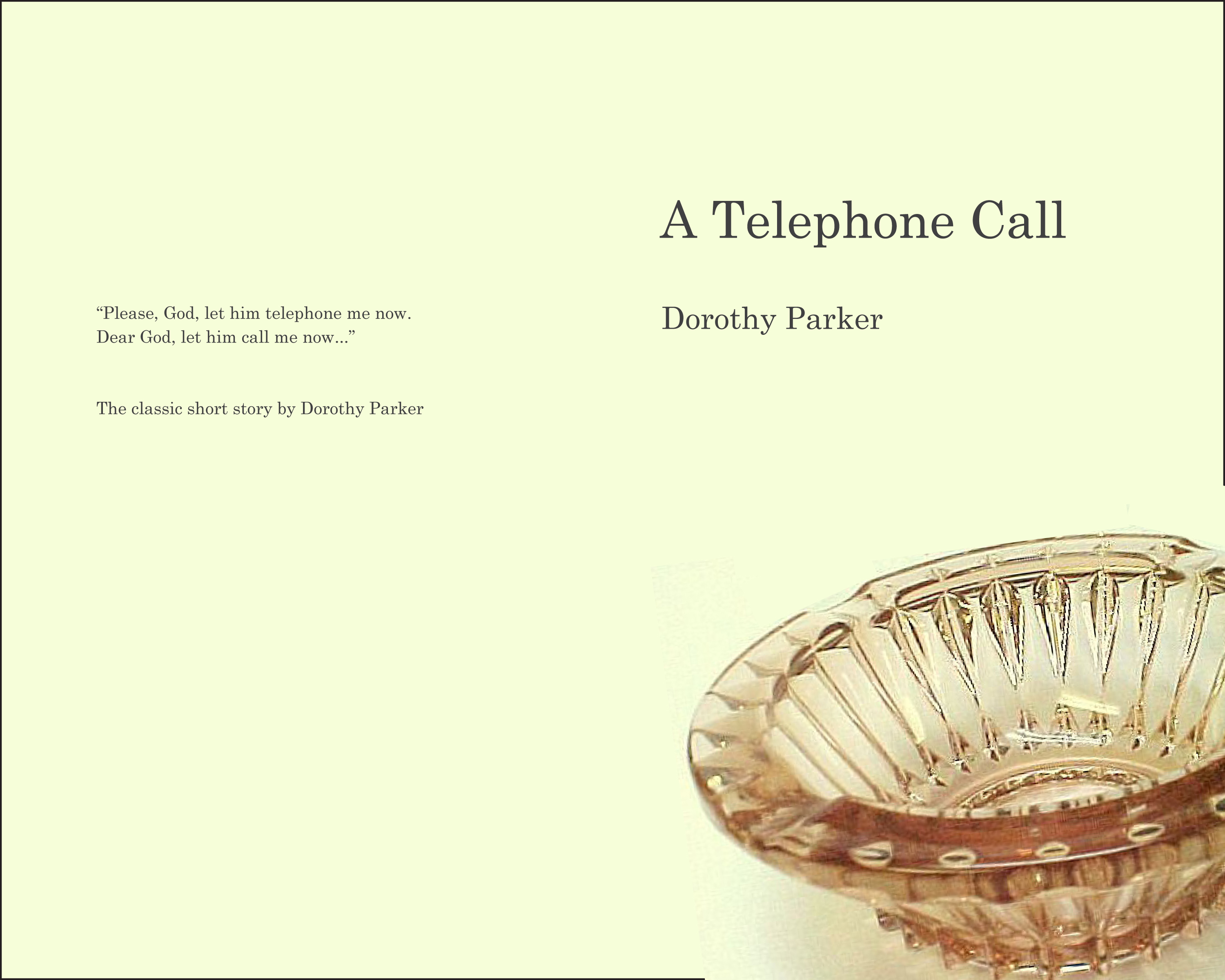
I’ve never taken graphic design, and that’s largely what this class is, so that’s why I’ve been quiet here. But now I can share a bit! Check out the learning curve for my first project, designing the cover for a short story by Dorothy Parker.

The story is, “A Telephone Call,” so I couldn’t help but go for the obvious at first (Important Note: All these covers are the full wrap, so the left half is the back cover and the right half is the front):

To keep from being too boring, though, I brought in this one as well (the story was written around the 1920s, so flapper seemed to fit the scene):

Consensus? The flapper was cool, but not quite right, and the telephone wasn’t working either (and was from the wrong time, to boot). Back to the drawing board!

I thought about the concept of the design, and decided my main focus was the fact that she was waiting for this call. After looking at some terrifying photos of bitten nails and lips, I decided smoking was a nervous habit I could feature in some kind of aesthetic way:

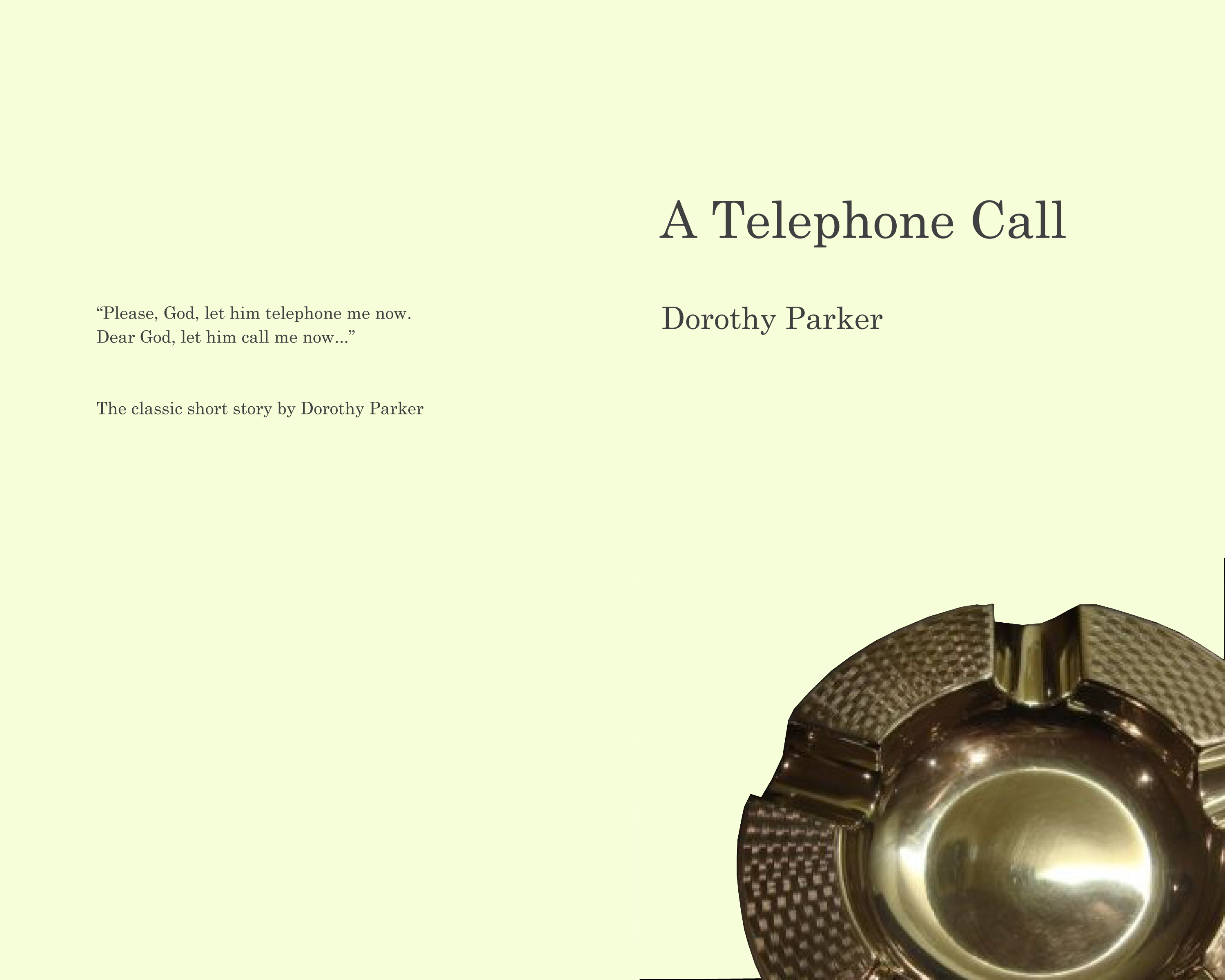
Two or three revisions later, came out with this, and realized my ashtray looked more like a drinking glass. Did a little more research…

This is much better! Except…the ashtray is recognizably Great Depression-era–about a decade too late for the story. Not a huge time gap, but enough to irritate those in the know.

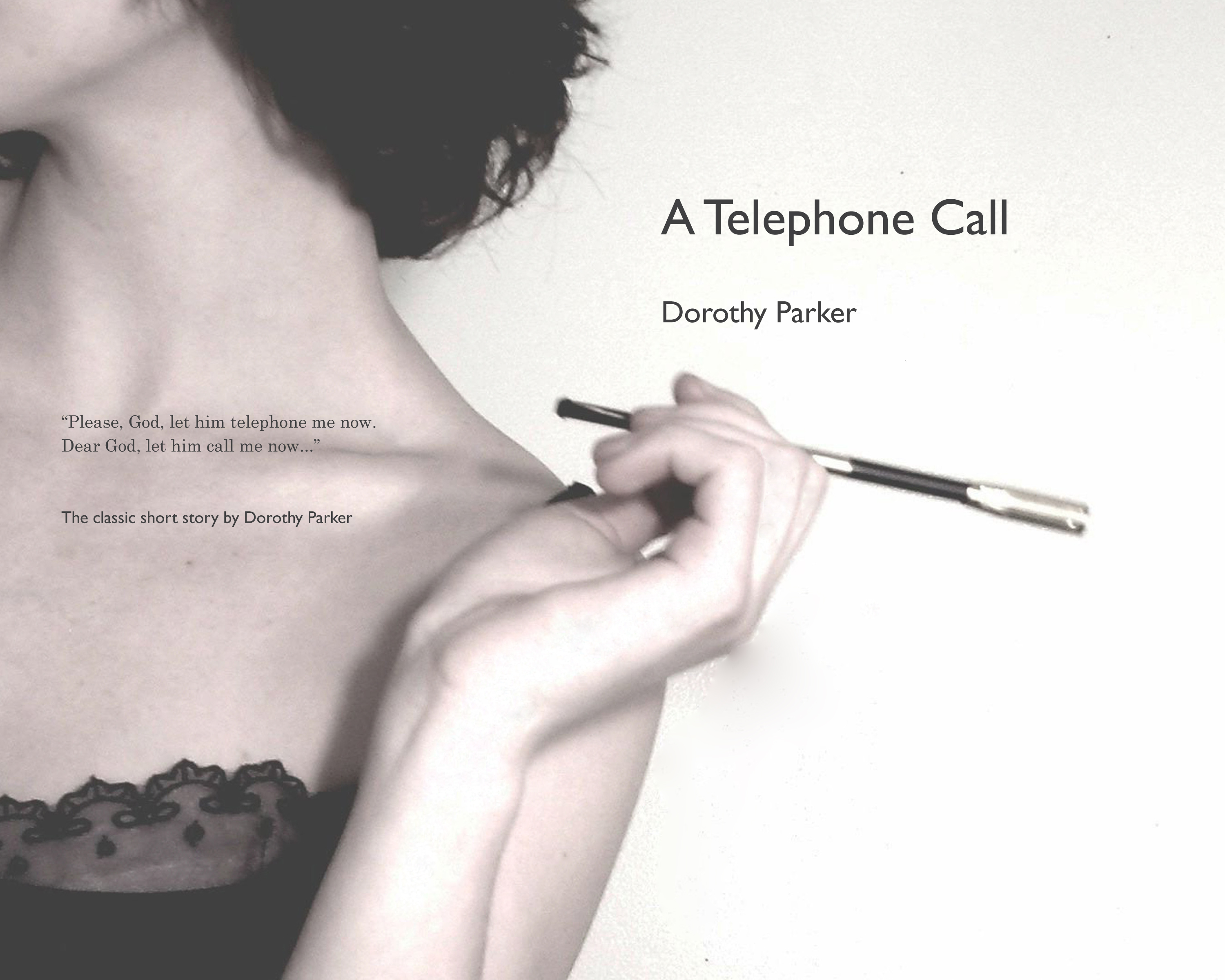
Right era, decent concept, but so stark. I was beating my head against a wall by this point (keep in mind, I’m only showing you about 2/3 of the revisions I did on this design). My computer was so stuffed with photos of cigarettes, cigarette stubs, cigarette smoke and ashtrays that I was worried Andrew would think I had some kind of weird nicotine fetish. I still loved the idea of this glamorous girl in the ’20s waiting by the phone, smoking nervously, probably using some fantastic Cruella de Vil-esque cigarette holder. And then I found it. I talked to my professor to make sure she wouldn’t freak out if I overhauled my design yet again, and she gave me the green light to make this:

I finally felt like I had a book that felt like a book. I don’t have a grade back quite yet (I’ve been out for a week, so hopefully tomorrow), but this is the design that makes me happy. There’s a lot I like about this final version, and some things I’m sure could still improve, but I won’t say anything else for now. I’d love to hear what people think!

← Older posts
Newer posts →

Enter your email address to subscribe to this blog and receive notifications of new posts by email.

Join 355 other subscribers

The Latest

  • Prices to Pay
  • Why You Should Do NaNoWriMo This Year
  • Back in the US!
  • Hiatus
  • The Briefest of Check-Ins and Some Words About a Bride

Journal History

  • February 2015
  • October 2014
  • September 2014
  • January 2014
  • August 2013
  • July 2013
  • January 2013
  • December 2012
  • November 2012
  • October 2012
  • September 2012
  • August 2012
  • June 2012
  • May 2012
  • March 2012
  • February 2012
  • January 2012
  • December 2011
  • November 2011
  • October 2011
  • September 2011
  • August 2011
  • July 2011
  • June 2011
  • May 2011
  • April 2011
  • March 2011
  • February 2011
  • January 2011
  • December 2010
  • November 2010
  • October 2010

Recurring Thoughts

abandoning perfectionism annoying art Banned Books Week birthday blogging book design books canary review class criticism D.C. elephants engagement epic bosshood essay fiction flash fiction flash friday goals grad school Hunger Games inspiration italo calvino jose saramago judaism lauren winner literature love magazine writing making time to write memoir mfa mudhouse sabbath nanowrimo niche markets nobel prize novel obama oddities oedipus paul guest pie poetry politics progress publishing quarterly review reading religion reports resolutions short stories sometimes goals are hard steps back steps forward submissions substance tanya egan gibson the apartment The Book the elephant's journey top-shelf totally boss wedding what I'm reading when the writing's going well when the writing isn't happening word count work working my butt off writer's block writing writing life YA

Blog at WordPress.com.

  • Subscribe Subscribed
    • Jessica Jonas
    • Join 85 other subscribers
    • Already have a WordPress.com account? Log in now.
    • Jessica Jonas
    • Subscribe Subscribed
    • Sign up
    • Log in
    • Report this content
    • View site in Reader
    • Manage subscriptions
    • Collapse this bar
 

Loading Comments...