• Bio
  • Contact
  • Events and Resources
  • My Writing

Jessica Jonas

Jessica Jonas

Category Archives: Books

If You’re In Enough Places, One is Bound to be the Right One

22 Sunday May 2011

Posted by jessicamjonas in Books, Writing

≈ Leave a comment

Tags

blogging, connection, serendipity, tanya egan gibson

This past Friday, when I got home from work, I went to check my emails, as one does when gmail is blocked on the work servers. I was going to drag this out all suspenseful-like, but I just want to say it: I had an email from Tanya Frickin’ Egan Gibson! (Note: it’s possible that only three of those names are legally recognized).

She wrote me an awesome email, thanking me for writing about her book and telling me how glad she was that I’d connected to it emotionally. She told me my post made her day. And I was like, “Holy crap, this is just my tiny little blog that I started for a class project and continue to prod myself into spending more time writing. Real authors don’t see this.” But they do, apparently, thanks to the modern magic of Google Alert, and I’m starting to learn something.

All the magazines say showing up willing to write is what counts. Ha ha, they don’t really say that, they say it’s the query letter, or the hook (get ’em by the first paragraph or the editor will deliberately spill coffee on it!), or the setting, or 5 (7, 10, 3) Easy Tips to Get Noticed that make or break you, but they start with the assumption that you’re willing to put yourself out there.

I don’t always think of blogging as the “real” writing, but maybe I’m wrong. Writing here means putting myself out there and connecting with people as much as anything else I am doing in the written world right now. Serendipity means I got a thank-you email from someone much farther along in this whole writing game than I am, which made my day. This exchange has just recharged me, and I am looking forward all over again to getting back to the two stories I am currently working on, and hopefully making a connection to someone again soon.

How to Buy a Love of Reading

18 Wednesday May 2011

Posted by jessicamjonas in Books

≈ Leave a comment

Tags

how to buy a love of reading, tanya egan gibson, what I'm reading

You need to know about this book. I picked up How to Buy a Love of Reading by Tanya Egan Gibson on a whim the last time I was at the library, and it turned into one of those books. You know the ones. I had to have it near me (it’s tucked against my leg right now). I felt nervous if I left home without it. I’m an, ah, involved reader in general, but it doesn’t often happen that I regularly find myself talking out loud to a book–arguing with or cheering on characters, laughing, swearing, yelling. About half an hour after I finished it I started crying, partly due to the kickback from the emotional surge of the book, partly because it was over. I think I read nearly half the book twice in my attempts to delay the sad moment when there would be none left.

The book is about Carley Wells, who is a pretty average girl living in a neighborhood straight out of Gatsby (seriously–one mom “practices” her mannerisms by studying an old tape of Jackie Kennedy). Carley’s overweight, devoted to her best friend, Hunter (the ‘golden’ boy, who’s struggling with an increasing dependency on alcohol and painkillers and the frustration of living in an image other people created), but not particularly interested in the social climbing scene. She also dislikes reading. Normally I’d shudder in horror, but considering the teacher she has to deal with, I can actually see her point. She’s a sweet girl, but not outstanding. Her parents, naturally, decide that the way to make her stand out on her college applications is to concentrate on a passion for literature, and commission an author to write a book to Carley’s specifications, the Book that will make her love to read.

From there, How to Buy a Love of Reading hones in on relationships. There’s Carley’s interaction with Bree, the high-concept meta-fictionist hired to write The Book, and their process of realizing what stories are about. There’s Bree and Justin (aka Rock Star), the bestselling author she went to college with, who hopes to reconcile with her. Most importantly, though, it’s about Carley and Hunter.

Carley and Hunter’s friendship is the reason for the yelling and cursing and pleading. Words like “raw” and “heartbreaking” don’t feel deep enough. It is painful to read, painful to write about, painful to think about. There are times when unconditional love and insurmountable difference coexist. The times when friendship continues through irreparable hurt because there is no way to stop loving that person. Ever. Times of clinging to each moment of ease and joy because they need to be enough to weather longer stretches of doubt and pain.

Gibson knows this kind of friendship intimately. In different hands, it would be easy to call Hunter a jerk, to call Carley weak. It would be too easy to dismiss the whole relationship with a wave of the hand and tell Carley it’s time to cut her losses and move on. Gibson knows it’s about more than who the other person is. It’s about who you are, and what it means to believe in a person, a love, without demanding proof before offering forgiveness. She knows the question is how you define yourself and the other person at every stage of a friendship.

I know what it’s like to have a Hunter. My friendship was different, and so was the way it ended (less complicated, thankfully. Less devastating in terms of what was said and done), but the emotions hit home. That’s why it’s so painful to read, and so perfect. Everything’s stirred back up again, but she meets you in exactly the right place to understand.

And Gibson does come back to the Book that makes her book’s title relevant, and that feels right, too. She does not try to make the book-within-a-book parallel the main narrative. She does not play stupid tricks. She does use the Book as a yardstick for Carley, a place to ground her as she grows, and by the end the parts of the story feel like they are where they are supposed to be.

Mudhouse Sabbath

11 Friday Mar 2011

Posted by jessicamjonas in Books, God

≈ Leave a comment

Tags

books, christianity, god, judaism, lauren winner, memoir, mudhouse sabbath, religion, what I'm reading

I mentioned earlier that for a while I worked at a church at a job that sucked. What’s good is that, in addition to the awesome job at the literary journal, I also found myself working an equally awesome job at a church. I’m a youth director rather than a secretary this go-around, which is a much better fit – playing games and leading discussions with 6th to 12th graders is a lot more fun than folding bulletins. Also, the pastors at the new church are supportive and encouraging. One of them gave me Mudhouse Sabbath by Lauren Winner as a Christmas gift. It took me a few months to get around to it (I’ve always got a back-log on the ‘to read’ list), but I am fully in it now, and what a book it is.

I grew up with two religions myself. My father’s not an Orthodox Jew by any stretch of the imagination, and I don’t know much beyond the skeleton of Judaism, but I grew up fasting on Yom Kippur, dipping parsley in salt water at Passover Seders and lighting candles at least four or so of the eight nights of Hanukkah (my dance and my sister’s gymnastics inevitably ate up some of those evenings). My family’s way of resolving Judaism and Christianity is to concentrate on what the faiths share, which is wonderful because it leads to a lot of openness and tolerance when it’s done right, as I believe it is in my parents’ house.

Winner takes a different approach by focusing on the differences between the faiths, specifically the differences in rites and practices such as prayer, food, weddings, and the Sabbath. What is so wonderful is that while I would have expected a focus on differences to lead to judging, Winner clearly has tremendous respect and warmth toward both sides. She grew up in a mix household, too, practicing Reform Judaism for the most part and gleaning a bit of Baptist belief from her mom’s side. In Girl Meets God, which I have not read yet, ever-stronger spiritual yearnings led her first to devout Orthodox Judaism, and then to equally devout Christianity (Anglican, I believe? I had to read up on the Internet to check it out, since she doesn’t mention a denomination in Mudhouse). Leaving Judaism for her meant leaving all the practices she was accustomed to, from keeping kosher to the way she grieved or prayed. Some transitions were easier than others (being allowed to eat shellfish is apparently one of the big perks of converting), but she found herself missing the rhythm of her Jewish life, the way even the annoying rules she had to follow kept her feeling connected to God.

Mudhouse Sabbath looks at eleven aspects of life from both the Jewish and Christian perspective, explaining what rituals each religion brings to the table, what they mean to her, and how she’s adapted or created her own practices so she can keep the attentiveness to faith that she loved in Judaism, rewritten into a Christian context. The writing is engaging and approachable, with an easy openness and honesty that makes me wish I could run into this girl on the street and be friends with her. I like the way she takes it as a matter of course that spirituality is an everyday part of life. Even though I work at a church, I don’t always pray every day or make such an attentive practice of “being religious” during the week. This book makes me want to bring more of that into my life, because the way she tells it makes it seem like such a rewarding way to be present in the days between Sunday and Sunday.

Two Jobs and a Midnight Snack

08 Tuesday Mar 2011

Posted by jessicamjonas in Growing Up, Stories, Writing

≈ 2 Comments

Tags

abandoning perfectionism, criticism, essay, memoir, short stories, work

Last May, I was working at a church, and it was awful. The pastor was a perfectionist, slow to praise and quick to point out anything I did wrong. The last straw came when he told me that he’d decided I had five typos left, and then I’d be out of a job. I hadn’t thought I was making that many mistakes, and I knew I was putting effort into my work. I also was involved in other projects, like helping overhaul the website, that were acknowledged minimally, if at all. So I quit.

About a week later, I was chatting to my MFA program director, who’s also the co-founder and editor of a literary magazine, and when she heard I needed work, she offered me a job on the spot. It’s a fantastic job. I’ve learned how to use two new computer programs since I’ve been here (not to mention a new operating system), and gotten markedly better than I used to be at two more. My bosses now are all about exploration and playfulness, and much less about mechanical perfection. I design posters, for example, for guest poets and speakers, for example, and once or twice it’s happened that a typo went to print and it hasn’t been a big deal (I keep wanting to clarify – I really don’t mess up that often, and I catch more errors than I make, but sometimes ‘night’ gets changed to ‘evening’ at the last second and I forget to switch ‘a’ to ‘an’). If I was thoughtless or careless about what I was doing, that would be another story, but in this job the bigger picture of what I’m doing matters more than any little bumps.

I’m still working on making a similar shift in my writing life. I’m still too quick to scold myself for not being as good or fast or prolific as I want to be, and need a hugely significant achievement (see Exhibit A) to happen in order to feel proud of what I’m doing. So I’m trying to quit, or rather I’m trying to be that kind of supportive presence for myself. I’ve got a new essay up in Stories & Things, a little piece I’ve been meaning to write for a while now, but hadn’t, perhaps because I thought it was too light to really matter. Now it’s written, and it made me happy to write it, and I hope someone may read it and like it too, but what’s best is that it is there now when it wasn’t before.

The Elephant’s Journey

23 Wednesday Feb 2011

Posted by jessicamjonas in Books

≈ Leave a comment

Tags

books, elephants, jose saramago, literature, nobel prize, the elephant's journey, top-shelf, what I'm reading

I have such a crush on this book, I hardly know where to begin. I picked it up because Jose Saramago won the Nobel Prize for Literature (although this wasn’t the book that won him the prize). Most of the writers I turn to have won something, although it’s typically the Hugo or Nebula, or some other more niche recognition. Reading Nobel winners’ novels is one of those things I felt like I should do because it would be good for me, not necessarily something I thought I would enjoy. I always expected that the works would be deep and thought-provoking, but I felt like this element would probably come at the expense of entertainment. I’m happy to say that, at least in this case, I was wrong.

How do I explain what makes this book so wonderful? The plot is fairly straightforward: the king of Portugal, regretting having bought an elephant named Solomon who doesn’t do all that much besides eat tons of forage, decides to foist it off on a relative, the prince of Austria, using the Austrian’s wedding as the excuse, because if an elephant doesn’t make a statement as a wedding present, what does? The mahout, Subhro, and a company of assorted military personnel are selected to escort Solomon to his new home, and so they proceed. There are of course multiple encounters with people in various villages along the way, but that’s not why I’m all warm and pink about this book. (Also, while I stand by the fact that the plot is straightforward, when I see it summarized I am struck by its oddities, as well).

What makes The Elephant’s Journey so magical is the way it’s told. Saramago clearly has so much fun playing with what it means to tell a story that it’s impossible not to catch his enthusiasm. There is the moment, for example, when a character disappears—plof—and Saramago is moved to dwell a moment on what a lovely thing onomatopoeia is. “Imagine if we had to describe in detail a person suddenly disappearing from view,” he says. “It would have taken at least ten pages. Plof.” There’s so much playfulness and curiosity in the writing, and I love how Saramago invites us into easy familiarity with him in his act of putting down the story. The other amazing thing is how The Elephant’s Journey looks at what is strange and what is normal. The elephant, Solomon, himself is odd and mundane at the same time–prized by royalty in two countries for being exotic, but spending most of his time eating, sleeping, and leaving steaming messes for his keepers to clean up. Even the people in the villages the company passes through get used to the idea of an elephant in a matter of days. The book often treats human relationships as stranger things, such as the hilarious, absurd exchange between two military officials who essentially want the same thing, but escalate a dramatic list of bluffs, boasts and threats to ensure they can have it on their terms, or Saramago’s shudder at a royal husband who would go on to impregnate his wife sixteen times: “Monstrous.”

Of course, Solomon is the heart of the story, as is fitting for any story that even contains an elephant, and much more so when it stars one. It is beautiful to see the ties between him and the people around him, and to feel all the subtle transformations, and to feel subtly transformed.

This books is ideal for: people who love elephants, people who love stylistic playfulness, Portuguese lit fans, “serious” readers who still want pleasure in their reading


Take Two Poems and Call Me…

20 Sunday Feb 2011

Posted by jessicamjonas in Growing Up, Poetry

≈ Leave a comment

Tags

poetry, the apartment

One of the things I’m realizing is how quickly you discover new things about yourself when you have your own space. I was over-the-moon excited about how I got my new place decorated. I refused to buy anything that clashed with my vision of what my first independent home was supposed to be, and the result paid off. It feels elegant to me, modern, full of things I find beautiful. It’s just the kind of retreat I’ve imagined, and new aspects of me are blooming.

For example, at least now in the honeymoon period of apartmentdom, I am considerably neater. It helps having the physical space to put my things, but it’s also the idea that it’s mine now, and if I want a clean kitchen or living room, it’s down to me to load the dishwasher and grab the dust cloth.

Did you know I am the kind of person who reads poetry every day? I didn’t.

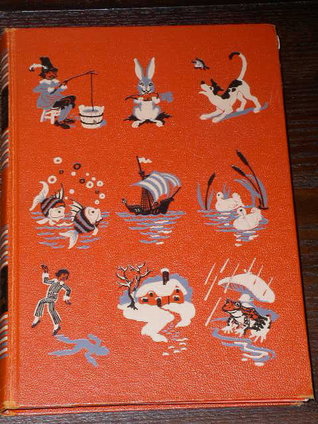
When I was little and my dad had to put my sister and I to bed, he wouldn’t read us bedtime stories. He tried, at first, but since we were  tiny and lacked a developed sense of social sympathy, we rejected his attempts at reading stories to us because he didn’t do the voices the way my mom did. His response? He turned to poetry (cool guy, my dad). He had this tattered, orange book from the Childcraft series and we would read poems together.

Childcraft book

My first poetry book

I had the entire first section of that book memorized. They were nursery rhymes, so they were easy, but I knew every one, every line, in order, the way you might know what song comes next on a favorite CD. I knew others in the book by heart, too. I still remember “The Lamplighter,” on page 103. I recited it once at camp. I still love “Vagabond Song,” the quintessential October poem, that I heard first at bedtime with my dad.

Perhaps because of this, I have very good associations with poetry. If I’m in a used bookstore, or have a Borders gift card, or poke through the 50-cent library discards, I am likely to leave with a book of poems in hand, more often than not by someone I’ve never heard of. I don’t read a whole lot of poetry, you see. I can only take in three or four poems in one go, max, so if I’m going to fill a 30-minute Metro ride, I need something else to pass the time. I don’t even really like reading poetry in noisy places. I’m romantic like that. I like the quiet room and the cup of tea to be there. The result is that I read lots of novels and stories, and tell people I love poetry, and then look blankly at them when they rattle off their favorites, because I don’t read it often enough to keep up.

This, of course, brings me to my current living situation. I don’t have the tea yet, in full disclosure, since grocery bills are freaking me out a little, and my first response is to cut the little indulgences, but I do have the poetry. Stacking and unstacking my bookshelf really brought it home: I have over twenty books of poetry. I have anthologies, I have trendy poets and poets who were trendy thirty or forty or fifty years ago, I’ve got books so pristine the spine isn’t even wrinkled and some that will need tape soon to keep their covers together. And I haven’t read more than two or three of them, until now. Now I can sit on my white couch in my quiet living room or lie in bed or on my kitchen floor if I want to and read poems. I’ve been doing a little experiment, starting and closing each day with a poem. I grabbed one of the anthologies, for variety, and it sits by my bed and every morning before I even groan that it is too early to be awake I read a poem, and then at night when I reach a good stopping-point in whatever other book I’m reading (or just get too tired to continue) I mark the page and get the anthology and read another poem, just before I turn out the light. It’s wonderful, bracketing my days in poetry, and while nothing was stopping me from doing this before, I never realized how beautiful and soothing a thing to do it was until I spent some time just listening to my own thoughts in this empty apartment.

The Mendacity of Hope

13 Thursday Jan 2011

Posted by jessicamjonas in Books, Breaking Boundaries

≈ 4 Comments

Tags

obama, politics, what I'm reading

I was a little hesitant to post this for a while. My concept of the What I’m Reading section of this site was to give some insight into what kind of reading material inspires me as a writer, and this isn’t even close. Still, I read it, and that plus honesty in blogging counts for something to me.

A second caveat: I am, I admit, one of those Americans who really doesn’t care about politics. I want to care. I wish I cared the way certain people wished they could stand the taste of coffee. Caring about politics is one of those marks of sophistication; knowing what’s happening in the news is a decent litmus test of savviness, and a kind of adult mentality. I fail every time. I try to watch debates or Presidential speeches, and halfway through I end up shamefacedly reading webcomics, typing the url really slowly in hopes that no one will realize what I’m doing. It’s like inching through a red light in hopes that people won’t recognize that you’re moving til you’re through. Then, as if that isn’t enough, the opinions in The Mendacity of Hope aren’t even ones I necessarily agree with. I like Obama. I voted for him proudly in 2008, and since then I’ve let him be and assumed he’d do a decent job with the country.

So why in the world did I pick up this book to read, if it’s such a literary and political anomaly for me? A couple reasons. I realized an election is coming up in the not-too-distant future again, and since I refuse to vote blindly, I’ll need to put together some idea of what’s going on if I want to participate again. I miss my college Sociology classes. With my double major, I got to spend plenty of time writing creatively, but also plenty of time reading the works of great social theorists, and arguing, living in logic as well as creativity. Nowadays, I’m just in the one program, the MFA. Sure, I’ll read a few articles on spiked.com from time to time, but I missed reading something big, something I didn’t always understand, something that would force me to think hard just to keep up. Jumping into politics with a book on why Obama is disillusioning the country seemed like a great way to get a mental argument rolling. Mostly, though, expanding my horizons is incredibly important to me. I am never happy with how much I know right now, and as long as I can squeeze any amount of time from my schedule and energy from my mind, I’m determined to find a way to learn things. Now, on to The Mendacity of Hope:

The book itself is very well done, I have to say. What I appreciated was how self-aware the author strived to be of his own leanings. The introduction establishes that yes, clearly, Obama is miles better than W., no matter what complaints still exist. Hodge acknowledges that in his quest for directness, he may come off rude, which is nice, and for the most part he doesn’t. He comes off as someone who is frustrated with the American political system as a whole, and frustrated anew by the fact that a president who swore to change how that system operated is not, in fact, doing so. A large portion of the book explores political thinkers when America was a baby: Jefferson and Hamilton and so on. The question of The Mendacity of Hope is less about whether Obama lied to/misled his voting audience, and more about the patterns of power and, inevitably, money in American politics. The great lie at stake isn’t any campaign promise, but the idea that the country can operate according to the “by the people, for the people” dream it was built on at all. It’s not the most hopeful stuff, but it is really interesting. I don’t understand most of the details of what he’s saying, but the whole piece he’s putting together here has some neat questions wrapped in it.

That said, I do have a few complaints. There’s one instance where he basically comes out and says he thinks Christianity is belief in a bunch of fairy stories. I think there was no call for that. He wasn’t talking about voters’ religions influencing anything, or Obama’s, or even the founding fathers. It came off as a stab from his own personal agenda against religion, and without having a properly justified context in the book, I don’t see it having any result other than alienating readers. Religion is still overwhelmingly the norm, and even if many intelligent people are atheists, I doubt they’d stop reading a book if an author failed to make a crack at Christians. There are plenty of other analogies out there that don’t strike at the most important aspect of many people’s lives, and I’m sick of people insinuating that I’m less intelligent because of what I believe.

Besides that, which is admittedly a pet peeve, although also a sloppy moment in a mostly crisp book, I wasn’t convinced by Hodge’s arguments that Obama is to blame for what he feels is a rather toothless health care reform. I seem to remember, even from the political hole I usually live in, that for about a year, anytime Obama mentioned the topic, it would go like this:

Obama: Health care–
Opponents: You want to murder my grandparents!
Obama, No, I just wanted to say that health–
Opponents: You’ll club them to death like baby seals!!!
Obama: Hea–
Opponents (jamming fingers into their ears): BABY SEALS!!!!!

There were people who didn’t make it easy to pass things, is what I’m saying.

At any rate, this was still supposed to be more book review than political rant. Expanding horizons is all very well and good, but if you want to stay smart when you talk, probably stick with what you know! So: did I enjoy The Mendacity of Hope? Yes. Will I become involved in the political news du jour from now on? Almost certainly not. Will I pick up another political book to read sometime soon? Maybe. I’ve only seen the one side now, after all. There’s another story out there.

One More Theory About Happiness

19 Sunday Dec 2010

Posted by jessicamjonas in Books

≈ Leave a comment

Tags

memoir, paul guest, what I'm reading

In the spirit of honesty, I read this a few months ago, so it’s more of a “What I Read.” But it is still worth talking about, so the current books can wait a moment.

I don’t read a lot of memoir; I’m primarily a fiction girl. But I also pride myself on being open to anything that looks good, and the premise of Paul Guest’s story was dramatic, to say the least. When he was twelve, he crashed his bike, breaking his neck and irreversibly paralyzing him. The memoir follows his life from that event through college, and a little after, and the more I read, the more I liked and admired the man.

The remarkable thing about this book is that Guest manages to be both honest & serious without falling into the trap of self-pity. There’s a moment, for example, where he talks about an episode of rehab in the hospital. The paralyzed patients had to watch a series of videos explaining how their injuries would affect different systems of the body, and they had come to the inevitable question of sex. For  12-year-old boy, this would have been awkward in the best-case scenario, and there is something almost cruel in making a child watch what amounted to low-grade porn (the video featured a couple demonstrating sex acts that could potentially be an option for paraplegics). Guest acknowledges the futility of the video for most of the audience and the absurd humor of the situation, and strikes an excellent emotional balance. Later, when he wrote about the end of his first adult relationship, I was impressed to see that he didn’t even begin to pull the “she left me because I was a cripple” card. He admits frankly that he was inexperienced at relationships, and tended to say the wrong thing. The reader understands that the injury can easily explain why he may have had less relationship experience than his peers, but you’re left to draw your own conclusions, which is mature, and thoughtful. It makes the book an open communication about life as a paraplegic, rather than a sermon.

All in all, One More Theory About Happiness seeks to show Guest’s life as a whole: the injury, his discovery and pursuit of writing, the process of developing relationships, friendships, independence (yes, even that). It’s thoughtful and funny and sad and refreshing, and if he ever comes to Baltimore for a while, I hope Paul Guest would want to be friends with me.

The Hunger Games

04 Monday Oct 2010

Posted by jessicamjonas in Books

≈ Leave a comment

Tags

Hunger Games, top-shelf, what I'm reading, YA

The most common, trite pieces of advice writers tend to give aspiring writers are:

1. Just write!

and

2. Read, read, read (why they must say this in triplicate I do not know. Maybe once I become a Famous, Successful Writer this power of three will become clear to me, but for now it just seems condescending).

I’m just starting out, myself, and am still experimenting with the best structure to help me achieve #1 most effectively. I’ve always been a good reader, though, and it occurred to me that in a very you-are-what-you-eat way, you may be able to get a sense of what I would like to write by seeing what kind of brain food inspires me. Thus, I present to you the first installment of:

What I’m Reading

I just finished the Hunger Games series, by Suzanne Collins, and it is amazing. This is the kind of work that stops being YA and starts being the kind of books people should talk about, and hopefully are, more and more. The series takes place in a future where the 12 Districts of Panem are governed by the Capitol. Every year, each district must send a boy and a girl, chosen by lottery, to fight to the death in a televised reality series called the Hunger Games. When Katniss Everdeen’s little sister is picked, Katniss volunteers to take her place. Years of illegal hunting to feed her family have given Katniss a certain competitive edge, and she finds herself standing a good chance of winning.  From there, the series dives into all kinds of huge questions, taking a sharp look at blame and responsibility, the cost of life, and how much anyone is able to lose.

The first thing I love about this series is Katniss. I’m going to have to raise my hand at this point and confess I did read three of the four Twilight novels, so believe me when I tell you Katniss is the Bella antidote. She’s strong to the point of being abrasive, has a tendency to insist on answers to uncomfortable questions from friends and enemies alike, and is (gasp!) not even especially pretty. She is wholeheartedly committed to protecting people she cares for, though, and takes responsibility for all that she does, and manages to be good at things without being either self-deprecating or boastful. Augh. Katniss is the only person I could see making it through this series without breaking beyond repair or becoming a monster, which shows how well Collins chooses her characters.

Collins also — I swear I am not making this up — manages to pull off a love triangle that isn’t rigidly fixed in one side’s direction, and stays interesting throughout the books. This is because she knows the romantic line is secondary to the main plot, which is another beautiful thing.

I love the pacing of the series. There’s a constant flow of suspense and release, but it feels organic. There’s nothing forced enough to break you out of the rhythm. Also, the fact that the Games are broadcast as a televised reality series in Katniss’s world lends another layer of credibility to the cliff-hanger-driven plot. Viewers want action, so the Gamemakers would shape the tributes’ surroundings to fuel that need.

Finally, Suzanne Collins is a risky writer. She doesn’t back down from any of the typical challenges: her love triangle is fair to both boys, her main character doubts her own motivations and therefore whether she is acting from a good place at all, and the deaths in her final book push the limits of what Katniss can take without crumbling. It’s a breath of fresh air to see someone treat her work so rigorously, and expect her readers to come to terms with so much ambiguity, and Collins does a tremendous job.

This book is best for: YA readers, people who love strong female leads, people who love tough questions, people who are sick of Twilight and other submissive-female stories, people who always suspected there was something even sicker about reality TV than meets the eye

Newer posts →

Enter your email address to subscribe to this blog and receive notifications of new posts by email.

Join 355 other subscribers

The Latest

  • Prices to Pay
  • Why You Should Do NaNoWriMo This Year
  • Back in the US!
  • Hiatus
  • The Briefest of Check-Ins and Some Words About a Bride

Journal History

  • February 2015
  • October 2014
  • September 2014
  • January 2014
  • August 2013
  • July 2013
  • January 2013
  • December 2012
  • November 2012
  • October 2012
  • September 2012
  • August 2012
  • June 2012
  • May 2012
  • March 2012
  • February 2012
  • January 2012
  • December 2011
  • November 2011
  • October 2011
  • September 2011
  • August 2011
  • July 2011
  • June 2011
  • May 2011
  • April 2011
  • March 2011
  • February 2011
  • January 2011
  • December 2010
  • November 2010
  • October 2010

Recurring Thoughts

abandoning perfectionism annoying art Banned Books Week birthday blogging book design books canary review class criticism D.C. elephants engagement epic bosshood essay fiction flash fiction flash friday goals grad school Hunger Games inspiration italo calvino jose saramago judaism lauren winner literature love magazine writing making time to write memoir mfa mudhouse sabbath nanowrimo niche markets nobel prize novel obama oddities oedipus paul guest pie poetry politics progress publishing quarterly review reading religion reports resolutions short stories sometimes goals are hard steps back steps forward submissions substance tanya egan gibson the apartment The Book the elephant's journey top-shelf totally boss wedding what I'm reading when the writing's going well when the writing isn't happening word count work working my butt off writer's block writing writing life YA

Blog at WordPress.com.

  • Subscribe Subscribed
    • Jessica Jonas
    • Join 85 other subscribers
    • Already have a WordPress.com account? Log in now.
    • Jessica Jonas
    • Subscribe Subscribed
    • Sign up
    • Log in
    • Report this content
    • View site in Reader
    • Manage subscriptions
    • Collapse this bar
 

Loading Comments...