• Bio
  • Contact
  • Events and Resources
  • My Writing

Jessica Jonas

Jessica Jonas

Category Archives: Reading

What I’m Reading: Mr. Palomar

12 Friday Jul 2013

Posted by jessicamjonas in Books, Reading

≈ Leave a comment

Tags

italo calvino, Mr. Palomar, what I'm reading

An easy mistake readers and writers make is confounding serious literature with serious subject matter. Death, devastation, relationships torn apart–these are the meat of literature, right? A man overwhelmed by the selection in a cheese shop, or trying to figure out where to look when passing a woman tanning topless? Fluff.

Until, that is, you see how Italo Calvino does it. Mr. Palomar is a series of essays, stories, and meditations featuring the eponymous protagonist, a man with a deep internal life and a certain level of, shall we say, nervous intensity in his day-to-day habits. The book is divided into three sections, progressing from internal meditations to more narrative pieces featuring some interpersonal interaction and ending in a section that considers its subjects on a wider historical/metaphysical/sociological plane.

I thought all of the stories were lovely, although don’t expect even the narrative stories to stray too far from Mr. Palomar’s head. In any particular piece, Mr. Palomar doesn’t do all that much: he takes an evening swim, watches a gecko in his living room, runs an errand to the butcher. The beauty is in the way his interpretation of the grander meaning of an act or place transforms the ordinary, and in Calvino’s lightness.

When I say lightness, I do mean humor, but almost tangentially. The real “lightness” is more that Calvino has a way of saying things that may be profound or perfectly silly without working too hard to define how the reader should take it. It’s a “maybe this is so” approach–you’re not pressured into accepting its gravity, but you also don’t get the impression that nothing matters. Mr. Palomar approaches life with an open mind as far as that goes, ready to appreciate meaning anywhere. When he passes the topless woman over and over again, trying to determine which way is the most polite to look (staring at her may be intrusive, but perhaps not looking is an insult to feminism via a rejection of the worth of female physicality?), it’s hilarious. When he considers the other swimmers in the water, all of them reaching toward the reflection the setting sun casts and seeing it as directed at them alone, it’s more contemplative.

I’d love to try some of the techniques out for myself. My stories are typically dark, even when they’re funny in places, and I love dialogue as a way of moving a story forward. I’m trying to capture more lightness in the story I’m working on now, and to see potential to show beauty or meaning through characters’ thoughts and actions, or even the surrounding environment, rather than concentrating on dialogue.
My Ideal Bookshelf

08 Monday Jul 2013

Posted by jessicamjonas in Books, Reading

≈ Leave a comment

Tags

books, my ideal bookshelf, reading

I found a coffee-table book on my last library visit called My Ideal Bookshelf. The idea is simple: ask artists, chefs, writers, architects, designers, musicians, and other creative spirits to put together a small sample of the books that have had the greatest impact on their lives. There’s no strict limit on number of books–just keep the list short enough to let the books stand or stack together on a short shelf, perhaps half the length of your standard IKEA fixture. Each page spread features an illustration of the books and a brief explanation by the person in question of why he or she picked them. The result is lovely: a lively sort of dialogue begins to unfold, even though the people featured throughout the book may never have spoken to one another.

Some books appear on shelf after shelf; some are famous and many I’ve never heard of. One chef chose a book whose spine was ripped off entirely, with thicker lines of glue on the binding-cloth to show where the connection between book and cover used to be. The cookbook had belonged to her grandmother and was full of notes in the margins. Junot Diaz’s shelf balanced Lord of the Rings over books on torture and race relations. In many cases, it was easy to see how the books people chose had shaped their own work, but there are surprises as well.

Of course, as soon as you crack the spine you want a notepad to start a to-read list, and it’s a matter of pages before you start daydreaming your own bookshelf. A few of mine that would make the list:

  1. Something Wicked This Way Comes, by Ray Bradbury. The beauty of the language thrilled me at 13, and as I’ve gotten older, Bradbury has still caught me with his enthusiasm for people, his disregard for genre pigeonholing, and of course the lyricism throughout his writing.
  2. Wuthering Heights, by Emily Bronte. People tend to love or hate this one. I love it for making an obsessive, consuming love into both the redeeming quality and downfall of two barely likeable people.
  3. The Smitten Kitchen Cookbook, by Deb Perleman. I started reading the blog at 19, before it was even about cooking. Over years, I began to understand the deep vein of creativity that lies in making food. Now, cooking, and especially baking, is a hobby and a way to work out my creative kinks. I also credit Smitten with introducing me to artichokes, but that’s another story for another time.
  4. The Hitchhiker’s Guide to the Galaxy, by Douglas Adams. Reading this book is what led to me meeting my husband, but if that wasn’t enough, I’d list it here for its irrepressible playfulness and as a reminder that flying by the seat of your pants can lead to good writing and a lot of fun.
  5. The Little Prince, by Antoine Saint-Exupery. Because it’s true, and beautiful, and makes me cry no matter how many times I’ve read it.
  6. Childcraft, because this is the collection of poems my father read to me.
  7. Love in the Time of Cholera, by Gabriel Garcia Marquez. Latin magical realism in general has proven to me that magic does have a place in canonical ‘literature,’ something I had hoped but had a hard time believing.
  8. A Good Man is Hard to Find and Other Stories, by Flannery O’Connor. I wish I was her. I love the way the grotesque and the spiritual come together, and the way she saw her writing as a way of communicating her idea of God. She inspires me technically and reminds me to aspire to do more than entertain.
  9. The Brief Wondrous Life of Oscar Wao, by Junot Diaz. Diaz doesn’t apologize or slow down his writing for anyone. It keeps his writing smarter, and also more intimate because of the way he assumes you know what he knows.
  10. The Prophet, by Kahlil Gibran, because it feels like a gift.
  11. Of Mice and Men, by Steinbeck. Steinbeck is able to write short novels that don’t feel forced into economy of language. There is still description and beauty, but the story and characters are kept so tight and clean that a slim little book can tell what others couldn’t do in 400 pages.

The beauty of an “ideal bookshelf” is that it can change over time. I’d love to hear what’s on your shelf right now, or what I should consider adding to mine.

Why Do You Buy Books?

04 Tuesday Dec 2012

Posted by jessicamjonas in Books, Publishing, Reading

≈ 7 Comments

Tags

books, reading, why buy books

I’m curious–do you (you specifically, not the rhetorical “you”) still buy books? It’s been obvious to me for a while that I get most of my reading material from the library, but it recently hit me that I rarely buy books anymore, except as gifts. I buy cookbooks because I like them as constant references/inspiration and I’m a recipe note-scribbler, but fiction? Three weeks plus renewals is apparently good enough for me.

I feel weird about that as a reader, and concerned about that as a writer and  worker in the publishing industry.

So I’m asking you to make the case for me: how often do you buy books? What kinds of books would you buy versus borrow? What does it take for you to make the leap between “I’d like to read that” and “I gotta have it”? I’m all ears.

Reading Dead Writers

12 Friday Oct 2012

Posted by jessicamjonas in Books, Publishing, Reading, Writing

≈ 10 Comments

Tags

books, michael crichton, reading, writing

I just finished Micro, a novel “by” Michael Crichton. I use the word “by” a little loosely because Crichton died while writing it, and the book was completed by another writer. It was still okay, but it missed some sharpness. There were summarized passages that I felt sure would have been explored more vividly if Crichton had lived to revise. Reading that last book got me thinking about what happens to manuscripts when the writer has died.

Micro isn’t the first example of a book that was a work in progress (sometimes barely more than a few drafted chapters and some Word files full of notes) that was finished by another writer. I will admit it’s one of the few I’ve read, mostly because a few dips into posthumously completed novels, including some I really love (Douglas Adams comes to mind) has taught me that a lot of what I love in an author’s voice comes later in the revision process.

I’m a voice girl when it comes to reading. Plot and character matter, of course. The premise better be interesting to make it on my favorites list, and the ending should count. But I will forgive a lot of sins on the basis of a great narrative voice, and I’m quick to put down almost any story if I don’t care for the way it’s told. It’s hard to get voice right on a first draft–it’s the kind of plaster or molding (I don’t know enough about carpentry to keep this metaphor accurate–whoops!) that you can only worry about when the scaffolding of the story is in place.

These days, editors don’t have much time to do extensive developmental editing with writers before the book is published. This is in many ways an unfortunate thing–a good editor can help a book cross the last inch (or more!) from a workable manuscript to a masterpiece. But that’s another story for another day. The point is that I think the authors themselves, and their personal communities of hand-selected readers, are the ones shaping most books today. A publisher assigning someone else (hopefully also popular in the same genre, to attract sales and ease suspicious readers’ minds) just isn’t the same to me. The question, then, is should the work stop if the author is no longer alive?

I know there is a lot of important work that happens after the writer is done putting words on the page (I wouldn’t be working in publishing if I thought that wasn’t true!). I know there are agents and even some editors who still take a strong personal interest in a book. But although I can understand the fans’ desire for just one more book and the publishers’ for one last good sale from an author, the writer side of me feels an uncomfortable twinge imagining an unfinished book going out. There is no last chance to review the book, or change it. There’s more possibility for anyone to say “close enough” to a not-quite-polished page. We should be grateful we even have this much, right?

Not me. I want the last book I read by a beloved author to be a proper send-off, with all the qualities I love in the work that got me hooked in the first place. I’ll miss out on a glimpse at the new characters and ideas my favorite writers were creating at the end of their lives, but I want that wonderful voice in my head to stay the same.

Should death be the final deadline for an author’s work to get published, or is it better to find a way to publish what they’ve left behind? I’d love to hear your take.

Bossypants

07 Wednesday Mar 2012

Posted by jessicamjonas in Books, Reading, Reviews

≈ 2 Comments

Tags

bossypants, tina fey, what I'm reading

I fell right off the edge of the world for a while there, didn’t I? It’s been a busy stretch (and midterms hasn’t even hit yet, Lord help me). Anyway, I am ducking in to do more than announce that I am still alive: I have just finally now gotten around to reading Bossypants, by Tina Fey, and if you have not, it is time you did too, especially if you are too busy to read anything.

Bossypants is, largely, a memoir of the development of a comedian and lady boss who is (just a little) frustrated sometimes that people are still shocked that a woman can be in charge of something that is not the kitchen. It is gaspingly funny. Some favorite moments for me include the time in college she hiked a mountain in hopes of some light fondling and maybe some dry humping her partner at the top, the crappy receptionist job where her only joy was passive-aggressively cutting the unlock-door buzzer off too short so people would still be locked out when they pushed the door handle, and anything involving her dad.

Tina Fey, for those of you who (like me) climbed out from under your rock this morning and said, “Wait–she was the one who was Sarah Palin that one time, right?” manages to be bright and attractive and still take unabashed delight in being awkward. She’s the ugly duckling who grew up and then decided being the duckling was more interesting, anyway.

At any rate, I laughed a lot even though anytime I looked away from the book, I was stunned by how much homework I had left to do. Speaking of, I need to go read stories thoughtfully and slice fancy art-store paper into 5.5 x 7.75 pieces for my midterm book, but I will be back soon!

Who’s Your Ideal Reader?

21 Tuesday Feb 2012

Posted by jessicamjonas in Reading, Uncategorized, Writing

≈ 2 Comments

Tags

good readers and writers, ideal reader, nabokov, writing

In International Fiction this week, we’ve been reading a (tiny) sample of Russian writing, including Nabokov’s wonderful essay, “Good Readers and Good Writers.” One of the class writing prompts was to take a page from Nabokov and consider who our ideal reader would be. It’s an eye-opening exercise that I would recommend to any writer. I realized I had a more specific experience in mind than I thought I did when I daydream/hope about how someone will feel reading my work. My thoughts are below. Tell me about your imagined reader in the comments!

My ideal reader, first and foremost, would have to be fascinated by people. This is partly just on the surface level: As a writer, I am primarily interested in people and relationships, and details like place and appearances get filled in later, if at all. Even plot is more or less a peripheral element for me; it’s a vehicle to bring people into the situation where they will reveal themselves. If my reader isn’t interested in people, he or she isn’t going to be my reader for very long.

My reader, as a person, would be sensitive and imaginative and would see reading as a collaborative exercise. I have a hard time right now gauging how overt or subtle my stories are, but I value subtlety. I like subtext. I like writing a conversation where you can hear the echo of another conversation underneath in what isn’t being said, and it takes a sensitive writer and reader to know how to approach such a conversation so that those echoes materialize. I like to explore gestures. I don’t often tell as much as I maybe should about my characters’ clothing or hair or eye color, but I like my reader to know how they move, because I think body language is the easiest way to read someone’s mind. Maybe that’s because I am a fidgeter with a wide range of tics. My reader would have the sustained imagination to see my character in movement throughout the story, and the sensitivity to see the shifts of emotion in the changes in gesture and the cues in conversation. I would want my reader to temporarily become my characters (rather than relate to them), which is why it would be important for my reader to have a spirit of collaboration. It would ideally be almost like an actor doing a study of a character he or she was going to play, getting rid of his or her innate patterns and taking on a new persona to understand a life through a different lens.

The other reason I want my reader to love people is that I want him or her to be so consumed that “person-ness” goes beyond humanity. I want my reader to leave my writing thinking of my story as a kind of person. I don’t mean thinking of the characters as “real,” although that is an element of what I’m envisioning. I think a really good, well-written story ends up having a mood and an idea and a manner of expression that blend together and form a personality. That is why I reread books I love, and why I would want readers to come back to my stories: the story itself becomes someone you want to spend time with. I sometimes pick up particular books when I’m troubled about something, not because the content or plot has a lesson I need, or the book features a character going through my problem, but because the whole story itself has a personality of probing, curiosity, reproach, authority, encouragement, or inspiration that touches something in me.

Ray Bradbury wrote in Zen and the Art of Writing that you should read poetry every day even if you don’t understand it on any level you recognize, because your ganglion will understand. Sometimes when I am in those troubled moods I will read on autopilot and end up talking out loud to the book, saying, “yes, I know what you mean,” or, “but how do I get there?” and it’s because my ganglion is in conversation with the personality of this particular book.

When I was little, I called certain favorite books of mine “oatmeal books.” They weren’t about oatmeal, and didn’t necessarily share a theme or style, or any other characteristic other than the emotional response they brought out in me. I absolutely could not articulate what I meant by that when I was a kid, and it’s hard even now, although in my head I know precisely what I mean. The closest I can get is to compare it to that moment of resonance other people have described, of the thrum of finding a story that works so well that it makes you feel like an extension of it. As a child, I probably picked the word “oatmeal” thinking intuitively of something with warmth and weight, but it also had an element of the inevitable and necessary. When it was a winter morning, you were fundamentally entitled to a bowl of hot oatmeal, as a human being. When I hit that certain reading mood, I would have ripped the house apart to find one of my oatmeal books. I craved this kind of reading experience as intently as any physical need, and when I had it, I was enveloped in a state of complete peace and comfort, even if the book was sad, because I had connected with the exact right book. The ideal, of course, would be to create something like that.

The Publishing Fetish

09 Thursday Feb 2012

Posted by jessicamjonas in Books, Reading, Writing

≈ Leave a comment

Tags

italo calvino, lightness, publishing, quickness, six memos, writing

“The demands of the publishing business are a fetish that must not be allowed to keep us from trying out new forms.”

The quote comes from Italo Calvino’s Six Memos. I’m reading two of them this week, “Lightness” and “Quickness,” and they are both gorgeous explorations of qualities of literature and writing that Calvino enjoys, or notices in himself, or wants to develop more. Neither term is as simple or frivolous as it may seem on first glance, and I’d like to get into Calvino’s ideas a little bit more, but first we need to talk about that quote, because it’s incredibly important.

As people keep explaining, the emergence of e-publishing and the traction it has gained in the last several years marks a kind of revolution in the relationship between writing and publishing that we haven’t seen in decades, if ever. In a time where only a tiny percentage of literary journals pay for stories and poems, only a fraction of consumer magazines publish literature, and traditional publishing seems more and more steeped in bureaucracy, the fact that writers are able to publish their work independently, and to do so with decreasing stigma, is a wonderful movement toward the empowerment of literary thought and talent.

What it is key to remember, though, is that independent publishing is still, ultimately, part of the publishing business. I say this because if a writer publishes traditionally and is discouraged from breaking out of his or her genre, or trying a new form, it’s fairly clear that whether the publisher or agent or whoever is to blame for imposing restrictions. If a writer is working independently, it’s going to be harder to tell whether reluctance to try a new thing, or pressure to do one particular thing, is in response to the writer’s own voice or his or her perceived publishing rules.

We are exploring a new publishing frontier, and as with any unsettled space, what we will find is what we bring with us. We can make a world with the same shelves and distinctions, or we can reinvent them. Length doesn’t matter anymore—without the dependence on paper signatures or the need for a hardback book to meet a certain length in order to balance text and cover, we can see more novellas, or short stories published as singles—or even epics that would have been too much for a spine to handle. When you don’t have the barrier of a magazine’s or publishing house’s reputation to consider, we could have more experimental fiction. We could see a writer publishing the bizarre along with the traditional as versatile, not uneven.

Many writers are undoubtedly already taking this philosophy to heart without needing me or Calvino or anyone else to remind them. I’ve been noticing a number of online literary magazines asking specifically for the experimental and new. For a lot of us, though, myself included, it’s still so easy to get wrapped up in the publishing fetish (Calvino’s choice of word there is perfect), and it’s important to get the reminder that if we think we can do something well, sooner or later, there will be a need and an audience for our kind of writing.

Why I’m an English Major Reading Science Books

25 Wednesday Jan 2012

Posted by jessicamjonas in Breaking Boundaries, Reading

≈ 6 Comments

Tags

interdisciplinary, reading, science, writing

One of the best classes I took in undergrad was an interdisciplinary seminar on science and science fiction. We read Orwell, Huxley, Atwood, and Gibson, watched movies like Brazil and Dr. Strangelove, and a handful of times during the semester, the English professor who led the class stepped down and had a different science professor talk about his or her field. It was amazing because we got to remind ourselves that the traits we loved in ourselves as readers and writers (curiosity, imagination, the desire to tinker beyond the world we knew) are the passions that drive scientists, too.

Flash forward several years and a graduate program, and I’ve fallen completely out of the habit of the interdisciplinary approach. Grad school concentrates; I don’t even have more than one or two literature classes because we’re focusing so intently on writing and publishing. That kind of immersion has its benefits, but lately I’ve been catching myself wondering, “What am I good at? What do I know about, besides the structure of a story?”

There’s no excuse for a writer not to know something about science. There’s no excuse for a scientist knowing nothing about art. There’s no excuse for a photographer not to understand math (“graph” is in the name of their profession, for crying out loud). Animals and atoms and poetry and music and numbers and psychology and dancing and history and stars and tomatoes and everything else you’ve ever seen or heard of in your life belongs together. (Except politics. Eff that.)

This doesn’t mean be an expert in everything, and it doesn’t mean spend five minutes every day dabbling in every discipline you can think of to check them off. It means that when you find something you love, you need to at least consider how other topics might fit into it.

I’m taking a quick break from fiction and getting my nose into some different things. First off is the 2011 edition of Best Science Writing. I’m reading a lot slower than I’d like, but I love the newness of what I’m reading–the influence weathermen have over whether we believe in global warming, or a mistake researchers made when studying estrogen supplements and why they have to start over. I feel like I’m peeking over a fence, and I’m trying to remember that the fence is something I only made up because I thought I was supposed to.

What are your reading (or thinking) ruts? How do you break out of them?

Madame Bovary’s Daughter

27 Tuesday Dec 2011

Posted by jessicamjonas in Books, Reading, Reviews

≈ Leave a comment

Tags

gustave flaubert, linda urbach, madame bovary, madame bovary's daughter, what I'm reading

The literature seminar that I loved last fall culminated with a translation thesis on Gustave Flaubert’s marvelous novel, Madame Bovary. Madame Bovary is one of those novels that gets put on the best-of-the-best lists; it’s been called unapproachable, the perfect novel. It’s amazing to read it–the characters (especially Emma Bovary) and their problems have carried remarkably well to present day, and the novel itself is a masterpiece of writing style. Nothing is wasted; it reads more like a poem in terms of its beauty and efficiency than a 300-page book.

So this is the mindset that I brought when I saw that Linda Urbach had picked up the thread of the story at the end of the novel, following the death of Emma and her husband, Charles, to tell the story of their forgotten daughter, Berthe. Sadly, even though I managed to talk myself out of expecting a masterpiece, I was still disappointed in the watered-down story and ugly interpretation Urbach takes of the selfish, tragic heroine of the original.

There’s a bit too much sex in Madame Bovary’s Daughter to describe it as a cross between Dickens and an American Girl story, but I’m going to go ahead and draw that comparison anyway. You can make the call later as to whether I was wrong. Berthe is orphaned at thirteen and sent to live with her grandmother, a cold, austere woman who makes Berthe take over all the household chores. Berthe, a spunky girl who dreams of being a fashion designer, chafes under both the manual labor and rough, homespun cloth she’s forced to wear. When Grand-mere catches Berthe fooling around with the stable boy in the barn, the shock is too great for the old woman to bear, and she dies of a heart attack, leaving Berthe penniless once again. She decides to move to the city, and ends up working in a cotton mill and living in a boarding house under the watch of a cruel woman who feeds the children the same disgusting slop of a soup every day.

Berthe’s dreams aren’t forgotten, however. She still cherishes the thought of designing the gowns her mother longed for, and hopes in some way to earn the love and attention her mother never showed her in life. She’s praised for her beauty, forthrightness, and eye for fashion, and soon makes her way to (say it with me) Paris. After some minor and some more serious obstacles, Berthe does become a respected fashion designer, partnering with one of the greats and earning piles of money, but the question remains of whether she will find the true treasure that her mother lacked–someone to love who loves her back.

And I wince a bit just typing all this out. The Cinderella story in place here is so overt that one of the parts is named “Rags.” (Mercifully, we are spared “Riches.”) Where Flaubert beautifully balanced description, plot, and insight into the inner workings of Emma’s mind and emotions, Urbach tries to cram everything into one passage, resulting in achingly obvious taglines to scenes in which we are told explicitly that Berthe doesn’t like work on the farm, or that she  wants to make beautiful gowns. Her sore muscles in the first case and the drool she all but leaves on the windows of fancy stores in the second is plenty of information, and those extra sentences feel like the author second-guessing either her own ability to tell a story or the reader’s intelligence.

Finally, I took issue with Urbach’s portrayal of Emma Bovary, Berthe’s mother. In the author interview in the back of the book, Urbach says her first impression of Emma was like mine–that her story was tragic, and that she was a relatable character in her desire to escape the boring life she led. It was only when Urbach became a mother, she said, that Emma’s neglect of her daughter became a demonizing trait. So perhaps, as a childless woman in my twenties, I’ll change my mind someday as well. In the meantime, though, Emma comes across as too mean. I remember her ignoring Berthe in the book, but I don’t remember the little jabs and barbs. I had understood Emma to be so preoccupied with trying to capture glimpses of luxury that she forgot her child, not that she resented her daughter so much. Emma was selfish, no question, but she wanted the same things Berthe does–to be surrounded by beauty, to choose a life for herself, to find love that is passionate and remarkable, instead of placid and convenient. That doesn’t sound like a monster to me, and if Berthe is fortunate enough to have the strength/courage/persistence/spunk that her mother lacked, I would have hoped that she would also have the sympathy to understand Emma.

It might have been a different case if I had been able to come to the book with an open mind, instead of having Flaubert’s masterpiece echoing in the back of my head. Then again, without being familiar with the original, I don’t know if I even would have picked up Madame Bovary’s Daughter.

What’s your take on reinterpretations/continuations of classic books?

Games to Play After Dark

31 Wednesday Aug 2011

Posted by jessicamjonas in Books, Family, Reading

≈ 1 Comment

Tags

abuse, books, games to play after dark, love, reading, relationships, sarah gardner borden, what I'm reading

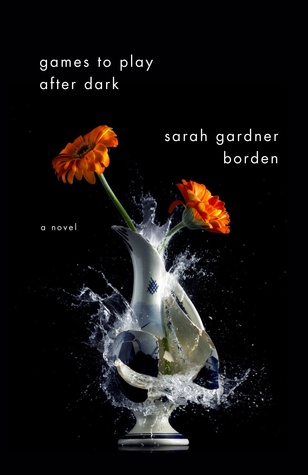
One of the awesome benefits to quitting my TV habit is that I’m finally tackling some of my backlogged reading list. I grabbed Sarah Gardner Borden’s Games to Play After Dark on a whim. It had a neat cover, and the back seemed suspenseful and vaguely reality-TVish.

You'd pick it up and read the back, too.

The novel chronicles the marriage of Kate and Colin, whose initial drunken encounter after a party turns into a whirlwind relationship, wedding, and suburban migration. The cracks start as mildly kinky sex games–she likes her hair pulled or her butt smacked.

From there, the story gets dark, but the gradations are so subtle that I almost didn’t catch what was happening. Kate’s father dies, for example. Colin wants her to talk about it, but she’s still in a state of shock and unwilling to talk. So instead she invents an elaborate story about taking the neighbor down to the laundry room and screwing his brains out while Colin is at work. So Colin, meaning to snap her out of it, throws her in the shower and turns the cold water on.

Even when she started volunteering at a shelter for domestic abuse victims, you are on her side, easily assuming their situation is completely different, black and white, while hers is justified as a rough patch, or an overreaction. It’s hauntingly subtle, and absolutely perfect. I was glad that Borden avoided the typical ending of having Spouse A (usually the woman) triumphantly walk out on Spouse B. I realize that’s the feel-good thing to do, but I can’t help feeling like it’s often a bit of a cop-out. Games to Play After Dark gives an ending that’s not quite happy, not quite dark, but honest.

← Older posts

Enter your email address to subscribe to this blog and receive notifications of new posts by email.

Join 355 other subscribers

The Latest

  • Prices to Pay
  • Why You Should Do NaNoWriMo This Year
  • Back in the US!
  • Hiatus
  • The Briefest of Check-Ins and Some Words About a Bride

Journal History

  • February 2015
  • October 2014
  • September 2014
  • January 2014
  • August 2013
  • July 2013
  • January 2013
  • December 2012
  • November 2012
  • October 2012
  • September 2012
  • August 2012
  • June 2012
  • May 2012
  • March 2012
  • February 2012
  • January 2012
  • December 2011
  • November 2011
  • October 2011
  • September 2011
  • August 2011
  • July 2011
  • June 2011
  • May 2011
  • April 2011
  • March 2011
  • February 2011
  • January 2011
  • December 2010
  • November 2010
  • October 2010

Recurring Thoughts

abandoning perfectionism annoying art Banned Books Week birthday blogging book design books canary review class criticism D.C. elephants engagement epic bosshood essay fiction flash fiction flash friday goals grad school Hunger Games inspiration italo calvino jose saramago judaism lauren winner literature love magazine writing making time to write memoir mfa mudhouse sabbath nanowrimo niche markets nobel prize novel obama oddities oedipus paul guest pie poetry politics progress publishing quarterly review reading religion reports resolutions short stories sometimes goals are hard steps back steps forward submissions substance tanya egan gibson the apartment The Book the elephant's journey top-shelf totally boss wedding what I'm reading when the writing's going well when the writing isn't happening word count work working my butt off writer's block writing writing life YA

Blog at WordPress.com.

  • Subscribe Subscribed
    • Jessica Jonas
    • Join 85 other subscribers
    • Already have a WordPress.com account? Log in now.
    • Jessica Jonas
    • Subscribe Subscribed
    • Sign up
    • Log in
    • Report this content
    • View site in Reader
    • Manage subscriptions
    • Collapse this bar
 

Loading Comments...