• Bio
  • Contact
  • Events and Resources
  • My Writing

Jessica Jonas

Jessica Jonas

Category Archives: Uncategorized

Who’s Your Ideal Reader?

21 Tuesday Feb 2012

Posted by jessicamjonas in Reading, Uncategorized, Writing

≈ 2 Comments

Tags

good readers and writers, ideal reader, nabokov, writing

In International Fiction this week, we’ve been reading a (tiny) sample of Russian writing, including Nabokov’s wonderful essay, “Good Readers and Good Writers.” One of the class writing prompts was to take a page from Nabokov and consider who our ideal reader would be. It’s an eye-opening exercise that I would recommend to any writer. I realized I had a more specific experience in mind than I thought I did when I daydream/hope about how someone will feel reading my work. My thoughts are below. Tell me about your imagined reader in the comments!

My ideal reader, first and foremost, would have to be fascinated by people. This is partly just on the surface level: As a writer, I am primarily interested in people and relationships, and details like place and appearances get filled in later, if at all. Even plot is more or less a peripheral element for me; it’s a vehicle to bring people into the situation where they will reveal themselves. If my reader isn’t interested in people, he or she isn’t going to be my reader for very long.

My reader, as a person, would be sensitive and imaginative and would see reading as a collaborative exercise. I have a hard time right now gauging how overt or subtle my stories are, but I value subtlety. I like subtext. I like writing a conversation where you can hear the echo of another conversation underneath in what isn’t being said, and it takes a sensitive writer and reader to know how to approach such a conversation so that those echoes materialize. I like to explore gestures. I don’t often tell as much as I maybe should about my characters’ clothing or hair or eye color, but I like my reader to know how they move, because I think body language is the easiest way to read someone’s mind. Maybe that’s because I am a fidgeter with a wide range of tics. My reader would have the sustained imagination to see my character in movement throughout the story, and the sensitivity to see the shifts of emotion in the changes in gesture and the cues in conversation. I would want my reader to temporarily become my characters (rather than relate to them), which is why it would be important for my reader to have a spirit of collaboration. It would ideally be almost like an actor doing a study of a character he or she was going to play, getting rid of his or her innate patterns and taking on a new persona to understand a life through a different lens.

The other reason I want my reader to love people is that I want him or her to be so consumed that “person-ness” goes beyond humanity. I want my reader to leave my writing thinking of my story as a kind of person. I don’t mean thinking of the characters as “real,” although that is an element of what I’m envisioning. I think a really good, well-written story ends up having a mood and an idea and a manner of expression that blend together and form a personality. That is why I reread books I love, and why I would want readers to come back to my stories: the story itself becomes someone you want to spend time with. I sometimes pick up particular books when I’m troubled about something, not because the content or plot has a lesson I need, or the book features a character going through my problem, but because the whole story itself has a personality of probing, curiosity, reproach, authority, encouragement, or inspiration that touches something in me.

Ray Bradbury wrote in Zen and the Art of Writing that you should read poetry every day even if you don’t understand it on any level you recognize, because your ganglion will understand. Sometimes when I am in those troubled moods I will read on autopilot and end up talking out loud to the book, saying, “yes, I know what you mean,” or, “but how do I get there?” and it’s because my ganglion is in conversation with the personality of this particular book.

When I was little, I called certain favorite books of mine “oatmeal books.” They weren’t about oatmeal, and didn’t necessarily share a theme or style, or any other characteristic other than the emotional response they brought out in me. I absolutely could not articulate what I meant by that when I was a kid, and it’s hard even now, although in my head I know precisely what I mean. The closest I can get is to compare it to that moment of resonance other people have described, of the thrum of finding a story that works so well that it makes you feel like an extension of it. As a child, I probably picked the word “oatmeal” thinking intuitively of something with warmth and weight, but it also had an element of the inevitable and necessary. When it was a winter morning, you were fundamentally entitled to a bowl of hot oatmeal, as a human being. When I hit that certain reading mood, I would have ripped the house apart to find one of my oatmeal books. I craved this kind of reading experience as intently as any physical need, and when I had it, I was enveloped in a state of complete peace and comfort, even if the book was sad, because I had connected with the exact right book. The ideal, of course, would be to create something like that.
Scissors Beat Paper

19 Thursday Jan 2012

Posted by jessicamjonas in Uncategorized, Writing

≈ Leave a comment

Tags

editing, writing, writing life

One of the fundamental rules of life is that scissors beat paper. Another is that scrolling is a bitch. Put them together, and you have the obvious solution to one of my biggest pet peeves in editing.

Putting a story together when you’re in the early stages can be a lot like putting together a puzzle that’s gotten mixed up with another box. In the beginning, there are bound to be scenes or scraps that don’t fit with the larger picture of the story, and it’s about as likely that other parts will be missing. So what is a writer to do?

Cut the thing up, of course! I started applying scissors to my work in college, on an essay I was writing about the year I spent half of Easter break in the Netherlands and half in Spain. I was having a terrible time trying to balance the parts and figure out how to splice the stories. In a fit of desperation, I printed it out and took a pair of scissors to the thing, and I realized that it was a lot easier to physically shuffle sections of my story around than cut and paste virtually.

The story I’m working on now doesn’t hop between places, but there are a lot of elements going on–a pregnancy, disease, the question of what to do with aging parents, an adult sister with a beloved baby doll, the question of how a family is supposed to come together when all its members begin creating separate lives. Some of it is more front-and-center, some of it may not even get an overt mention, but I believe in the importance of knowing more than you tell. I’m still working on what needs to go in and what needs to stay out, so I’ll be cutting my story up and spreading it over the living room floor.

What are your editing tricks?

2011 Reading Roundup

29 Thursday Dec 2011

Posted by jessicamjonas in Uncategorized

≈ 2 Comments

Yesterday, I finally made it to the end of Ulysses, James Joyce’s near-incomprehensible masterpiece, the one I’ve been trudging through since May. And with that son of a gun safely under my belt, I’m ready to take a look through  my full reading list for 2011.

First, let’s look at the best and worst of my reading year. Here’s what you should pick up on your next library visit or bookstore shopping spree:

Jessica’s Top 5:

  1. Madame Bovary, by Flaubert. This novel amazed me with its vivid, real protagonist; the timelessness of the plot; and the gorgeous writing, which is both beautiful to read and performs the fantastic feat of making every word and every scene feel necessary in a 300-page book. Madame Bovary reads like music, and is a must-read for any aspiring fiction or poetry writer.
  2. Disgrace, by Coetzee. This story of a professor who is exiled for having an affair with a student, and who struggles to understand his daughter’s choice of a dangerous life in the country, opened my eyes to the importance of having something to say when I write, instead of focusing only on the best way to say it. Coetzee’s keen attention to race, the complications that still exist between men and women, and even the relationship between humans and animals, will make you think about what it means to be human.
  3. How to Buy a Love of Reading, by Tanya Egan Gibson. This book made me laugh, cry, and yell at the characters. It also had the unexpected bonus of putting me in contact with the author (she found my blog, read the review, and wrote me an awesome thank-you. Authors are cool peeps).
  4. Poetry 180, selected by Billy Collins. One of the things I love about this man is that he shares a cause close to my heart–the desire to reconnect students with the arts. Poetry is one of those arts that unfortunately can seem less accessible and deeply enjoyable than it really is. This book is a great way to rediscover poetry if you’re new/wary, and to enjoy some fun and unexpected stuff if you’re a fan. A plus–almost all the poems are by living writers, so if you like someone in particular, you can still write them fan mail.
  5. The Anti-9-5 Guide, by Michelle Goodman. This smart, handy guide is a great resource for anyone feeling a little constricted by the 9-5 grind. What I love is that besides offering freelance and self-employment tips, Goodman also talks about negotiating flexibility within a conventional position. Some people like their office gig just fine, but want to be able to walk the kids to the bus, or are willing to work 4 10-hour days to have regular long weekends. Goodman recognizes this group as well, which is a refreshing change from the all-or-nothing attitude of some career books.
And the ones you can skip:
  1. The Kid, by Sapphire. This story of an abused child who becomes an abuser, then a dancer, then possibly a crazy person, is graphic in a way that feels less edgy and more shock for shock’s sake. Better: Read Push, Sapphire’s earlier (and much better) novel.
  2. The 4-Hour Workweek, by Timothy Ferriss. I suppose I got what I should have expected–this book isn’t about engaging your passions in your job, but rather how to outsource or ignore as much as possible until work functions smoothly without you. Fine if you own a company and wish you didn’t have to be around. Less fine if you’re in a lower position where your bosses may decide that since the company works well without you, maybe you shouldn’t be on payroll. Much less fine if your goal is to cultivate work that is meaningful to you, instead of hiring a personal assistant in India to take care of your mundane tasks. Better: Read The Anti-9-5 Guide, by Michelle Goodman.
  3. Horns, by Joe Hill. Oh, Horns. You strange, sad, silly little book, with your predictable characters and last-minute plot shenanigans. Your story of a man who wakes up with devil horns and the ability to make others confess their darkest secrets didn’t stand a chance. Better: Read A Good and Happy Child, by Justin Evans, about a man who’s memories of being haunted by a demonic “friend” resurface with the birth of his son.
  4. Thinner, by Stephen King. Joe Hill’s dad makes my naughty list this year, too, with a plotline as thin as the main character (ouch, sorry, but I couldn’t resist). A man hits a Gypsy woman and gets cursed by her father to lose weight. I’ve seen you do much better, Stephen King. Better: Want scary? Read The Shining, by Stephen King. Want an anorexia tale? Read Wintergirls, by Laurie Halse Anderson.
  5. The Snow Goose, by Paul Gallico. Ugh. The frickin’ Snow Goose, people! The tale is of an ugly hunchback (whose physical abilities are not hampered AT ALL by the several deformities he has) who falls in love with the young blond thing who brings him a wounded goose and yammers at him in such thick eye dialect it’s a miracle he understood a word she said. Written in 1941, this guy won the O. Henry Prize, but was also already criticized for being overly sentimental. In this age of irony, there’s so much sentiment and schmaltz that your eyes will cake over in sugar crystals halfway through. Better: For a more modern, magical love story, try The Night Circus, by Erin Morgenstern. Or read The Snow Goose, but have Sh*t My Dad Says on hand as a chaser.

My goal was to read 52 books, although I more or less read at the same speed I would have anyway. Fortunately, my baseline is a good one, and I’m closing the year with 60. Here’s the list, starting with the first book I read this year:

  1. The Mendacity of Hope (Roger D. Hodge)
  2. Lovecraft Unbound (Ellen Datlow, ed.)
  3. Blood Roses (Francesca Lia Block)
  4. The Elephant’s Journey (Jose Saramago)
  5. Push (Sapphire)
  6. Sh*t My Dad Says
  7. Best American Short Stories 2008
  8. The House of Discarded Dreams (Ekaterina Sedia)
  9. Mudhouse Sabbath (Lauren F. Winner)
  10. The Hound of the Baskervilles (Arthur Conan Doyle)
  11. Animal’s People (Indra Sinha)
  12. More Tales of the Unexpected (Roald Dahl)
  13. Eunoia (Christian Bok)
  14. The Collected Works of Billy the Kid (Michael Ondaatje)
  15. The Year of Living Biblically (A.J. Jacobs)
  16. Equus (Peter Shaffer)
  17. Drinking Closer to Home (Jessica Anya Blau)
  18. Eric (Terry Pratchett)
  19. Machine of Death (Ryan North, ed.)
  20. The Snow Goose (Paul Gallico)
  21. The Importance of Being Ernest (Oscar Wilde)
  22. How to Buy a Love of Reading (Tanya Egan Gibson)
  23. Fanny, Herself (Edna Ferber)
  24. Attachments (Rainbow Rowell)
  25. Poetry 180 (Billy Collins, ed.)
  26. Cheerful By Request (Edna Ferber)
  27. Horns (Joe Hill)
  28. The Help (Kathryn Stockett)
  29. Love Lyrics (James Riley)
  30. Kiss & Tell (MariNaomi)
  31. Orientation (Daniel Orozco)
  32. Knock Your Socks Off Service (Performance Review Associates)
  33. Witches Abroad (Terry Pratchett)
  34. Feet of Clay (Terry Pratchett)
  35. Games to Play After Dark (Sarah Gardner Borden)
  36. The Fiction Class (Susan Breen)
  37. A Good and Happy Child (Justin Evans)
  38. Oedipus the King (Sophocles)
  39. 20 Under 40 (Deborah Treisman, ed.)
  40. The 4-Hour Workweek (Timothy Ferriss)
  41. Coraline (Neil Gaiman)
  42. Disgrace (J.M. Coetzee)
  43. Malina (Ingeborg Bachmann)
  44. Miracles, Inc. (T.J. Forrester)
  45. The Anti-9-5 Guide (Michelle Goodman)
  46. A Sorrow Beyond Dreams (Peter Handke)
  47. Tsing (David Albahari)
  48. The Kid (Sapphire)
  49. Your Wildest Dreams (Within Reason) (Mike Sacks)
  50. Where Did You Sleep Last Night? (Danzy Senna)
  51. Thinner (Stephen King)
  52. Light in August (William Faulkner)
  53. Nanny Returns (Emma McLaughlin, Nicola Kraus)
  54. The Pile of Stuff at the Bottom of the Stairs (Christina Hopkinson)
  55. Changing My Mind: Occasional Essays (Zadie Smith)
  56. Madame Bovary (Gustave Flaubert)
  57. Snuff (Terry Pratchett)
  58. The Night Circus (Erin Morgenstern)
  59. Madame Bovary’s Daughter (Linda Urbach)
  60. Ulysses (James Joyce)

10,000 Words!

05 Saturday Nov 2011

Posted by jessicamjonas in Uncategorized

≈ Leave a comment

Tags

apartment, nanowrimo, pie, when the writing's going well

The 10K mark has historically been the tipping point where I knew I was going to have to see NaNo all the way through, and I just hit it! A day early, no less. I have no doubt I’ll need the word buffer later, but at the moment I’m riding high, and I have an apple pie in the oven to boot. My whole apartment smells like cinnamon and butter. Life is good.

T-Minus 1 Week

24 Monday Oct 2011

Posted by jessicamjonas in Growing Up, Uncategorized

≈ 2 Comments

Tags

balance, nanowrimo

Give or take a few hours, NaNoWriMo kicks off in a week! I’m definitely nervous–I don’t have copious amounts of time, and my ideas are sketchy at best–but there’s something about this writing community that makes me want to be a part of it regardless.

The plan this year is to crank out 50,000 worth of short stories. I’d say, “as many as possible,” but that logic train goes the direction of 500 100-word drabbles, when I’d rather have a mix of longer and shorter stories.

Beyond that, not too much to share. Class is kicking into high gear. I’ve got about 40 pages left to read in Light in August (Faulkner: pretty cool guy. Glad we’re reading him), one other book for next week, and then I get to swing into two translations of Madame Bovary in preparation for the final translation project. I’m slowing down on fiction to save lots of ideas for NaNo, and getting ready to throw a Halloween bash at the church on Sunday. I even had time to make an artichoke tortilla, which came out golden and beautiful. Life’s good, autumn is great, and as soon as I get a chance I’ll post properly about NaNo prep or the amazing stuff I’m reading or interior design or something, but for the moment I’m going to head outside and take a moment to breathe.

The Help

10 Wednesday Aug 2011

Posted by jessicamjonas in Books, Uncategorized

≈ Leave a comment

Tags

canary review, guest posts, kathryn stockett, the help, what I'm reading

First off, I have exciting news: I’ve been invited to write my very first guest blog post! The Canary Review has just posted the first article in a series about the best and worst books people have read, written by yours truly. I’m completely thrilled, and I invite you to check out the Canaries and what they have to offer!

Conversely, should you happen to have made your way here from The Canary Review, I am happy you are here! I would put out cookies and juice for you, but I can’t, because we are on the Internet.

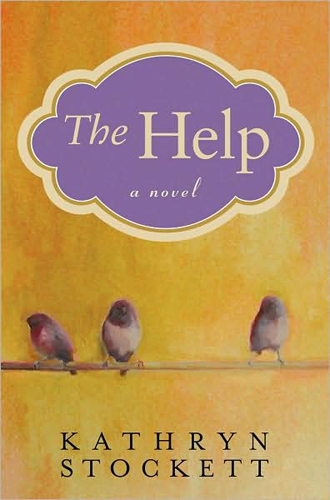
So instead, I will tell you about a book. I just finished The Help, by Kathryn Stockett, and I feel a little awkward about the timing of this announcement, since it’s pretty obvious that I’m reading it in order to go see the movie properly, but whatever. It’s an awesome book, and I want to tell you about it, so you can read it and see the movie properly.

The original cover of a book is always better than the movie cover.

The Help moves between the voices of three women living in Jackson, Mississippi in the 1960s: Aibileen, Minny, and Skeeter. Aibileen and Minny are both black maids–Aibileen is caring for her seventeenth white child, which sometimes slightly eases and sometimes amplifies the pain of losing her only child a few years before. Minny is working to support her own family, but has cycled through multiple jobs because she cannot be the calm, restrained, half-invisible person her employers want her to be (which, incidentally, makes her tremendous fun to read). Skeeter is white and newly returned to Jackson from college with dreams of being a writer. Distance has given her a little needed perspective, and she has come up with an idea.

Skeeter’s idea to write a tell-all book about the lives of black domestic help, interviewing maids to get her stories, doesn’t start out as an altruistic project. She has a vague idea that the book could change things, but sees this as a warm, positive benefit to the larger story of her own developing success. This isn’t so much because she is selfish as it is her continuing naivete, but it makes her transformation particularly interesting. As she realizes the possible consequences the maids face by helping her, even anonymously (various penalties either happen or are suggested, from being blacklisted from work and therefore forced into eventual homelessness, to having tongues cut out by racists), Skeeter begins to see herself as only playing a role in a larger issue of justice.

Minny and Aibileen deepen, too, of course. Telling their stories, seeing the effect of the project on other maids, and ultimately seeing the book published is a kind of liberation and a kind of danger that neither woman expected to experience in her life. There are moments of sacrifice and courage and a richer, more meaningful maturity in each of these adult women’s lives by the end of the book. Not because they were immature or complacent before–quite the opposite–but because for them, this story is about claiming power and justice directly, instead of using pranks (Minny) or secret attempts to teach equality and kindness (Aibileen) as substitutes for what they really need. Admittedly, as substitutes go, these are great ones to read–Minny’s revenge is a hair-raiser, and Aibileen’s interactions with Mae Mobley, the two-year-old daughter of her employer, are both tender and powerful.

The story is compelling, the characters are meaningful, but I always note the writing style. I am happy to report that The Help is solidly written, as well! One thing in particular was Stockett’s use of dialect. It is incredibly difficult to write eye dialect effectively, without it sounding hokey and condescending. Stockett has the ear, though, and the tact, and Aibileen and Minny get voices that are distinctive and authentic and respected by their author. Major kudos there.

In short, as always, I would recommend reading the book before seeing the movie. It’s not just a matter of principle here, though–I can’t speak to the film adaptation (yet) but The Help, the novel is a beautiful, masterful story and well worth every attention and award it can get.

What Do Project Managers Do?

05 Friday Aug 2011

Posted by jessicamjonas in Publishing, Uncategorized, Work, Writing

≈ Leave a comment

Tags

copyediting, project manager, proofreading, publishing, work

One of the things I love about WordPress is that I can see what searches led people to my site. Mostly it’s my name, or Nick and Sheila Pye (not totally sure why–maybe they don’t get written about often enough? Anyway.). Today, though, there was a whole question:

“I am a new Project Manager. What will I receive on my first day of work?”

And I thought, “Huh. I have been a Project Manager for all of five weeks and I already take it for granted that I know what it is that I do.” And then I realized that probably most of my friends don’t know what I do. So, in case you wondered:

Being a Project Manager is primarily a scheduling job. When I get assigned a book, the first thing I have to do is review the schedule I get from the publisher. They’ll tell me when they need to see design samples (pages with sidebars, figures, illustrations, etc. set in with the text) and copyediting samples, when the author needs to get a copy of the book to make final comments and changes (and answer copyeditors’ questions), and when the book needs to be ready to go to the printer. From that assignment schedule, my job is to know what the Art Department and copyeditors are doing so I can make sure the book gets done on time.

Being a Project Manager may also mean doing a lot of copyediting yourself, and a heck of a lot of proofreading. I’m in a small company, so if we can avoid outsourcing copyediting too much, we do.

Note: For those who are unsure of the difference, copyediting means checking a manuscript not only for basic grammar and spelling errors, but also making sure the work fits the publisher’s style (do you say email, e-mail, or E-mail? Is Internet capitalized? Is “timeframe” one or two words?). Proofreading is comparing versions of a manuscript to make sure all the edits from the previous draft made it into the next version, and are both consistent and correct. When you might have half a dozen people editing one chapter, it’s important to look over and make sure one person isn’t adding commas while another is taking them out.

Finally, since this is a small office and we don’t have a receptionist or secretary, my day also involves some administrative work: answering phones, scanning files to colleagues overseas, etc. My boss also sometimes asks for additional projects, such as learning how to use Sharepoint and give short presentations on it.

Overall, I’d estimate I spend about 15%-25% of my time managing schedules and communicating between departments, about 70%-80% of my time copyediting and proofreading, and 5%-10% of my time on administrative tasks.

3 Ways to Distinguish Between Fantasy and Magical Realism

30 Saturday Jul 2011

Posted by jessicamjonas in Books, Uncategorized, Writing

≈ 9 Comments

Tags

fantasy, genre, magical realism

I’ve read a fair amount of fantasy in my day, enough to understand that the genre is split into sub-categories and sub-sub-sub-categories that look as different next to each other as a Western novel and a psychological thriller. The fact that Robert Jordan’s classic (if formulaic) Wheel of Time high fantasy series shares shelf space with Francesca Lia Block’s fractured, whimsical stories of fairies in L.A. boggles my mind.

Actually, what really boggles my mind is the fact that libraries and bookshelves continue to insist on combining science fiction and fantasy, as though they weren’t fundamentally opposite from each other, but that’s another story for another day.

What I’ve been thinking about lately, though, is the tissue paper barrier separating fantasy and magical realism. Some people, in fact, don’t think there’s any real distinction between the two at all (Terry Pratchett called magical realism a “polite way of saying you write fantasy”). I think there is a difference, though, and, just as importantly, a reasonably clear way to tell:

1. What is the character’s reaction to the magical event? In a fantasy novel, the introduction of a magical element is cause for immediate wonder or alarm. In magical realism, characters will take magic at face value, or treat it with no more emotion than something that is possible in the ‘real’ world.

2. Does the magical element seem to be a symbol? Magical realism often uses the supernatural in almost a poetic way–in one story I read, white moths flew out of the mouth of a dead grandmother when the granddaughter finished washing the body. In fantasy, for the most part, a dragon is a dragon.
Note: It is, of course, always possible to find metaphorical meaning in fantasy novels as well. The Harry Potter books alone have sparked countless interpretations. The distinction for me is that fantasy’s magic metaphors are often extremely clear (Aslan=Jesus) or extremely general (discovery of magic=discovery of self/coming of age), whereas magical realism often has moments that are both subtler and more precise (like the moths in the story I mentioned).

3. What does the magical element do for the plot? In fantasy, the magic is the catalyst to the plot, its lifeblood. Magical events or characters are inextricably tied to the story. In magical realism, you could theoretically strip the magic out and have a functioning story. Magic deepens and enriches certain moments, but doesn’t usually drive the plot forward.

So there you have it! These rules aren’t completely set in stone–I’m sure plenty of people can come up with exceptions–but these three guidelines can give you a pretty good sense of what you are reading.

Because Sometimes Spam is Poetry

20 Wednesday Jul 2011

Posted by jessicamjonas in Poetry, Uncategorized, Wedding

≈ Leave a comment

Tags

poetry, spam, wedding, white gold wedding band

The other day, I was daydreaming about wedding things, and all the plans Andrew and I have for the next year and change of getting ready for our wedding. Suddenly, a brilliant idea occurred to me.

“I’m on WordPress,” I thought. “I bet you a hundred peaches there are bodzillions of wedding blogs on this thing.”

So I clicked the “Wedding” tab on WordPress’s searcher, and lo and behold, the very first featured blog post I saw seemed perfectly suited to my taste. It was titled “White Gold Wedding Band,” which is exactly the kind of ring Andrew and I are planning on selecting for ourselves. I clicked the link, eager to hear this blogger’s take on white gold, where I could find the best white gold wedding rings, etc.

I have since performed the blog post, “White Gold Wedding Band” as a piece of slam poetry for friends and family members, and now it’s time to share it with the world. I’ve added line breaks to guide the flow of the piece, but I have not altered a single word. Ladies and gentlemen:

Essential Items within Considerate: White Gold Wedding Band

White Gold Wedding Band universally stay in the finger
no matter what the wearer achieve,
plus when they do their responsibilities throughout the domicile.

This reflects how they clutch their dear thing
very dearly,
although it can in fact damage the ring.

White Gold Wedding Band.

are better place in a secure point whilst you accomplish your cleaning otherwise crop growing.
Pick a secure site in your bedroom or you able to lynch the ring on a choker, hence still when you are not togged up in the ring,
you still bear it
all-round
everyplace you walk off.

An essential thing to bear in mind is to use a clean collar band
completed of lace, twine,
if not thread
and hold in beneath your top for shelter points.

With intention of remain the sheen, White Gold Wedding Band.

should to be polished regularly treating appropriate cleaner.

White Gold Wedding Band.

can be full to a costume jewelry warehouse for skilled clean-up
otherwise polished at dwelling
using jewelry polish kit or watered down soft detergent solution.
An irregular enhance wish
also be the ring
in addition the charms
in a fitness.

For this, you should allow it to the experts.

Why “Taking the Bull by the Horns” Feels Particularly Apt

28 Monday Feb 2011

Posted by jessicamjonas in Uncategorized, Writing

≈ Leave a comment

Tags

publishing, submissions, writing, writing life

“Submission” is a funny word for the process of sending out work. It makes it feel like it should be a passive process. My mind goes for the classical Greek metaphor, imagining some demure temple acolytes padding silently toward the altar of Publishing, clean white papers ready in hand for the sacrifice. Then, once it’s gone, it’s gone, to be accepted or rejected according to the whims of the Editors.

That’s the tricky part, you see: the acceptance or rejection. That’s what means that submissions cannot be passive, or all that submissive. It’s a lot more like the version of sacrifice where you need six or eight muscular men and thick ropes to drag some roaring animal up to where it can already smell the blood of the others. The Publishing Gods are more known for their silence and disapproval than their welcome, you see, so offerings have to be frequent and animated enough to call the attention of those who see thousand similar creatures every day. It is exhausting even to think about. Maybe there are other writers who can flippantly whip submissions into the mail, but I am not one of them. I need a certain amount of prep time to psych myself into looking up magazines, reading guidelines, looking up whether that editor with the ambiguous name is a Mr. or Ms., and shuffling through the stack of things I want to send out. By the time I get through two or three of these, I’m feeling pretty beat, which is not so good if I figure an honest-to-goodness freelance writer must have to send out dozens every week.

I do realize, however, that it’s really silly to make myself a cute little writer’s site if I’m only going to be publishing blog posts. So today I sent off five pieces in one swoop, all different: a memoir essay, a story, a handful of poems, an article, some recipes. If nothing else, you cannot fault me for not offering something from any genre I know how to write. And it does feel relieving to see them crossed off my list, even if I’m feeling a little drained. Now to see if the offerings appeal, right? Editors, I believe it is your move.

← Older posts
Newer posts →

Enter your email address to subscribe to this blog and receive notifications of new posts by email.

Join 355 other subscribers

The Latest

  • Prices to Pay
  • Why You Should Do NaNoWriMo This Year
  • Back in the US!
  • Hiatus
  • The Briefest of Check-Ins and Some Words About a Bride

Journal History

  • February 2015
  • October 2014
  • September 2014
  • January 2014
  • August 2013
  • July 2013
  • January 2013
  • December 2012
  • November 2012
  • October 2012
  • September 2012
  • August 2012
  • June 2012
  • May 2012
  • March 2012
  • February 2012
  • January 2012
  • December 2011
  • November 2011
  • October 2011
  • September 2011
  • August 2011
  • July 2011
  • June 2011
  • May 2011
  • April 2011
  • March 2011
  • February 2011
  • January 2011
  • December 2010
  • November 2010
  • October 2010

Recurring Thoughts

abandoning perfectionism annoying art Banned Books Week birthday blogging book design books canary review class criticism D.C. elephants engagement epic bosshood essay fiction flash fiction flash friday goals grad school Hunger Games inspiration italo calvino jose saramago judaism lauren winner literature love magazine writing making time to write memoir mfa mudhouse sabbath nanowrimo niche markets nobel prize novel obama oddities oedipus paul guest pie poetry politics progress publishing quarterly review reading religion reports resolutions short stories sometimes goals are hard steps back steps forward submissions substance tanya egan gibson the apartment The Book the elephant's journey top-shelf totally boss wedding what I'm reading when the writing's going well when the writing isn't happening word count work working my butt off writer's block writing writing life YA

Blog at WordPress.com.

  • Subscribe Subscribed
    • Jessica Jonas
    • Join 85 other subscribers
    • Already have a WordPress.com account? Log in now.
    • Jessica Jonas
    • Subscribe Subscribed
    • Sign up
    • Log in
    • Report this content
    • View site in Reader
    • Manage subscriptions
    • Collapse this bar
 

Loading Comments...