Poke the Box

Tags

, , , , ,

The first week of 2012 is over, and I’m already glancing behind me to make sure I hit my resolutions (almost all of mine are incremental, do-this-x-times-per week things, which is good because baby steps, but it means I have to hold myself accountable all the time). Did I meet my gym goals? Cook enough new recipes? Spend enough time writing? Make time to see my friends? The answer’s yes, fortunately–the first week of a new year does wonders for discipline and optimism–but what if I didn’t look at my resolutions as a list of categories and boxes to check off? From what I can see, most resolutions boil down to a promise to start things.

Enter Seth Godin and his manifesto, Poke the Box. Godin’s main point in this book is that, while we may be talented in a variety of ways, one skill that never seems to be actively taught or even encouraged is that of initiating. It’s a pretty glaring omission, when you think about it. Without having the chutzpah to try something new, nothing would ever get invented, even in a room full of the brightest and most creative people around. Unfortunately, in many schools and workplaces, people fall back on safe and familiar. Godin urges the reader to commit to making initiative a way of life.

It’s a cool read. The book is slim and broken into neat mini-sections, so it would be easy to polish off in an hour, tops, but I’d suggest you don’t do that. Spacing it out will give you some time to percolate over things like the lizard brain (the fight-or-flight instinct that fears change), how to embrace things like risk and failure, and why you might be morally obligated to be as creative as possible. The book contains few, if any, how-to instructions. Godin’s whole point is that we need to be the mapmakers, not another handful of tourists looking for a route to follow. But even without concrete tips, the book has punch, and left me with a new sense of energy toward my job and writing.

It’s a new year, and you’re probably already charged to make it as great as possible. But maybe it’s a mistake to limit that resolve to things like, “eat healthier food,” or “reduce smoking by 50%.” Maybe it’s time for bigger adventures, and for making inspiration and innovation something we do every day. Read Poke the Box. At worst, it’ll fortify you to stick to your resolutions past January twenty-something this year. At best, it’ll make you rethink how you approach goals and prod you toward something even bigger and braver.

How Balinese Puppets Can Make You a Better Writer

Tags

, , , ,

After dreaming and drooling over photos of white beaches and turquoise water, Andrew and I narrowed down our favorite honeymoon choices and made our decision: we’re going to Bali!

Pictured: Honeymoon

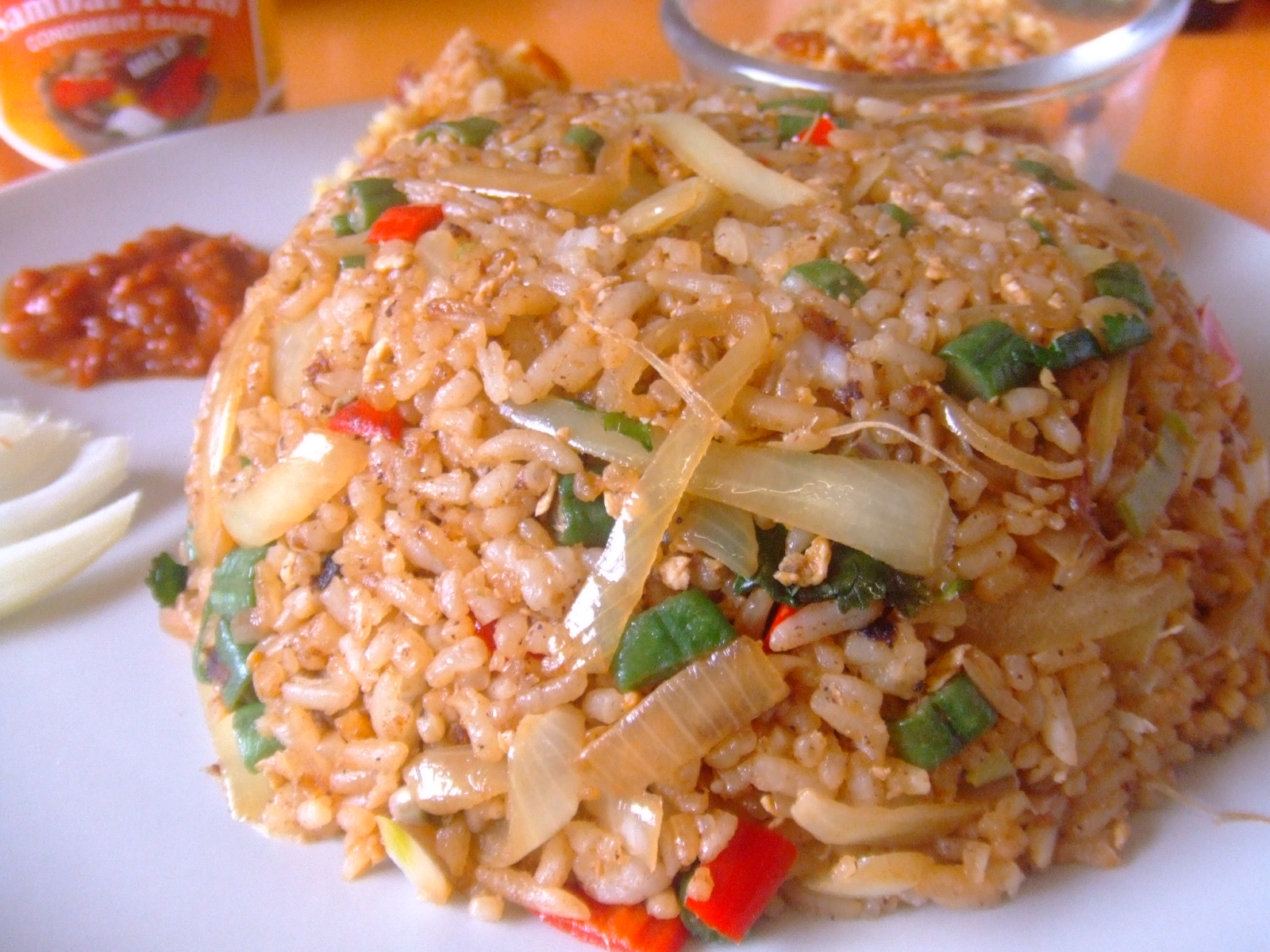
I have a teeny-tiny smidgen of history with Bali already. My mother is Dutch, and while you wouldn’t necessarily connect Holland with Indonesia, you can. The Netherlands colonized Indonesia back in the day, and the result was that when WWII broke out, many Indonesian refugees made their way to the Netherlands (which must have been quite the culture shock). I grew up eating solid, one-pot, Dutch farmer’s dishes, but also kroupouk and nasi goreng and gado gado salad (even for Christmas dinner, one memorable year).

Rice, pork, leeks, egg, peanut butter sauce, hot sauce, and dried shredded coconut? Yes, please!

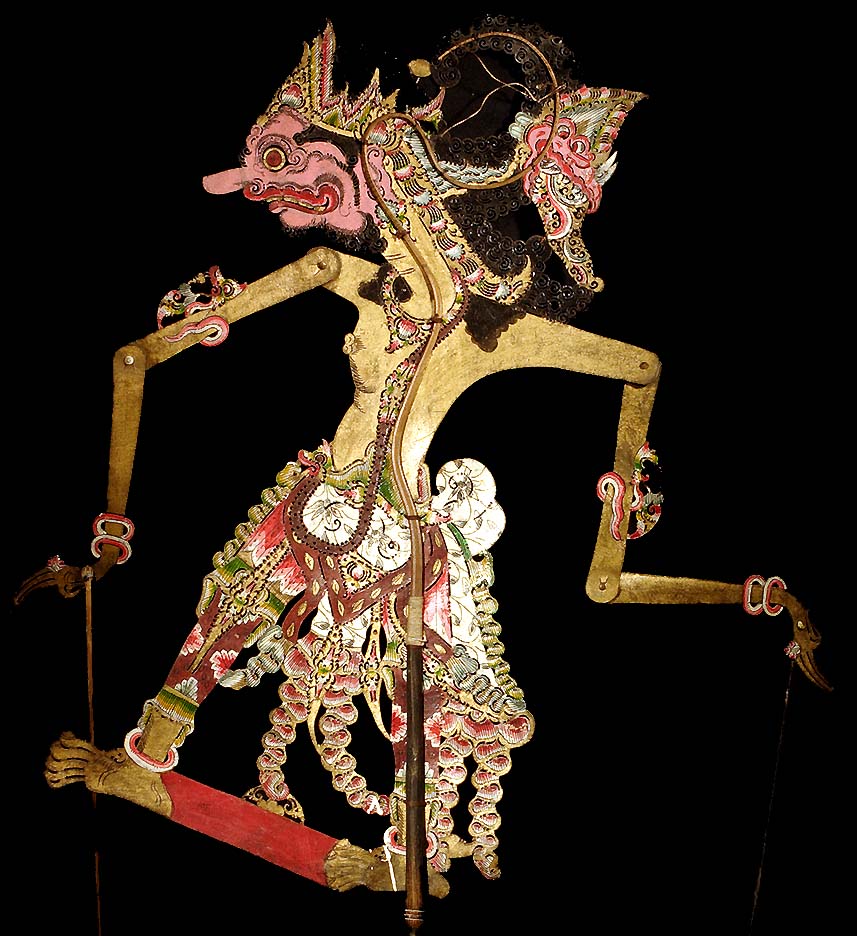
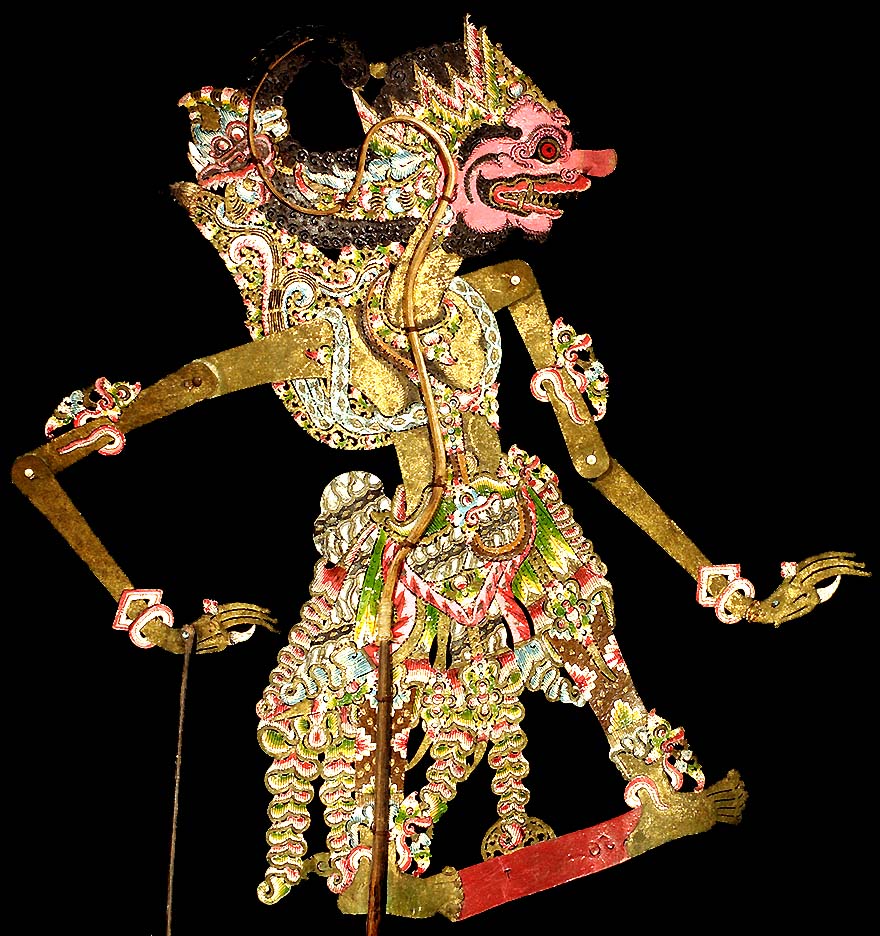
I also grew up with shadow puppets. I didn’t know what they were for years. They hung in our hallway, men and women with sharp profiles and richly detailed clothing, jeweled ornaments in their hair and long, thin sticks dangling from their wrists.

Sometimes I’d stop on my way to the family room or my bedroom to examine the details of their costumes, and more often I’d walk right by. They were part of my everyday scenery. Then I learned that, used properly, no one would see all their intricate beauty. Shadow puppets, as the name implies, are performed from behind a sheet, illuminated by candlelight. Their strange poses and angular faces are made that way so viewers can distinguish one silhouette from another, and to show the nature of the character (a demon would have a wilder outline than a prince, for example). I couldn’t understand why someone would spend so much time and effort on something that was going to be hidden from the audience.

Now that I’ve jumped into editing short stories for my upcoming collection, A Moment of Unexpected Closeness (it’ll be published in 2013!), I realized there are several reasons why it makes sense to put the time and effort into all that beautiful, unseen detail.

1.      It shows respect for your creation. Many Balinese shadow puppet performances are religious or historical, so they want characters representing deities or respected historical figures to look their best. My characters are made up, but I care about them, so I’m learning to flesh them out. A guy who buys the creepy artifact from the dusty old store is as stock as stock characters get. A former museum curator with a borderline kleptomaniac obsession with rare totems has a lot more at stake when he enters the store, and there’s a lot more that can go wrong.

  1. It reminds you not to show everything off. Knowing everything about your character is good—it means they’ll come across more natural and three-dimensional. Proving to the reader that you’ve got your protagonist’s report cards, dental history, and high school crushes memorized is no good. The people watching the shadow puppets don’t need more than the silhouette and good narrative. Provide the shape, and most readers will fill in the features for you.
  2. It proves that the characters don’t run the story—the writer does. Balinese shadow puppet performers are regarded as a kind of mystical blend of poet, philosopher, storyteller, and holy man or woman. A shadow show only has one person operating the whole cast of characters, and the performer is also responsible for chanting the narrative of the story and directing the orchestra with his or her feet (because obviously his or her hands are too busy)! It’s fun sometimes to talk about a character running away with the story, but ultimately it comes down to the writer’s invention, and I love thinking that the experience comes down to the well-crafted shape of the characters and the power of the performer’s story.

I’m hoping Andrew and I can make it to a shadow puppet performance during our honeymoon so I can see the art I grew up with the way it was meant to be seen. Until then, I’ll keep a picture on my bulletin board, to remind me what I’m trying to do.

2011 Reading Roundup

Yesterday, I finally made it to the end of Ulysses, James Joyce’s near-incomprehensible masterpiece, the one I’ve been trudging through since May. And with that son of a gun safely under my belt, I’m ready to take a look through  my full reading list for 2011.

First, let’s look at the best and worst of my reading year. Here’s what you should pick up on your next library visit or bookstore shopping spree:

Jessica’s Top 5:

  1. Madame Bovary, by Flaubert. This novel amazed me with its vivid, real protagonist; the timelessness of the plot; and the gorgeous writing, which is both beautiful to read and performs the fantastic feat of making every word and every scene feel necessary in a 300-page book. Madame Bovary reads like music, and is a must-read for any aspiring fiction or poetry writer.
  2. Disgrace, by Coetzee. This story of a professor who is exiled for having an affair with a student, and who struggles to understand his daughter’s choice of a dangerous life in the country, opened my eyes to the importance of having something to say when I write, instead of focusing only on the best way to say it. Coetzee’s keen attention to race, the complications that still exist between men and women, and even the relationship between humans and animals, will make you think about what it means to be human.
  3. How to Buy a Love of Reading, by Tanya Egan Gibson. This book made me laugh, cry, and yell at the characters. It also had the unexpected bonus of putting me in contact with the author (she found my blog, read the review, and wrote me an awesome thank-you. Authors are cool peeps).
  4. Poetry 180, selected by Billy Collins. One of the things I love about this man is that he shares a cause close to my heart–the desire to reconnect students with the arts. Poetry is one of those arts that unfortunately can seem less accessible and deeply enjoyable than it really is. This book is a great way to rediscover poetry if you’re new/wary, and to enjoy some fun and unexpected stuff if you’re a fan. A plus–almost all the poems are by living writers, so if you like someone in particular, you can still write them fan mail.
  5. The Anti-9-5 Guide, by Michelle Goodman. This smart, handy guide is a great resource for anyone feeling a little constricted by the 9-5 grind. What I love is that besides offering freelance and self-employment tips, Goodman also talks about negotiating flexibility within a conventional position. Some people like their office gig just fine, but want to be able to walk the kids to the bus, or are willing to work 4 10-hour days to have regular long weekends. Goodman recognizes this group as well, which is a refreshing change from the all-or-nothing attitude of some career books.
And the ones you can skip:
  1. The Kid, by Sapphire. This story of an abused child who becomes an abuser, then a dancer, then possibly a crazy person, is graphic in a way that feels less edgy and more shock for shock’s sake. Better: Read Push, Sapphire’s earlier (and much better) novel.
  2. The 4-Hour Workweek, by Timothy Ferriss. I suppose I got what I should have expected–this book isn’t about engaging your passions in your job, but rather how to outsource or ignore as much as possible until work functions smoothly without you. Fine if you own a company and wish you didn’t have to be around. Less fine if you’re in a lower position where your bosses may decide that since the company works well without you, maybe you shouldn’t be on payroll. Much less fine if your goal is to cultivate work that is meaningful to you, instead of hiring a personal assistant in India to take care of your mundane tasks. Better: Read The Anti-9-5 Guide, by Michelle Goodman.
  3. Horns, by Joe Hill. Oh, Horns. You strange, sad, silly little book, with your predictable characters and last-minute plot shenanigans. Your story of a man who wakes up with devil horns and the ability to make others confess their darkest secrets didn’t stand a chance. Better: Read A Good and Happy Child, by Justin Evans, about a man who’s memories of being haunted by a demonic “friend” resurface with the birth of his son.
  4. Thinner, by Stephen King. Joe Hill’s dad makes my naughty list this year, too, with a plotline as thin as the main character (ouch, sorry, but I couldn’t resist). A man hits a Gypsy woman and gets cursed by her father to lose weight. I’ve seen you do much better, Stephen King. Better: Want scary? Read The Shining, by Stephen King. Want an anorexia tale? Read Wintergirls, by Laurie Halse Anderson.
  5. The Snow Goose, by Paul Gallico. Ugh. The frickin’ Snow Goose, people! The tale is of an ugly hunchback (whose physical abilities are not hampered AT ALL by the several deformities he has) who falls in love with the young blond thing who brings him a wounded goose and yammers at him in such thick eye dialect it’s a miracle he understood a word she said. Written in 1941, this guy won the O. Henry Prize, but was also already criticized for being overly sentimental. In this age of irony, there’s so much sentiment and schmaltz that your eyes will cake over in sugar crystals halfway through. Better: For a more modern, magical love story, try The Night Circus, by Erin Morgenstern. Or read The Snow Goose, but have Sh*t My Dad Says on hand as a chaser.

My goal was to read 52 books, although I more or less read at the same speed I would have anyway. Fortunately, my baseline is a good one, and I’m closing the year with 60. Here’s the list, starting with the first book I read this year:

  1. The Mendacity of Hope (Roger D. Hodge)
  2. Lovecraft Unbound (Ellen Datlow, ed.)
  3. Blood Roses (Francesca Lia Block)
  4. The Elephant’s Journey (Jose Saramago)
  5. Push (Sapphire)
  6. Sh*t My Dad Says
  7. Best American Short Stories 2008
  8. The House of Discarded Dreams (Ekaterina Sedia)
  9. Mudhouse Sabbath (Lauren F. Winner)
  10. The Hound of the Baskervilles (Arthur Conan Doyle)
  11. Animal’s People (Indra Sinha)
  12. More Tales of the Unexpected (Roald Dahl)
  13. Eunoia (Christian Bok)
  14. The Collected Works of Billy the Kid (Michael Ondaatje)
  15. The Year of Living Biblically (A.J. Jacobs)
  16. Equus (Peter Shaffer)
  17. Drinking Closer to Home (Jessica Anya Blau)
  18. Eric (Terry Pratchett)
  19. Machine of Death (Ryan North, ed.)
  20. The Snow Goose (Paul Gallico)
  21. The Importance of Being Ernest (Oscar Wilde)
  22. How to Buy a Love of Reading (Tanya Egan Gibson)
  23. Fanny, Herself (Edna Ferber)
  24. Attachments (Rainbow Rowell)
  25. Poetry 180 (Billy Collins, ed.)
  26. Cheerful By Request (Edna Ferber)
  27. Horns (Joe Hill)
  28. The Help (Kathryn Stockett)
  29. Love Lyrics (James Riley)
  30. Kiss & Tell (MariNaomi)
  31. Orientation (Daniel Orozco)
  32. Knock Your Socks Off Service (Performance Review Associates)
  33. Witches Abroad (Terry Pratchett)
  34. Feet of Clay (Terry Pratchett)
  35. Games to Play After Dark (Sarah Gardner Borden)
  36. The Fiction Class (Susan Breen)
  37. A Good and Happy Child (Justin Evans)
  38. Oedipus the King (Sophocles)
  39. 20 Under 40 (Deborah Treisman, ed.)
  40. The 4-Hour Workweek (Timothy Ferriss)
  41. Coraline (Neil Gaiman)
  42. Disgrace (J.M. Coetzee)
  43. Malina (Ingeborg Bachmann)
  44. Miracles, Inc. (T.J. Forrester)
  45. The Anti-9-5 Guide (Michelle Goodman)
  46. A Sorrow Beyond Dreams (Peter Handke)
  47. Tsing (David Albahari)
  48. The Kid (Sapphire)
  49. Your Wildest Dreams (Within Reason) (Mike Sacks)
  50. Where Did You Sleep Last Night? (Danzy Senna)
  51. Thinner (Stephen King)
  52. Light in August (William Faulkner)
  53. Nanny Returns (Emma McLaughlin, Nicola Kraus)
  54. The Pile of Stuff at the Bottom of the Stairs (Christina Hopkinson)
  55. Changing My Mind: Occasional Essays (Zadie Smith)
  56. Madame Bovary (Gustave Flaubert)
  57. Snuff (Terry Pratchett)
  58. The Night Circus (Erin Morgenstern)
  59. Madame Bovary’s Daughter (Linda Urbach)
  60. Ulysses (James Joyce)

Madame Bovary’s Daughter

Tags

, , , ,

The literature seminar that I loved last fall culminated with a translation thesis on Gustave Flaubert’s marvelous novel, Madame Bovary. Madame Bovary is one of those novels that gets put on the best-of-the-best lists; it’s been called unapproachable, the perfect novel. It’s amazing to read it–the characters (especially Emma Bovary) and their problems have carried remarkably well to present day, and the novel itself is a masterpiece of writing style. Nothing is wasted; it reads more like a poem in terms of its beauty and efficiency than a 300-page book.

So this is the mindset that I brought when I saw that Linda Urbach had picked up the thread of the story at the end of the novel, following the death of Emma and her husband, Charles, to tell the story of their forgotten daughter, Berthe. Sadly, even though I managed to talk myself out of expecting a masterpiece, I was still disappointed in the watered-down story and ugly interpretation Urbach takes of the selfish, tragic heroine of the original.

There’s a bit too much sex in Madame Bovary’s Daughter to describe it as a cross between Dickens and an American Girl story, but I’m going to go ahead and draw that comparison anyway. You can make the call later as to whether I was wrong. Berthe is orphaned at thirteen and sent to live with her grandmother, a cold, austere woman who makes Berthe take over all the household chores. Berthe, a spunky girl who dreams of being a fashion designer, chafes under both the manual labor and rough, homespun cloth she’s forced to wear. When Grand-mere catches Berthe fooling around with the stable boy in the barn, the shock is too great for the old woman to bear, and she dies of a heart attack, leaving Berthe penniless once again. She decides to move to the city, and ends up working in a cotton mill and living in a boarding house under the watch of a cruel woman who feeds the children the same disgusting slop of a soup every day.

Berthe’s dreams aren’t forgotten, however. She still cherishes the thought of designing the gowns her mother longed for, and hopes in some way to earn the love and attention her mother never showed her in life. She’s praised for her beauty, forthrightness, and eye for fashion, and soon makes her way to (say it with me) Paris. After some minor and some more serious obstacles, Berthe does become a respected fashion designer, partnering with one of the greats and earning piles of money, but the question remains of whether she will find the true treasure that her mother lacked–someone to love who loves her back.

And I wince a bit just typing all this out. The Cinderella story in place here is so overt that one of the parts is named “Rags.” (Mercifully, we are spared “Riches.”) Where Flaubert beautifully balanced description, plot, and insight into the inner workings of Emma’s mind and emotions, Urbach tries to cram everything into one passage, resulting in achingly obvious taglines to scenes in which we are told explicitly that Berthe doesn’t like work on the farm, or that she  wants to make beautiful gowns. Her sore muscles in the first case and the drool she all but leaves on the windows of fancy stores in the second is plenty of information, and those extra sentences feel like the author second-guessing either her own ability to tell a story or the reader’s intelligence.

Finally, I took issue with Urbach’s portrayal of Emma Bovary, Berthe’s mother. In the author interview in the back of the book, Urbach says her first impression of Emma was like mine–that her story was tragic, and that she was a relatable character in her desire to escape the boring life she led. It was only when Urbach became a mother, she said, that Emma’s neglect of her daughter became a demonizing trait. So perhaps, as a childless woman in my twenties, I’ll change my mind someday as well. In the meantime, though, Emma comes across as too mean. I remember her ignoring Berthe in the book, but I don’t remember the little jabs and barbs. I had understood Emma to be so preoccupied with trying to capture glimpses of luxury that she forgot her child, not that she resented her daughter so much. Emma was selfish, no question, but she wanted the same things Berthe does–to be surrounded by beauty, to choose a life for herself, to find love that is passionate and remarkable, instead of placid and convenient. That doesn’t sound like a monster to me, and if Berthe is fortunate enough to have the strength/courage/persistence/spunk that her mother lacked, I would have hoped that she would also have the sympathy to understand Emma.

It might have been a different case if I had been able to come to the book with an open mind, instead of having Flaubert’s masterpiece echoing in the back of my head. Then again, without being familiar with the original, I don’t know if I even would have picked up Madame Bovary’s Daughter.

What’s your take on reinterpretations/continuations of classic books?

New Directions

Tags

, , , ,

It’s been quite the learning year for blogging! When I made this blog as my midterm project for my E-Pub class, I wasn’t sure what, if anything, I’d ever use it for. In 2011, I resolved to post at least once a week, using the blog as a reminder to myself to take writing seriously and make progress toward my personal writing goals. I didn’t expect anyone to read it, but while I am far from well-read on the ethersphere (blogonet? i have no idea what the universe where people read blogs is called), I have a few dozen followers, and got enough attention to land me a spot on the Canary Review as well!

What this means, of course, is that I clearly need to step things up here. Through careful research, I have determined that one of the things all the cool bloggers do is write for audiences–as in, act like there actually are people reading this thing that you have posted to the entire internet. Writing myself little pep talks isn’t going to cut it anymore.

So here’s what I propose: since literature and writing are the things that make me feel happy and inspired, and sometimes tangentially related or even seemingly unrelated creative things do, too, I want to make this blog-space that I have a virtual studio, dedicated to stories and inspiration, both in traditional and a bit more unconventional form. Posting goes like this:

Once a week: What I’m Reading, because I want to read 75 books in 2012 and I like talking about them (and, without getting too braggy, I’ve read a shelf or two in my lifetime and I think I can pick some good ones)

Another day in the week: Writing/inspiration. Something I’ve found or that’s occurred to me that is good for creativity, that I think you might think is cool, too.

As many Fridays as I can: Flash fiction. Because writing crappy short-short stories is a good way to shake out my brain, which I will need given how much editing I have to do in 2012 (see: NaNoWriMo).

I don’t want to put down specific days, because I am still doing the 2-jobs-and-grad-school thing and I don’t always know what good writing days my schedule will allow, but that’s the plan for next year. And if you are one of the couple dozen people who stop by sometimes, and you see something really cool, send it my way! Let’s make creative inspiration a community thing.

Getting Consumed by Writing

Tags

, ,

I took a breather for the last two weeks from the frenetic pace of NaNoWriMo writing. The second week was a break, at any rate. I spent the first week tackling my somewhat-neglected final project for my Seminar in Literature and Writing. The project was a translation thesis on Madame Bovary, by Gustave Flaubert: we had to read at least two translated versions, select a passage, and put together a composite translation that we felt was best. I spent more hours than I thought a 350-word excerpt would require poring over editions, looking up the French using two dictionaries, and agonizing over word choice. This project was the anti-NaNo–quality is the only thing that matters, and a day’s work might be a paragraph.
Flaubert apparently wrote Madame Bovary much the same way. He talked about “composing” the book, rather than writing it, and lavished months of attention on individual scenes to balance the tone he wanted with the plot points he needed to convey. The result was that everything in the book connects. There isn’t a wasted sentence. When I think that, after 12 drafts, an editor still pointed out a fairly glaring factual error in one of the stories I’d been considering my best, the effect is discouraging, but also a kick in the pants.
Both NaNo and my Lit seminar are about being consumed, in different ways. NaNo is famous for its cavalier attitude toward the shitty first draft. “No plot? No problem!” is the unofficial motto. In order to hit 50,000 words in a month, you need to get consumed by writing, in its most gritty, basic, physical form. Butt in seat, fingers on keys. And for those who find 50,000 in a month too easy, I’ve seen anywhere from 75,000 to half a million posted as individual alternate goals. If there is a spare moment in your day, it should be spent writing, and all the rest should be spent thinking about what you will write next, so that when the next spare moment comes, the only limitation to how many words get down is how fast you can type.
The problem is the obvious one: in a 5,000-word story I write during NaNo, I am lucky to find 1,000 words’ worth of good or even usable text.
On the last night of class, we talked about how inhumanly good the writers we’ve been reading are. Faulkner, Flaubert, Coetzee, Peter Handke, Ingeborg Bachmann. They do things with words that are unapproachable. It’s not even talent anymore, it is actual genius, and it is both brilliant and frightening to think about a person who buys groceries and gets a stiff neck after sleeping wrong and pays bills making books like theirs. It’s impossible. The mastery of language, depth of thought, and fresh approaches in their writing is the kind of perfection that has to come from consuming yourself in how language and story works. That means reading books that challenge and inspire you instead of reading Hogfather for the ninth time, and being patient enough sometimes to understand why you’re struggling with a difficult scene and fix it, instead of using the NaNo trick of skipping ahead to the scene you’d rather be writing and leaving a messy hole behind.
I can do the speed-writing thing. I finished NaNo fairly easily this year, skipping a day here or there and making up with extra later. I can push myself into the 500-words-per-day routine, pound out a few blog articles a week, whatever. But I’ve been complaining for months about how the daily 500 elude me, and the blog’s been dry for weeks. I’m missing the other half of being consumed, the kind that makes it a worthwhile endeavor to hit whatever arbitrary quota I’ve set. It’s really scary to imagine letting myself get consumed with quality. With word count, I know how fast I type, and I know how long it takes to come up with the minimum creative threshold to fill seven pages with roughly coherent text. And I know how much time it eats. In November I barely exercised, I didn’t cook, I spent the minimum time I could on work and school without getting myself into trouble. It’s scary to think about what I would have to give up in order to give energy and concentration to quality. Would I stop caring about exercise and my appearance, like I did in college, and gain 20 pounds? Would I get cranky about doing wedding planning, since my creative energy is blown by the time I finish writing? Would I put less effort into the quality time I spend with Andrew? What if I put my energy in only to discover that even if I try my hardest for years, I’ll never turn out anything really good?
It’s sobering stuff. But it’s also smoke and mirrors. Of course I am going to spend time with my fiance. If I stop taking care of my body, eventually the people who love me will tactfully remind me that I feel better when I exercise, and I will find some way to work it back in. I can sacrifice an hour of sleep twice a week if I need to and hit the gym early, to leave my evenings free. The only thing on my list of fears that is a real possibility is that I’ll find out I’m not any good, but if I’m not putting energy into writing, that’s going to be a certainty anyway. So I’m reconsidering my fallback resolution of “Revise 15 stories for my MFA thesis,” which would necessitate my churning out a completely revised story every 3.4 weeks for the whole year. I might need more time than that. The new plan is to allow myself in 2012 to get consumed by quality in my writing (while still making time for wedding planning, of course!). I don’t know exactly what that’s going to look like, but I’m interested to find out.

TGIO!!

Tags

, , ,

NaNoWriMo is done! I validated yesterday with 50,240 words–and still had enough work done on my final project that I didn’t embarrass myself in my Skype conference with my professor!

What I love about doing National Novel Writing Month is that it’s an exceptional writer’s boot camp, and utterly puts me to shame when I complain the rest of the year about “not having time” to spit out 500 words a day. I cranked out an average of 1674 words a day for a month, and did schoolwork, and job work, and  went to the gym, and took a long weekend trip with the fiance.

Granted, some things slip a little when words are such a focus. Andrew’s been cooking me dinner for much of the last month so I wouldn’t live on frozen pizza and Triscuits. My apartment is cluttered. Blogging, as you may have noticed, went completely out the window. My words aren’t of high enough quality to justify me trying to make a steady practice of 1,667. But it can be done, life and writing together, and I love that NaNo reminds me that I can make time for outstanding productivity in terms of output, and that my creative imagination will not poop out on me.

I also love that I’ve got about 10 new stories! Combined with the drafts I have written already, I’d say I have around 20 pieces to polish and prep for the MFA thesis next fall. Not too shabby!

Well, reasonably shabby at this point (I think only three or four have been through any kind of revision), but the real point is that for right now I’ve got the chance to dive into what I have and see what I can revise into something usable for a book, which is pretty cool. Plus, I am excited to get back to fiddling around on the blog after the month hiatus.

TGIO, in NaNo slang, means “Thank God it’s over,” by the way, which of course for any kind of serious writer is far from being the case. I’ve got my work cut out for me. But the tough slog of churning out rough material, plots and characters and settings, is over. The fun part, of reshaping these story lumps into something someone else can enjoy, is just about to begin.

Why I’m Thankful for Hitchhikers

Tags

, , , ,

This year, along with my family, what tops my list of Things to Be Thankful For is hitchhikers. Intergalactic hitchhikers, to be specific, as memorialized in Douglas Adams’s The Hitchhiker’s Guide to the Galaxy.

As a few people know, about seven months ago I got engaged to, by my estimates, the coolest person in the world. What fewer people know is that Douglas Adams is a large part of the reason why this came to pass.

Back in 2004, I was in a summer theater production of Grease: The Musical Watered Down for High School Productions But Retaining the Message That You Should Change Yourself to Make People Like You. My talented and beautiful sister, Elisabeth, would come home every night complaining about her dance partner, who apparently had two left feet so bad it was a miracle he could walk straight. Fortunately for all players involved, the kid who was playing Eugene flaked, and the director decided that Andrew’s adolescent klutziness and comedic talents might be better suited to play the school nerd than a dancer in the chorus. Lizzie was happy because she got to dance with someone better, and started chatting with Andrew more. The topic of program bios came up, specifically the “crazy” quotes some people include, and the following conversation ensued:

Elisabeth: One year, my sister put “So long and thanks for all the fish” in her bio.

Andrew: Nice. That was actually my least favorite book in the series.

Elisabeth: Wait, you’ve read those books??

Andrew: Yes…

Elisabeth: No one reads those books. You need to talk to Jessica. She needs someone she can talk about books with.

The rest, as they say, is history.

So this year, I’m thankful that I’ll have dinner with the most wonderful family I could ever hope for, I’m thankful my pecan pie looks and smells good coming out of the oven, I’m thankful that I’m in a year and a half of adventurous wedding planning before I get to spend my life with the guy I love more than anything, and I am thankful that one night, young Douglas Adams wondered if intergalactic hitchhikers would need a travel guide, and unwittingly set things in motion to make me happier than I knew I could be.

Happy Thanksgiving!

My NaNoWriMo Theme Song

Tags

, , , ,

One of the things you learn when you’ve written just over 30,000 words in 18 days is that sometimes, you need a little push to get those words on the page. The answer, for many of us? Music. The first year I did NaNo, back in 2007, I was following Neil Gaiman’s blog religiously. He posted a little gem that had made him smile called “Georgette Plays a Goth,” and I fell utterly in love. The bright, unbelievably catchy, nigh-indiscernible song of a waitress who likes to dress like a Goth from time to time had just the right up-tempo perkiness to shake me up and get another couple hundred words out. It is basically my NaNoWriMo anthem at this point: I only listen to it during November, but in November, by gum, I listen the heck out of this song. Ladies and gentlemen, the magic of Tullycraft:

(G-g-g-georgette)

Aaaaaahhhhhh

Tags

, , ,

Okay. So I’ve got just over 18,000 words, which is good, and work is mostly holding together, and I am insisting that this is not a cold, just a last burst of allergies, and there’s about a quarter of a made-from-scratch apple pie in the fridge. Things are hectic, but mostly good. I’m sorry I haven’t been around here, but basically every second I have I’m either writing NaNo or reading Madame Bovary for class. Fine, I am playing some Bejeweled as well, but only when my brain is too fried for more productive tasks.

There’s an impressively coherent new article up on the Canary Review about publishing NaNo novels, so probably check that out if you want to read something that’s not a total spazzfest. And now for a list of the things I bribe myself with in order to get words done:

  1. Slice of aforementioned pie (700 words)
  2. Episode of Dr. Who (1000 words)
  3. 1 and 2 together (meet daily quota even though I don’t feel like writing)
  4. Walk in the park (400 words)
  5. Bake something interesting (2000 words)
  6. Game of Bejeweled (350 words)
  7. Chapter of latest Discworld novel (400 words)