The Search for Substance

Tags

, , , , , , , ,

The first thing that’s struck me about my literature seminar this fall is how amazingly substantial the books are. That is, they offer something more than an entertaining story, or even a thoughtful one, and instead get at the kind of human truths that transcend their time or place. Oedipus is still current in the way that it raises questions of whether the gods are just, whether and where fairness comes into play regarding crimes and punishment, and how to understand the concept of a good man and a good life.

Disgrace, by J. M. Coetzee, is about men and women and sex, and the uses of sex. It’s about animals and obligation and the problems of how to live a life that has to involve giving and receiving a certain amount of cruelty. We’re going to spend hours tonight talking about meaning, not in a “what is the author trying to say” way, but in the “how does this book change our understanding of how we live our lives” way.

Perhaps (just perhaps) it’s unfair for me to compare myself to a Nobel Prize-winning writer, but I’ve always had a tendency to set my personal bar high.  I started by getting up early to write, took the next jump to sign up for 750words.com and its monthly writing challenge (I’ve only made it to 750 twice, but I’ve written every day this month and am pushing for the full 750), and I’m gearing up for NaNo. With word count building, my next logical step is to reconsider what it is that I’m writing. Again, I am aware Nobel Prize is a smidge high for a yardstick, but on the other hand, if you fail to reach it, you’re still probably going to be turning out something pretty good.

I’ve got some writing exercises I’ll be trying out in the next few days to find a way to add more of that delicious, meaty, philosophical substance to my writing. I’ll post them here. Stay tuned!

Tale of Two Kings

Tags

, , , , ,

For my first week of class, we read Oedipus the King, by Sophocles. Being a frugal student, I had ordered almost all my books off Amazon, and being a bit of a procrastinator, I had ordered them a little late, and my copy of Oedipus didn’t make it in on time. I wasn’t sure about the translation my professor preferred (I didn’t see the class version at the library or in the Kindle store), so I picked up two versions. It turned out to be a great choice–I happened to find two radically different versions of the story, which made for a great side-by-side reading experience.

The first place I turned to was my trusty Kindle, where I picked up a copy for $0.99. Despite its modern format, the text was proudly old-school, with near-Shakespearean language and perfectly metered lines. It was a slightly less accessible read than the library version I found, but it read like poetry. Many of the lines actually held more power for me due to their formal language–sometimes I feel the old stories get a little watered down when they’re brought into present day vernacular. This one was glorious:

(Kindle version)
Creon (reacting to Oedipus’s accusation that he is a traitor): …the calumny/ Hits not a single blot/ But blasts my name

Library version: This is no minor charge.

The library had an anthology of Sophocles’s plays, Oedipus included, and the version came complete with blocking directions and some costuming notes. The text, though, didn’t come off particularly theatrical at all. It felt, surprisingly, almost Biblical in places–something a Psalmist might say, or one of the gloomier prophets. When it moved away from the prophetic, though, the modern language felt a little flat. On the other hand, one of my favorite lines was a moment of “wait for it…” irony that feels most natural when you read it in everyday language:

(Library version)
Chorus (introducing Jocasta to the messenger): This is his wife and mother…of his children.

Kindle version: This is his wife the mother of his children. (That one word and a well-placed ellipsis makes all the difference.)

What I like about translations of works is the way they illustrate the flexibility of language. Both versions of Oedipus I read (Oedipi?) tell the same story, the same way. There’s no radical experimentation in tone or format. The word choice is the only thing that changes how each version feels, and what a difference it makes! Reading a translated work lets you know what matters to the translator in a story: accessibility, beauty, maintaining purity of rhyme or of word meaning, and many other elements start to show in the move between languages.

The final project for this class will have to do with translation. We’ll be working with Madame Bovary (supposedly the “perfect novel,” so expect more on that in November), either from the original French for those who speak it (alas, my French only extends as far as “pomme de terre” and “la bebe es sur la table”), or from the two different English versions we’ll read in class. It’s going to be interesting to create my “ideal” version by borrowing someone else’s words.

Do you think about the translation when you read something originally written in another language? What are your experiences reading multiple versions of a work, or reading an original and translated version?

The Power of Annoyance

Tags

, , , ,

In my sophomore year of college, my sociology professor had us read this book by Edward Bellamy, called Looking Backward. The story, theoretically, was about a guy who pulls some Rip Van Winkle stunt and sleeps himself into the next century. Really, the book was an excuse for Bellamy to use characters as his mouthpiece for his theory of the perfect utopian society. The story felt lifeless, the theory was full of holes, and the phrase “heaving bosom” appeared near the end of the book (one of my top five least favorite phrases in the English language).

I was outraged. I could have written a more believable societal structure in my sleep! And a better plot! When I pulled my professor aside after class to rant at him for five minutes about how much I hated the book, though, he was oddly pleased. It didn’t matter to him whether I loved or detested the reading material he assigned; what was important to him was that I got invested enough to be passionate about it.

Which brings us to present day. I mentioned before that I’m currently reading a career development book by an author who I find completely insufferable. He comes across to me as one of those slick, arrogant, narcissistic types who only reaches out to remind themselves of their own power: “You look so miserable down there. Let me tell you about the amazing things I did to make sure I’ll never be like you.”

“I like my work,” I snarled at the pages. “I don’t buy into the outsource-your-life philosophy you’re selling. I want to live my own life, thank you very much.”

Then I remembered Bellamy. So I put down the book for a moment and tried to figure out what it was that was irritating me so much about this author. I decided I didn’t like the way he presented what seemed to me to be very difficult tasks and acted like everyone should be able to do them. Contact celebrities, for example–who was he to assume that some anonymous person could call up someone important at random for an interview? What happened to pounding the pavement with the rest of the proles, you jerk?

And then I realized I didn’t like the way I was sounding, so I decided, you know what, I’m going to try it. There’s an article I’m writing about diets and eating disorders and how to teach children about being healthy, and I emailed the president of the National Eating Disorder Association to ask for an interview.

And I got it. It’s scheduled for Wednesday.

Being annoyed is not always a bad thing. Knowing why something gets under your skin can reveal a lot about you–what you’re scared of, what your ideas and theories are, which direction you need to push yourself. I may not agree with the rest of that insufferable book, but I’m going to keep reading it. If his life principles irritate the hell out of me, it’s not the worst place I could start to get a firmer grasp on my own.

Games to Play After Dark

Tags

, , , , , , ,

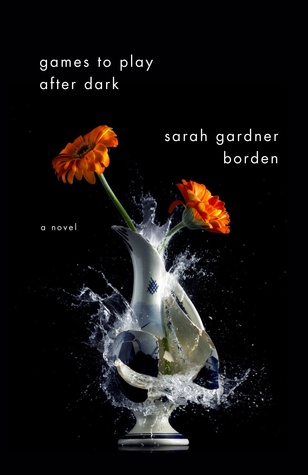
One of the awesome benefits to quitting my TV habit is that I’m finally tackling some of my backlogged reading list. I grabbed Sarah Gardner Borden’s Games to Play After Dark on a whim. It had a neat cover, and the back seemed suspenseful and vaguely reality-TVish.

You'd pick it up and read the back, too.

The novel chronicles the marriage of Kate and Colin, whose initial drunken encounter after a party turns into a whirlwind relationship, wedding, and suburban migration. The cracks start as mildly kinky sex games–she likes her hair pulled or her butt smacked.

From there, the story gets dark, but the gradations are so subtle that I almost didn’t catch what was happening. Kate’s father dies, for example. Colin wants her to talk about it, but she’s still in a state of shock and unwilling to talk. So instead she invents an elaborate story about taking the neighbor down to the laundry room and screwing his brains out while Colin is at work. So Colin, meaning to snap her out of it, throws her in the shower and turns the cold water on.

Even when she started volunteering at a shelter for domestic abuse victims, you are on her side, easily assuming their situation is completely different, black and white, while hers is justified as a rough patch, or an overreaction. It’s hauntingly subtle, and absolutely perfect. I was glad that Borden avoided the typical ending of having Spouse A (usually the woman) triumphantly walk out on Spouse B. I realize that’s the feel-good thing to do, but I can’t help feeling like it’s often a bit of a cop-out. Games to Play After Dark gives an ending that’s not quite happy, not quite dark, but honest.

Published!

Tags

, , , , , , ,

I did it! Check out my article, “7 Simple Steps to Becoming Well-Read,” on Dumb Little Man (one of my favorite sites for quick, fun personal development articles).

Speaking of being well-read, this is going to be a great semester. I’m taking a Seminar on Literature and Writing with the scary Russian professor at my school (most of the time she’s really nice, but she does have a reputation for bringing a student to tears in class at least once a semester), and we are reading 11 books in 15 weeks. Expect my What I’m Reading section to get real highbrow, real fast, people. This week? Sophocles’ Oedipus the King, and a book of poetry called Supernatural Love. Stay tuned…

The Case for Slow Reading

Tags

, ,

It seems to me that often, when people talk about how much they read, they make a point to note how fast they can polish off a book. When the Harry Potter books came out, people got the most bragging rights for whizzing through a 400- or 600- or 700-page book in less than a day. Other times, friends use speed to try to convince me to take their recommendation.

“It’s such a quick read,” they say. “I finished it in a day. You’d probably finish it in a half hour.”

I’m no exception here. I do take some pride in the fact that I read fast (about 2-3 times the average adult pace). I can comfortably read 100-150 pages a day if I don’t have too many other obligations.

The problem is that sometimes we readers get so wrapped up in our own reading stats that I feel like we miss the point. Yes, there are thousands of books out there, and it can feel like we’ll never get the time to read everything we want to, but I checked out a new book a few weeks ago and only realized later that I’d read it before, and didn’t remember anything beyond the introduction.

My professors in the MFA program advocate a different approach: read widely, and often, but read slowly. Break away from the urge to devour a book and try to savor it. Let yourself read paragraphs over and over to figure out what it is about this set of words that makes the characters and emotions so wonderful. Stop. Reading. Fast.

It’s not easy. Like many others, I’ve got a competitive streak, and my impulse is to push my own limits. Plus, I’m reading a self-help book by this really insufferable man who claims to be able to speed-read 1,300 words a minute, and I bristle to think someone I can’t stand can finish more books than me.

Reading slowly, though, captures what reading is about. In the ideal scenario of curling up with a cup of tea, a fire, and thick book, do you imagine reading at a frenzied pace, fingers constantly itching to turn the next page? Or do you envision something more luxurious–reading particularly elegant sentences aloud to yourself, pausing for a few moments to form your own guesses about what will happen next? Reading slowly gives you more chance to befriend the author and make the story your own.

If you’re interested in writing, reading slowly becomes even more important. The ubiquitous advice to read is based on the assumption that writer/readers will pay attention to the structure of the story. That means reading closely enough to recognize what makes dialogue effective, what changes in style make a passage elegant or suspenseful or terrifying or romantic. You have to be in deep enough to see the abstract, fictional story and the concrete words and grammar simultaneously. You can’t do that when you’re speed-reading.

Anyone else share my struggle? Do you notice a change in quality of reading depending on how fast or slow you read?

Short One, Cause I’m Writing Words

Tags

, , ,

The writing’s going better. I woke up this morning, sat down to spend my 15 minutes editing a story I’ve been meaning to revise for ages, and realized I only had two pages left to go. When my buzzer went off, I only had two paragraphs. I don’t know whether it’s the daily writing that is making the difference, or if 7:35 is too early for the internal editor to be in full gear, or if 15 minutes is just too short to be scary, but I’m starting to regain the feeling that things are happening.

My awesomely ridiculous best friend mentioned yesterday that it’s possible I may always have to be changing my routine. I think she’s right. It worked for a long time to insist on a word count, regardless of the time, and then it didn’t. Now it makes more sense to insist on a time, and aim for the word goal, and that may change, too. It’s a little annoying. I wish I could find the perfect routine and just let that be the habit forever, but I guess I can see why that wouldn’t work for me. I’d get complacent, and writing is too hard and too emotionally demanding for that to work. Fortunately, 15 minutes in the morning is working, and is occasionally leading to an additional 15-30 minutes in the evening. It’s not much–15 minutes is what, 1% of my day?–but so far I’ve made almost a full revision pass on one story, drafted a second (it’s nonfiction now, so needs some heavy work before it can count as a proper story, but still), and written an article that is just about ready to be pitched. The plan is to give it a quick edit tonight or tomorrow, write an author bio, and send it before the end of the week. I’ve even, tentatively, started an actual fiction story. I’m hoping this new writing pattern lasts (the last good routine I found lasted something like 8 months, without missing a day), but if it doesn’t, I’m not too worried either. One way or another, this is working.

6 Ways to Beat Writer’s Block

Tags

, , , ,

It’s happened, people. I’ve hit a wall. The weird thing is that over the last few weeks, I’ve actually had a spike in writing productivity. I’ve started getting up 15 minutes early to write, and have been churning out as much as 350 words even in that quick little sitting. Combined with some evening writing, I did almost 2000 words last week, not counting blogging. That sounds like the opposite of writer’s block, doesn’t it?

Maybe it’s not so much a block on writing as it is on writing fiction. Every day gets me 24 hours closer to the end of my MFA program, and makes me that much more aware that I need to have a book written in order to graduate (yeah, it’s still a year and a half away. So what?). A book of short stories, polished and thoughtful and linked enough in theme or tone or whatever to nestle harmoniously with each other. It freaks me the heck out. And being freaked out is not conducive to creativity.

The words need to come regardless, though, so here are my top tips for when I’m in a funk. Maybe they will work for you as well!

1. Write something else. Nonfiction works best for me–retelling a story from my life in as engaging a way as I can. I can always change characters or details later to fictionalize it and give it better narrative flow.

2. Read the headlines. News is cool because journalists and editors have already cherry-picked the wildest characters and most intense stories. One way to get a different angle (so you’re not just writing a fictional version of the news article) is to imagine how the story affects a family member, friend, or ex-lover of whoever is in the news.

3. Do something radically different for a day: refuse to drive, paint yourself all over with henna, cross-dress, eat backward (dinner for breakfast, dessert for lunch, breakfast for dinner and lunch for dessert), and so on. Write a story about someone who does that every day. Why do they do it? What problems do they run into?

4. Start a story-writing group with your friends. Assign a genre, a key word that needs to appear in the story (the more incongruous the better), and a deadline. Now all your friends are going to have stories written! Sometimes writer’s block is a matter of getting a solid kick in the pants.

5. Go to asofterworld.com. Click the “fnord” button to go to a random strip. Write the expanded, story version of what the strip says.

6. Write a story using only one vowel. It is possible, and it’s like drinking water upside down to cure hiccups–weird, but effective.

Disclaimer: I have not actually tried #3 myself, but it seems like it would work. If you try it, let me know how it goes!

That’s what I have to offer. How do you beat writer’s block?

The Art of the Pen (and Pen Case, and Writing Box…)

Tags

, , , ,

Making the call of whether painting is an art or a craft/trade is fairly easy. Someone painting portraits or landscapes or modern, abstract creations is making art. Someone painting walls or toys is practicing a trade. If they’re really skilled, you might call it a craft.

Making the same call for writing can be tricky. Are all books art? Is art a fiction/poetry/plays/memoir thing, or can other non-fiction books qualify? Is a beautiful cookbook art? What about pieces of writing that aren’t books at all, like handwritten letters?

The Walters Art Museum looks at these questions, makes a thoughtful face, and decides to do something completely different when it comes to the intersection of writing and art. I spent a Saturday afternoon with Andrew, checking out “The Art of the Writing Instrument.” Turns out, there have been artists for centuries, around the world, creating jeweled boxes for writing instruments, or writing tablets with paintings and poems meant to inspire, or exquisitely carved and jeweled quills and pens and ink bottles. Whether the user of these items wrote poetry, letters, or just doodles, someone believed enough in the power of words to make the tools beautiful.

Imagine keeping your ballpoint in this.

I found it at once inspiring and a little disconcerting to see all these rare, hyperexpensive versions of the tools I would use. Part of me wanted to go home and stick rhinestones all over an old necklace box and have my own beautified inkholder (later I remembered that I don’t use ink and am not particularly crafty, so don’t hold your breath for that project). Another part of me balked at the thought of writing with something that’s probably worth well in excess of a year’s rent. I grew up with the romanticized Starving Writer idea, the “room with a view” and cheap paper and pencils being all you needed to create something special.

What I think it comes down to, though, is the idea of consecrating writing. The artists behind the Walters exhibit work in a physical medium, so they consecrate the physical paraphernalia of writing. Many blog posts and books I’ve read talk about reserving a time to write that no one can touch–that’s consecration, too. It’s nice to think that whether or not I end up with something artistic on the page, there are people who find that simple act of creation beautiful, in and of itself.

Climbing Wagons

Tags

, ,

A quick note, because I’ve been guilty about the somewhat disappointing mid-year report and don’t want you to think that I just sit around and whine (I know no one who knows me thinks that, but I get paranoid). Since writing that post, I have:

  1. Submitted 3 stories to 13 places (hooray for simultaneous submissions!)
  2. Written a first draft of a story
  3. Resumed editing a story I’ve been sitting on, meaning to rewrite
  4. Published the guest post at the Canary Review

This week, I started getting up at 7:10 instead of 7:25, and am using the extra 15 minutes to write a little before I go to work. It’s helping! I can get about 300-350 words out in my bleary state, which means I only need 150-200 or so when I get home to meet my 500/day goal. Admittedly, I’ve only been getting up early for four days as I write this, but I plan to make it a new habit.

While seeing how far I’d fallen short of my goals was disheartening, writing it out and holding myself accountable does seem to give me a kick toward better progress. I told Andrew that sometimes it’s not even as much a matter of getting back on the wagon as it is finding out where the damn thing went. I feel good about this last month, though. Wagons ho!