The Help

Tags

, , , ,

First off, I have exciting news: I’ve been invited to write my very first guest blog post! The Canary Review has just posted the first article in a series about the best and worst books people have read, written by yours truly. I’m completely thrilled, and I invite you to check out the Canaries and what they have to offer!

Conversely, should you happen to have made your way here from The Canary Review, I am happy you are here! I would put out cookies and juice for you, but I can’t, because we are on the Internet.

So instead, I will tell you about a book. I just finished The Help, by Kathryn Stockett, and I feel a little awkward about the timing of this announcement, since it’s pretty obvious that I’m reading it in order to go see the movie properly, but whatever. It’s an awesome book, and I want to tell you about it, so you can read it and see the movie properly.
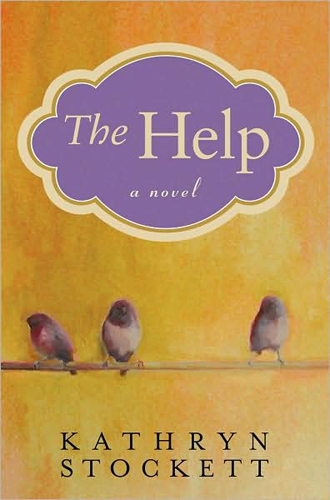
The original cover of a book is always better than the movie cover.

The Help moves between the voices of three women living in Jackson, Mississippi in the 1960s: Aibileen, Minny, and Skeeter. Aibileen and Minny are both black maids–Aibileen is caring for her seventeenth white child, which sometimes slightly eases and sometimes amplifies the pain of losing her only child a few years before. Minny is working to support her own family, but has cycled through multiple jobs because she cannot be the calm, restrained, half-invisible person her employers want her to be (which, incidentally, makes her tremendous fun to read). Skeeter is white and newly returned to Jackson from college with dreams of being a writer. Distance has given her a little needed perspective, and she has come up with an idea.

Skeeter’s idea to write a tell-all book about the lives of black domestic help, interviewing maids to get her stories, doesn’t start out as an altruistic project. She has a vague idea that the book could change things, but sees this as a warm, positive benefit to the larger story of her own developing success. This isn’t so much because she is selfish as it is her continuing naivete, but it makes her transformation particularly interesting. As she realizes the possible consequences the maids face by helping her, even anonymously (various penalties either happen or are suggested, from being blacklisted from work and therefore forced into eventual homelessness, to having tongues cut out by racists), Skeeter begins to see herself as only playing a role in a larger issue of justice.

Minny and Aibileen deepen, too, of course. Telling their stories, seeing the effect of the project on other maids, and ultimately seeing the book published is a kind of liberation and a kind of danger that neither woman expected to experience in her life. There are moments of sacrifice and courage and a richer, more meaningful maturity in each of these adult women’s lives by the end of the book. Not because they were immature or complacent before–quite the opposite–but because for them, this story is about claiming power and justice directly, instead of using pranks (Minny) or secret attempts to teach equality and kindness (Aibileen) as substitutes for what they really need. Admittedly, as substitutes go, these are great ones to read–Minny’s revenge is a hair-raiser, and Aibileen’s interactions with Mae Mobley, the two-year-old daughter of her employer, are both tender and powerful.

The story is compelling, the characters are meaningful, but I always note the writing style. I am happy to report that The Help is solidly written, as well! One thing in particular was Stockett’s use of dialect. It is incredibly difficult to write eye dialect effectively, without it sounding hokey and condescending. Stockett has the ear, though, and the tact, and Aibileen and Minny get voices that are distinctive and authentic and respected by their author. Major kudos there.

In short, as always, I would recommend reading the book before seeing the movie. It’s not just a matter of principle here, though–I can’t speak to the film adaptation (yet) but The Help, the novel is a beautiful, masterful story and well worth every attention and award it can get.

What Do Project Managers Do?

Tags

, , , ,

One of the things I love about WordPress is that I can see what searches led people to my site. Mostly it’s my name, or Nick and Sheila Pye (not totally sure why–maybe they don’t get written about often enough? Anyway.). Today, though, there was a whole question:

“I am a new Project Manager. What will I receive on my first day of work?”

And I thought, “Huh. I have been a Project Manager for all of five weeks and I already take it for granted that I know what it is that I do.” And then I realized that probably most of my friends don’t know what I do. So, in case you wondered:

Being a Project Manager is primarily a scheduling job. When I get assigned a book, the first thing I have to do is review the schedule I get from the publisher. They’ll tell me when they need to see design samples (pages with sidebars, figures, illustrations, etc. set in with the text) and copyediting samples, when the author needs to get a copy of the book to make final comments and changes (and answer copyeditors’ questions), and when the book needs to be ready to go to the printer. From that assignment schedule, my job is to know what the Art Department and copyeditors are doing so I can make sure the book gets done on time.

Being a Project Manager may also mean doing a lot of copyediting yourself, and a heck of a lot of proofreading. I’m in a small company, so if we can avoid outsourcing copyediting too much, we do.

Note: For those who are unsure of the difference, copyediting means checking a manuscript not only for basic grammar and spelling errors, but also making sure the work fits the publisher’s style (do you say email, e-mail, or E-mail? Is Internet capitalized? Is “timeframe” one or two words?). Proofreading is comparing versions of a manuscript to make sure all the edits from the previous draft made it into the next version, and are both consistent and correct. When you might have half a dozen people editing one chapter, it’s important to look over and make sure one person isn’t adding commas while another is taking them out.

Finally, since this is a small office and we don’t have a receptionist or secretary, my day also involves some administrative work: answering phones, scanning files to colleagues overseas, etc. My boss also sometimes asks for additional projects, such as learning how to use Sharepoint and give short presentations on it.

Overall, I’d estimate I spend about 15%-25% of my time managing schedules and communicating between departments, about 70%-80% of my time copyediting and proofreading, and 5%-10% of my time on administrative tasks.

3 Ways to Distinguish Between Fantasy and Magical Realism

Tags

, ,

I’ve read a fair amount of fantasy in my day, enough to understand that the genre is split into sub-categories and sub-sub-sub-categories that look as different next to each other as a Western novel and a psychological thriller. The fact that Robert Jordan’s classic (if formulaic) Wheel of Time high fantasy series shares shelf space with Francesca Lia Block’s fractured, whimsical stories of fairies in L.A. boggles my mind.

Actually, what really boggles my mind is the fact that libraries and bookshelves continue to insist on combining science fiction and fantasy, as though they weren’t fundamentally opposite from each other, but that’s another story for another day.

What I’ve been thinking about lately, though, is the tissue paper barrier separating fantasy and magical realism. Some people, in fact, don’t think there’s any real distinction between the two at all (Terry Pratchett called magical realism a “polite way of saying you write fantasy”). I think there is a difference, though, and, just as importantly, a reasonably clear way to tell:

1. What is the character’s reaction to the magical event? In a fantasy novel, the introduction of a magical element is cause for immediate wonder or alarm. In magical realism, characters will take magic at face value, or treat it with no more emotion than something that is possible in the ‘real’ world.

2. Does the magical element seem to be a symbol? Magical realism often uses the supernatural in almost a poetic way–in one story I read, white moths flew out of the mouth of a dead grandmother when the granddaughter finished washing the body. In fantasy, for the most part, a dragon is a dragon.
Note: It is, of course, always possible to find metaphorical meaning in fantasy novels as well. The Harry Potter books alone have sparked countless interpretations. The distinction for me is that fantasy’s magic metaphors are often extremely clear (Aslan=Jesus) or extremely general (discovery of magic=discovery of self/coming of age), whereas magical realism often has moments that are both subtler and more precise (like the moths in the story I mentioned).

3. What does the magical element do for the plot? In fantasy, the magic is the catalyst to the plot, its lifeblood. Magical events or characters are inextricably tied to the story. In magical realism, you could theoretically strip the magic out and have a functioning story. Magic deepens and enriches certain moments, but doesn’t usually drive the plot forward.

So there you have it! These rules aren’t completely set in stone–I’m sure plenty of people can come up with exceptions–but these three guidelines can give you a pretty good sense of what you are reading.

Half of the year is over. List 10 things you want to do before 2012 begins.

Tags

, , , ,

A prompt from WordPress itself! Given that I’m in a lull, this might not be a bad time to recenter on my goals (writing and otherwise). Here goes:

  1. Frickin’ publish something. I don’t care what. It’s been a goal for so long, and it’s getting harder to be patient. (Note: I sent out a handful last week, and have more for next week.)
  2. Save enough money to take two classes this spring instead of one. I know we’ll be in the thick of wedding planning, but I want to graduate in spring of 2013, and I’m not going to make it going one class at a time.
  3. Take a trip somewhere. I’m always happiest to go out of the country, but local’s fine, too. I just want to explore more before the year is out.
  4. Get back on my 500 words writing schedule. I spent about eight months writing 500 words a day, and got amazing at it. Then I completed the novel I was working on, took a break from those 500 words, and haven’t yet been able to get back on that wagon.
  5. Be a better blogger. (More posts? More subscribers? Haven’t thought this one all the way through…)
  6. Figure out what’s keeping kids from coming to youth group! Participation is way down, and I’m getting kind of upset about it.
  7. Do NaNoWriMo.
  8. Learn some more about HTML and CSS so I can play with interesting website stuff.
  9. Catch up on my back issues of the New Yorker.
  10. Get better at relaxing? Am I allowed to say that? I do relax, of course, but it’s rarer for me to find myself in that state of happiness where I don’t have a nagging feeling that I should be somewhere else.
In conclusion, saving resolutions for January is for chumps. I’ll make goals whenever the heck I feel like it. I am, of course, always interested in hearing other people’s goals as well. I kind of dare Mr. A.P. Sillers to do a mid-year resolution post (earnest or in jest) on his blog.
The glove, Mr. Sillers, has been thrown.

Post-Show Blues

Tags

, , ,

Great news–I got an A in Book Design! It took what felt like every spare moment I had (and then some, considering the several evenings I forewent dinner in favor of fiddling with the placement of a title or trying to learn what to do in Illustrator to keep my pictures from getting pixely), but the class is finally over, and yours truly rocked it.

I’m feeling a little adrift, though. When I was in high school doing summer theater productions, all of us in the cast used to dread the end-of-show crash, when we would wander aimlessly around the house, missing the rigid rehearsal schedule we’d complained about half the summer, and wondering what to do with these memorized lines and lyrics and dance steps that no longer had a useful outlet. It was the loss of a little identity.

Sometimes, ending a class is like that for me. I know, HUGE academic geek moment. But it’s true. I throw myself into these courses so hard that for eight or 16 weeks, I identify as a budding book designer or what have you. I’ve been taking it easy (or, you know, as easy as I can) the last two weeks, because I know I need a summer. I went to the pool a few times, actually sat down and watched an episode of So You Think You Can Dance all the way through (so those are the Top 10!), and on Saturday, my family and a representative sample of Andrew’s got together at my parents’ house for a BBQ engagement party. I even got to see my best friend for the first time in about six months (because we live in different states–neither of us is that busy).

I think I’m already gearing up to get some new project percolating, though. I’ve got stuff to revise, I’ve got a tentative idea or two, and I’ve got a “write daily” resolution that’s fallen by the wayside for too long. I’ll try to make time to do some more substantive stuff here when I can, but my real goal is to be able to come back here in not too long with some good writing news, so if I’m quiet, that’s why.

Because Sometimes Spam is Poetry

Tags

, , ,

The other day, I was daydreaming about wedding things, and all the plans Andrew and I have for the next year and change of getting ready for our wedding. Suddenly, a brilliant idea occurred to me.

“I’m on WordPress,” I thought. “I bet you a hundred peaches there are bodzillions of wedding blogs on this thing.”

So I clicked the “Wedding” tab on WordPress’s searcher, and lo and behold, the very first featured blog post I saw seemed perfectly suited to my taste. It was titled “White Gold Wedding Band,” which is exactly the kind of ring Andrew and I are planning on selecting for ourselves. I clicked the link, eager to hear this blogger’s take on white gold, where I could find the best white gold wedding rings, etc.

I have since performed the blog post, “White Gold Wedding Band” as a piece of slam poetry for friends and family members, and now it’s time to share it with the world. I’ve added line breaks to guide the flow of the piece, but I have not altered a single word. Ladies and gentlemen:

Essential Items within Considerate: White Gold Wedding Band

White Gold Wedding Band universally stay in the finger
no matter what the wearer achieve,
plus when they do their responsibilities throughout the domicile.

This reflects how they clutch their dear thing
very dearly,
although it can in fact damage the ring.

White Gold Wedding Band.

are better place in a secure point whilst you accomplish your cleaning otherwise crop growing.
Pick a secure site in your bedroom or you able to lynch the ring on a choker, hence still when you are not togged up in the ring,
you still bear it
all-round
everyplace you walk off.

An essential thing to bear in mind is to use a clean collar band
completed of lace, twine,
if not thread
and hold in beneath your top for shelter points.

With intention of remain the sheen, White Gold Wedding Band.

should to be polished regularly treating appropriate cleaner.

White Gold Wedding Band.

can be full to a costume jewelry warehouse for skilled clean-up
otherwise polished at dwelling
using jewelry polish kit or watered down soft detergent solution.
An irregular enhance wish
also be the ring
in addition the charms
in a fitness.

For this, you should allow it to the experts.

Horns

Tags

, ,

In a few writing contests I’ve entered, the judges highlighted two criteria as the most important in how they evaluated fiction entries:

1. How good the story was (idea-wise)

2. How well it was told

In the last book I read, it became a lot clearer to me why they include that second criterion.

Horns opens with our hero, Ignatius Perrish (Ig to his friends), waking up after a black-out night of doing “terrible things” to discover he has sprouted devil horns. Worse, they are functional: anyone who sees them is compelled to confess to Ig the deepest secrets and worst deeds in their hearts, and to ask his permission to commit more sins. Ig realizes he can use his power to finally discover who raped and murdered his girlfriend, and avenge her death, and this becomes the driving plot of the book. To a lesser extent, he is concerned about how he developed the horns in the first place (the book takes a magical-realism approach for the most part, treating the horns as highly unusual phenomena, but not cause to really question sanity).

It’s an interesting premise, right? Here’s where it begins to fall apart for me: Joe Hill rams his elbow into your ribs on almost every page over the fact that his character is the Devil. Not only are there suddenly matches in Ig’s pocket, despite the fact that he doesn’t smoke, they are Lucifer brand. The girl he’s seeing leaves underwear on the floor? Devil-print. Hill takes every possible opportunity to have his character cast a shadow so he can point out yet again that the horns are the most distinguishing feature( well, obviously). By the time Ig finds himself in an old building and grabs a tool, you know it’s a pitchfork so long before Joe Hill gives his triumphant reveal that you wonder what took him so long to figure it out.

That’s the problem: Joe Hill doesn’t seem to believe in an intelligent reader (at least in this book—I’ve read Twentieth-Century Ghosts and Heart-Shaped Box and I don’t remember either of those being like this). He barely believes in an average reader. The narrative style feels like it’s going for clever, but the content is way too soaked in devil imagery and nudges that feel more like slams (Ig’s brother makes a living playing the horn. The HORN. Get it?)

Disclaimer: We’re going to get into some spoilers. If, for whatever reason, you really want to read this book and be surprised, stop here.

For the rest, Horns failed to surprise me where I wanted to be surprised, and then completely mystified me where I should have gotten a straighter answer. Here’s what’s going on:

Unsurprised: Re: the murder of Ig’s girlfriend. You find out who did it. Really early, considering the discovery and revenge takes up so much plot time. Basically the first person who’s named is your guy, and he is a pretty garden-variety sociopath. The kind you’d expect to see on a weeknight crime show: good-looking, flat emotional affect, delinquent childhood, charismatic, methodical, delusion of grandeur (he believes he once performed a miracle), yada yada. Joe Hill probably watched The Dark Knight at some point, because this villain is even a blonde with one side of his face messed up. Feels a lot more like the guy you’re sure is going to be the one all book long, and then it turns out to be someone else, right? Like a twist? Nope. Face value, right here.

Surprised: On and off throughout the book, Ig wonders why these horns have appeared in the first place (as one would). In the end, the answer we’re looking for appears to be:

*ahem*


Fantasy time travel.


Yes. That is how Joe Hill, apparently with a straight face, is going to answer that question for us. Almost at the end of the book, Hill seems to suddenly realize that he never answered that question with us, and goes, “Hey–um—remember that time when Ig and his girlfriend were snuggling in that treehouse they never found again? And something was bumping at the trapdoor and scared the bejesus out of them? Yeah, turns out that something was Ig from the future! That’s cool, right? Also the treehouse is owned by the Devil. That oughta explain everything.”

I’m as confused as you are. I’ve read books like this before, where things are at least relatively normal (or at least consistent), and copped out in the closing pages with, “And it was a ghost! or “And it was time travel!” or “And it was all a dream!” and it almost never feels satisfying to me (A Christmas Carol and The Sixth Sense are the only two works I can think of that pulled off something like that successfully.) (Also, spoiler alert.)

I mean, overall the story was still interesting enough to keep my attention, and wasn’t terribly written (if it was all-out terrible, I wouldn’t have finished it. I don’t have the time to waste on truly crappy stuff). But I have to say, between rubbing my nose in the Devil and leaving me with a bewildering time-travel episode when I thought I was going to be given a more grounded explanation, I’ll give Horns a resounding: eh.

Mid-Year Report

Tags

, , , ,

It’s been a whirlwind three months! It’s amazing to think that only a few days after I posted the Quarterly Report, Andrew and I got engaged. I kind of wish I was reporting on progress in wedding planning: we’ve already figured out the guest list, set a date, booked the ceremony and reception sites, picked a pastor to officiate, picked bridesmaids, picked colors (more or less), started our registry, and scheduled tastings with local caterers. We are winning at wedding planning.

But this isn’t a wedding blog (yet :-P), and I had made myself some goals for the kind of writing work I had wanted to accomplish over the last three months. They were:

Submit 120 pieces

Write and revise 4 pieces

Okay. I have to admit I didn’t complete either of those goals as I had intended to. Here’s what I did do:

  1. Submitted about 10-12 pieces
  2. Began heavy revision of one story
  3. Started several stories that died after the 1st paragraph
  4. Wrote class material (Experimental Forms) that I ended up submitting to a contest
  5. Designed 2 completed book projects (Book Design) that definitely involved thoughtful revision
  6. Started full-time work in publishing
  7. Subscribed to Poets & Writers and The New Yorker
  8. Maintained reasonably regular blog postings and updated What I’m Reading and Home pages of my site

So while I didn’t turn into the warrior of submitting that I wanted to be, I haven’t been sitting on my butt for three months, either. What I think I’m doing well:

  1. With the new job, I’m simultaneously immersing myself in a word-driven atmosphere, improving my editing skills, and freeing up time to write (my commute’s two-thirds shorter now)
  2. I’m devoting significant time to creative work (design lately, analysis of experimental work and writing experiments of my own before that)
  3. I’m spending more of my reading time reading material that can help me with my writing

What I think I’m doing badly:

  1. I’m not actually writing
  2. I’m not submitting enough

Scheduling writing is a problem for me because, since so many of my day-to-day responsibilities are deadline-driven, anything that can be put off will be if I get into a crunch. I’m still struggling to make writing enough of a routine that I won’t drop it when academics or other deadlines need my immediate attention. I do still read every day, after all, so having that time in my schedule is possible.

Part of me really wants to give myself the same goals for the next three months (10 subs/week, 4 new polished stories gleaming on my desk), but I’m not sure that’s the best way to go. Instead, I’m going to try something tough, but hopefully more doable:

  1. Write and/or revise fiction at least five days a week, aiming for 500 words a day or 2 revised pages a day
  2. Submit at least five pieces a week (simultaneous submissions count)
  3. Keep doing the good things I’m doing (blogging, reading good stuff, working hard in class)

Hopefully I’ll have better luck achieving what I’ve set for myself in the next three months!

Book Design

Tags

, , , , , , ,

This class, people! It is kicking my butt. One of the things I like about grad school is it definitely forces me out of my comfort zone, and I’m learning all kinds of good things. The short-term downside? So. Much. Work.

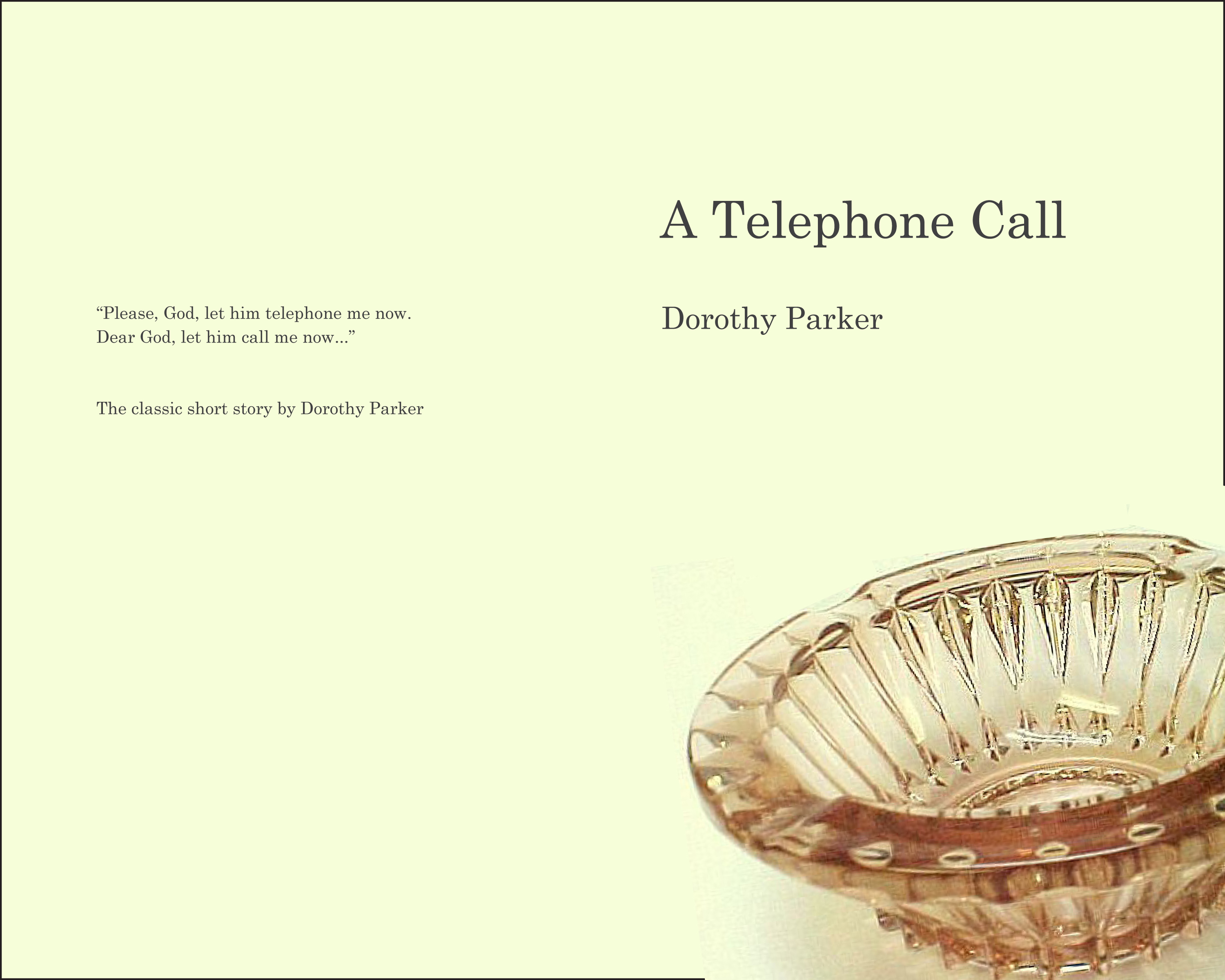
I’ve never taken graphic design, and that’s largely what this class is, so that’s why I’ve been quiet here. But now I can share a bit! Check out the learning curve for my first project, designing the cover for a short story by Dorothy Parker.

The story is, “A Telephone Call,” so I couldn’t help but go for the obvious at first (Important Note: All these covers are the full wrap, so the left half is the back cover and the right half is the front):

To keep from being too boring, though, I brought in this one as well (the story was written around the 1920s, so flapper seemed to fit the scene):

Consensus? The flapper was cool, but not quite right, and the telephone wasn’t working either (and was from the wrong time, to boot). Back to the drawing board!

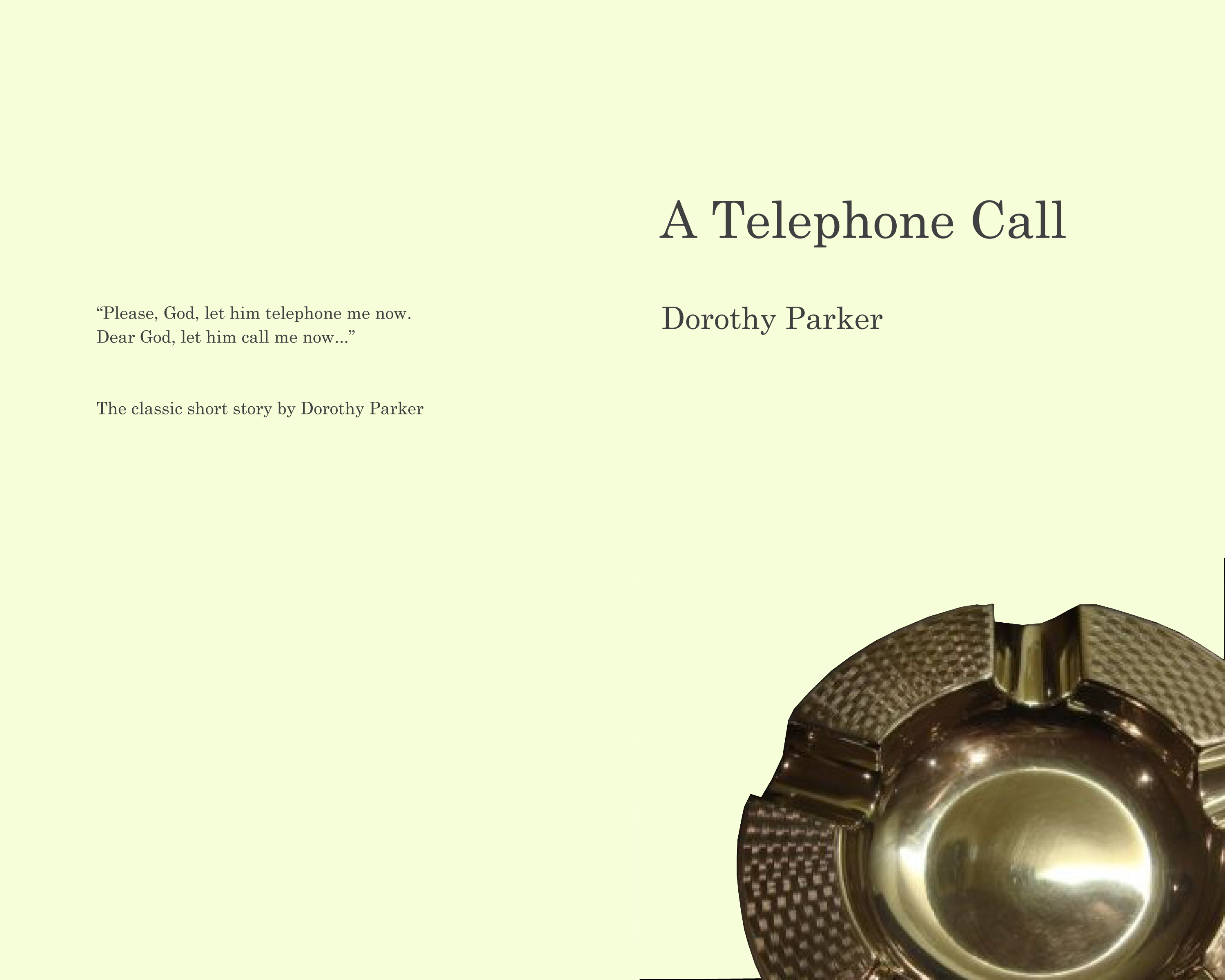
I thought about the concept of the design, and decided my main focus was the fact that she was waiting for this call. After looking at some terrifying photos of bitten nails and lips, I decided smoking was a nervous habit I could feature in some kind of aesthetic way:

Two or three revisions later, came out with this, and realized my ashtray looked more like a drinking glass. Did a little more research…

This is much better! Except…the ashtray is recognizably Great Depression-era–about a decade too late for the story. Not a huge time gap, but enough to irritate those in the know.

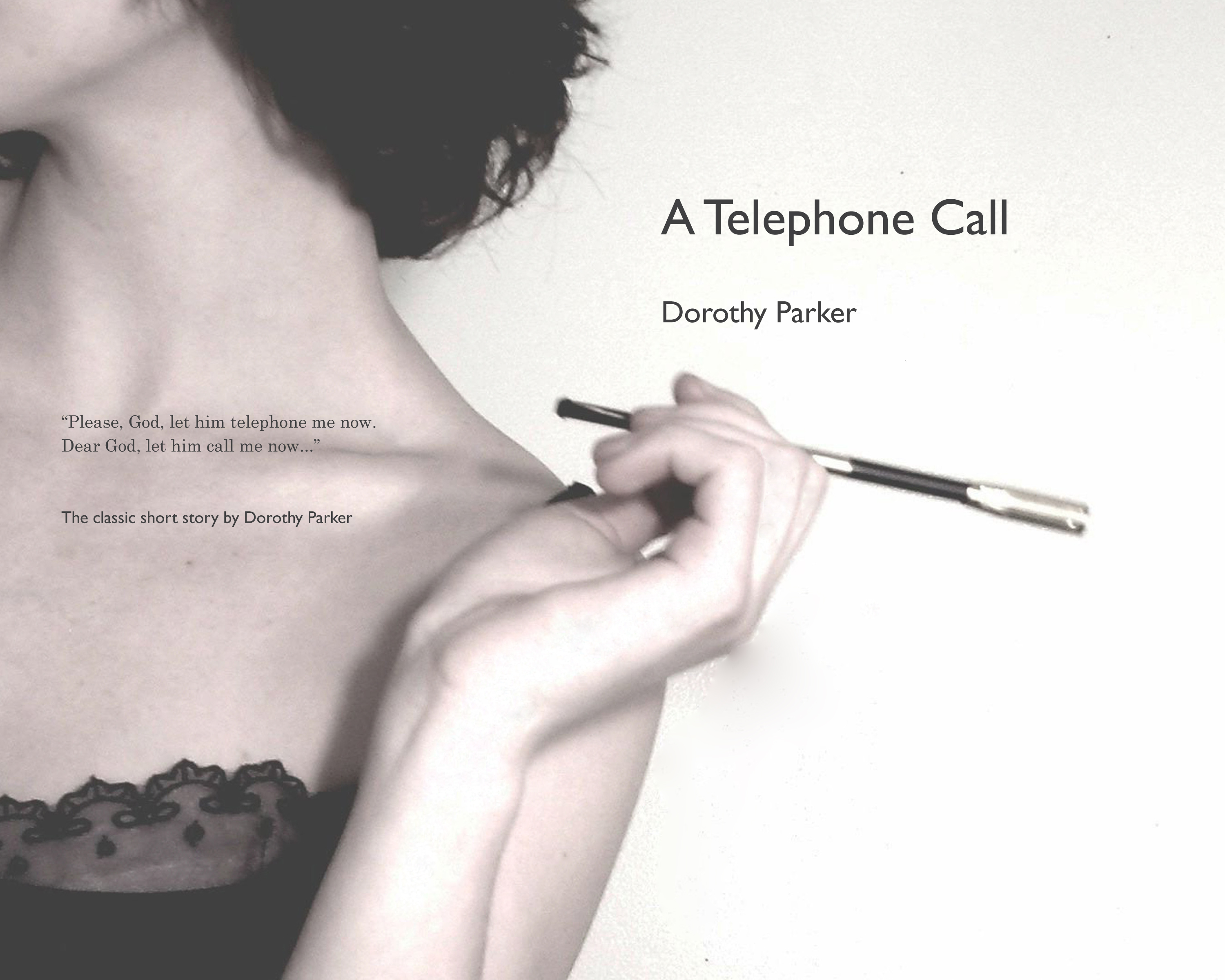
Right era, decent concept, but so stark. I was beating my head against a wall by this point (keep in mind, I’m only showing you about 2/3 of the revisions I did on this design). My computer was so stuffed with photos of cigarettes, cigarette stubs, cigarette smoke and ashtrays that I was worried Andrew would think I had some kind of weird nicotine fetish. I still loved the idea of this glamorous girl in the ’20s waiting by the phone, smoking nervously, probably using some fantastic Cruella de Vil-esque cigarette holder. And then I found it. I talked to my professor to make sure she wouldn’t freak out if I overhauled my design yet again, and she gave me the green light to make this:

I finally felt like I had a book that felt like a book. I don’t have a grade back quite yet (I’ve been out for a week, so hopefully tomorrow), but this is the design that makes me happy. There’s a lot I like about this final version, and some things I’m sure could still improve, but I won’t say anything else for now. I’d love to hear what people think!

New Job!!

Tags

,

After nine crazy months of working three part-time jobs in three different cities (Washington, D.C., Baltimore, and Annapolis), I’ve landed a new position that should make my life ten times easier. Starting at the end of the month, I’ll be the new Project Manager for a publishing service company (they take projects for publishing companies, such as formatting print books to be e-books, handling the layout and design for manuscripts, etc.).

A quick caveat to the celebration that’s about to go on here: I am keeping the Youth Director position, mostly because I really enjoy it and feel invested in the kids, and also because I still need that income to make ends meet. Because of this, I will still be pulling the 50-hour shift for the time being. That said, here is what I am looking forward to with this career change:

1. It’s in my field. Publishing is highly competitive, and there aren’t too many opportunities in this area. Between getting to spend my work days doing what I want to do and getting a foot in the door of the industry, this is a fantastic shift from doing filing work for a company where I’m neither qualified or interested in rising up the ranks.

2. It’s in my city. Or close enough. I’m about a half-hour drive from Gwynn Oak to Towson, instead of an hour to hour-and-a-half drive, plus half-hour Metro trip to D.C. I get to get up at 7:15 instead of 6:00 a.m., and will get home closer to 5:45 than 6:45 or 7:00 p.m.

3. I eliminate the Metro from my life. Unless there’s an exhibit or something in D.C. that I want to see for fun, Metro commuting is over. No more spending $40 a week on parking and Metro passes, no crowded cars or waiting for trains or gloomy platforms. I am well aware that on-the-road rush hour’s no fun, either, but I am very happy to know that when I am stuck in traffic now, at least I will be able to see the sky.

4. It’s much more challenging than what I was doing before. This job will be a lot closer to the work I was doing as an Editorial Assistant at Passager than as a law clerk, and it will probably be even more involved than at Passager, since it’s full-time and I may even have people (like proofreaders) working under me. It’s a weird thought, and an exciting one. I’ve been the underling in almost every job I’ve held since graduation. Sometimes it’s been pleasant work and I hardly noticed being at the bottom, sometimes it was made painfully clear how little power I had. Sometimes, like at the law firm, it became the kind of thing I took for granted. It’s a major confidence boost to think that I’m starting in a position where I have some real responsibility to make sure stuff gets done.

The countdown stands at 3 weeks exactly until my first day as Project Manager. I’m looking forward to a few free days and the church mission trip before I start. Money’s a little tight this month, since I’m basically working half-time (only two jobs a week, and one week of only church), but I’m feeling great about the new beginning waiting for me at the end of the month.