• Bio
  • Contact
  • Events and Resources
  • My Writing

Jessica Jonas

Jessica Jonas

Tag Archives: books

Games to Play After Dark

31 Wednesday Aug 2011

Posted by jessicamjonas in Books, Family, Reading

≈ 1 Comment

Tags

abuse, books, games to play after dark, love, reading, relationships, sarah gardner borden, what I'm reading

One of the awesome benefits to quitting my TV habit is that I’m finally tackling some of my backlogged reading list. I grabbed Sarah Gardner Borden’s Games to Play After Dark on a whim. It had a neat cover, and the back seemed suspenseful and vaguely reality-TVish.
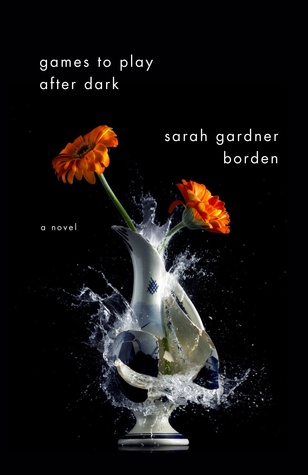
You'd pick it up and read the back, too.

The novel chronicles the marriage of Kate and Colin, whose initial drunken encounter after a party turns into a whirlwind relationship, wedding, and suburban migration. The cracks start as mildly kinky sex games–she likes her hair pulled or her butt smacked.

From there, the story gets dark, but the gradations are so subtle that I almost didn’t catch what was happening. Kate’s father dies, for example. Colin wants her to talk about it, but she’s still in a state of shock and unwilling to talk. So instead she invents an elaborate story about taking the neighbor down to the laundry room and screwing his brains out while Colin is at work. So Colin, meaning to snap her out of it, throws her in the shower and turns the cold water on.

Even when she started volunteering at a shelter for domestic abuse victims, you are on her side, easily assuming their situation is completely different, black and white, while hers is justified as a rough patch, or an overreaction. It’s hauntingly subtle, and absolutely perfect. I was glad that Borden avoided the typical ending of having Spouse A (usually the woman) triumphantly walk out on Spouse B. I realize that’s the feel-good thing to do, but I can’t help feeling like it’s often a bit of a cop-out. Games to Play After Dark gives an ending that’s not quite happy, not quite dark, but honest.

Published!

31 Wednesday Aug 2011

Posted by jessicamjonas in Books, Goals, Poetry, Publishing, Reading, Writing

≈ 3 Comments

Tags

books, Dumb Little Man, published, publishing, reading, top-shelf, when the writing's going well, writing

I did it! Check out my article, “7 Simple Steps to Becoming Well-Read,” on Dumb Little Man (one of my favorite sites for quick, fun personal development articles).

Speaking of being well-read, this is going to be a great semester. I’m taking a Seminar on Literature and Writing with the scary Russian professor at my school (most of the time she’s really nice, but she does have a reputation for bringing a student to tears in class at least once a semester), and we are reading 11 books in 15 weeks. Expect my What I’m Reading section to get real highbrow, real fast, people. This week? Sophocles’ Oedipus the King, and a book of poetry called Supernatural Love. Stay tuned…

The Case for Slow Reading

29 Monday Aug 2011

Posted by jessicamjonas in Books

≈ 3 Comments

Tags

books, reading, taking it slow

It seems to me that often, when people talk about how much they read, they make a point to note how fast they can polish off a book. When the Harry Potter books came out, people got the most bragging rights for whizzing through a 400- or 600- or 700-page book in less than a day. Other times, friends use speed to try to convince me to take their recommendation.

“It’s such a quick read,” they say. “I finished it in a day. You’d probably finish it in a half hour.”

I’m no exception here. I do take some pride in the fact that I read fast (about 2-3 times the average adult pace). I can comfortably read 100-150 pages a day if I don’t have too many other obligations.

The problem is that sometimes we readers get so wrapped up in our own reading stats that I feel like we miss the point. Yes, there are thousands of books out there, and it can feel like we’ll never get the time to read everything we want to, but I checked out a new book a few weeks ago and only realized later that I’d read it before, and didn’t remember anything beyond the introduction.

My professors in the MFA program advocate a different approach: read widely, and often, but read slowly. Break away from the urge to devour a book and try to savor it. Let yourself read paragraphs over and over to figure out what it is about this set of words that makes the characters and emotions so wonderful. Stop. Reading. Fast.

It’s not easy. Like many others, I’ve got a competitive streak, and my impulse is to push my own limits. Plus, I’m reading a self-help book by this really insufferable man who claims to be able to speed-read 1,300 words a minute, and I bristle to think someone I can’t stand can finish more books than me.

Reading slowly, though, captures what reading is about. In the ideal scenario of curling up with a cup of tea, a fire, and thick book, do you imagine reading at a frenzied pace, fingers constantly itching to turn the next page? Or do you envision something more luxurious–reading particularly elegant sentences aloud to yourself, pausing for a few moments to form your own guesses about what will happen next? Reading slowly gives you more chance to befriend the author and make the story your own.

If you’re interested in writing, reading slowly becomes even more important. The ubiquitous advice to read is based on the assumption that writer/readers will pay attention to the structure of the story. That means reading closely enough to recognize what makes dialogue effective, what changes in style make a passage elegant or suspenseful or terrifying or romantic. You have to be in deep enough to see the abstract, fictional story and the concrete words and grammar simultaneously. You can’t do that when you’re speed-reading.

Anyone else share my struggle? Do you notice a change in quality of reading depending on how fast or slow you read?

Mudhouse Sabbath

11 Friday Mar 2011

Posted by jessicamjonas in Books, God

≈ Leave a comment

Tags

books, christianity, god, judaism, lauren winner, memoir, mudhouse sabbath, religion, what I'm reading

I mentioned earlier that for a while I worked at a church at a job that sucked. What’s good is that, in addition to the awesome job at the literary journal, I also found myself working an equally awesome job at a church. I’m a youth director rather than a secretary this go-around, which is a much better fit – playing games and leading discussions with 6th to 12th graders is a lot more fun than folding bulletins. Also, the pastors at the new church are supportive and encouraging. One of them gave me Mudhouse Sabbath by Lauren Winner as a Christmas gift. It took me a few months to get around to it (I’ve always got a back-log on the ‘to read’ list), but I am fully in it now, and what a book it is.

I grew up with two religions myself. My father’s not an Orthodox Jew by any stretch of the imagination, and I don’t know much beyond the skeleton of Judaism, but I grew up fasting on Yom Kippur, dipping parsley in salt water at Passover Seders and lighting candles at least four or so of the eight nights of Hanukkah (my dance and my sister’s gymnastics inevitably ate up some of those evenings). My family’s way of resolving Judaism and Christianity is to concentrate on what the faiths share, which is wonderful because it leads to a lot of openness and tolerance when it’s done right, as I believe it is in my parents’ house.

Winner takes a different approach by focusing on the differences between the faiths, specifically the differences in rites and practices such as prayer, food, weddings, and the Sabbath. What is so wonderful is that while I would have expected a focus on differences to lead to judging, Winner clearly has tremendous respect and warmth toward both sides. She grew up in a mix household, too, practicing Reform Judaism for the most part and gleaning a bit of Baptist belief from her mom’s side. In Girl Meets God, which I have not read yet, ever-stronger spiritual yearnings led her first to devout Orthodox Judaism, and then to equally devout Christianity (Anglican, I believe? I had to read up on the Internet to check it out, since she doesn’t mention a denomination in Mudhouse). Leaving Judaism for her meant leaving all the practices she was accustomed to, from keeping kosher to the way she grieved or prayed. Some transitions were easier than others (being allowed to eat shellfish is apparently one of the big perks of converting), but she found herself missing the rhythm of her Jewish life, the way even the annoying rules she had to follow kept her feeling connected to God.

Mudhouse Sabbath looks at eleven aspects of life from both the Jewish and Christian perspective, explaining what rituals each religion brings to the table, what they mean to her, and how she’s adapted or created her own practices so she can keep the attentiveness to faith that she loved in Judaism, rewritten into a Christian context. The writing is engaging and approachable, with an easy openness and honesty that makes me wish I could run into this girl on the street and be friends with her. I like the way she takes it as a matter of course that spirituality is an everyday part of life. Even though I work at a church, I don’t always pray every day or make such an attentive practice of “being religious” during the week. This book makes me want to bring more of that into my life, because the way she tells it makes it seem like such a rewarding way to be present in the days between Sunday and Sunday.

The Elephant’s Journey

23 Wednesday Feb 2011

Posted by jessicamjonas in Books

≈ Leave a comment

Tags

books, elephants, jose saramago, literature, nobel prize, the elephant's journey, top-shelf, what I'm reading

I have such a crush on this book, I hardly know where to begin. I picked it up because Jose Saramago won the Nobel Prize for Literature (although this wasn’t the book that won him the prize). Most of the writers I turn to have won something, although it’s typically the Hugo or Nebula, or some other more niche recognition. Reading Nobel winners’ novels is one of those things I felt like I should do because it would be good for me, not necessarily something I thought I would enjoy. I always expected that the works would be deep and thought-provoking, but I felt like this element would probably come at the expense of entertainment. I’m happy to say that, at least in this case, I was wrong.

How do I explain what makes this book so wonderful? The plot is fairly straightforward: the king of Portugal, regretting having bought an elephant named Solomon who doesn’t do all that much besides eat tons of forage, decides to foist it off on a relative, the prince of Austria, using the Austrian’s wedding as the excuse, because if an elephant doesn’t make a statement as a wedding present, what does? The mahout, Subhro, and a company of assorted military personnel are selected to escort Solomon to his new home, and so they proceed. There are of course multiple encounters with people in various villages along the way, but that’s not why I’m all warm and pink about this book. (Also, while I stand by the fact that the plot is straightforward, when I see it summarized I am struck by its oddities, as well).

What makes The Elephant’s Journey so magical is the way it’s told. Saramago clearly has so much fun playing with what it means to tell a story that it’s impossible not to catch his enthusiasm. There is the moment, for example, when a character disappears—plof—and Saramago is moved to dwell a moment on what a lovely thing onomatopoeia is. “Imagine if we had to describe in detail a person suddenly disappearing from view,” he says. “It would have taken at least ten pages. Plof.” There’s so much playfulness and curiosity in the writing, and I love how Saramago invites us into easy familiarity with him in his act of putting down the story. The other amazing thing is how The Elephant’s Journey looks at what is strange and what is normal. The elephant, Solomon, himself is odd and mundane at the same time–prized by royalty in two countries for being exotic, but spending most of his time eating, sleeping, and leaving steaming messes for his keepers to clean up. Even the people in the villages the company passes through get used to the idea of an elephant in a matter of days. The book often treats human relationships as stranger things, such as the hilarious, absurd exchange between two military officials who essentially want the same thing, but escalate a dramatic list of bluffs, boasts and threats to ensure they can have it on their terms, or Saramago’s shudder at a royal husband who would go on to impregnate his wife sixteen times: “Monstrous.”

Of course, Solomon is the heart of the story, as is fitting for any story that even contains an elephant, and much more so when it stars one. It is beautiful to see the ties between him and the people around him, and to feel all the subtle transformations, and to feel subtly transformed.

This books is ideal for: people who love elephants, people who love stylistic playfulness, Portuguese lit fans, “serious” readers who still want pleasure in their reading


Newer posts →

Enter your email address to subscribe to this blog and receive notifications of new posts by email.

Join 355 other subscribers

The Latest

  • Prices to Pay
  • Why You Should Do NaNoWriMo This Year
  • Back in the US!
  • Hiatus
  • The Briefest of Check-Ins and Some Words About a Bride

Journal History

  • February 2015
  • October 2014
  • September 2014
  • January 2014
  • August 2013
  • July 2013
  • January 2013
  • December 2012
  • November 2012
  • October 2012
  • September 2012
  • August 2012
  • June 2012
  • May 2012
  • March 2012
  • February 2012
  • January 2012
  • December 2011
  • November 2011
  • October 2011
  • September 2011
  • August 2011
  • July 2011
  • June 2011
  • May 2011
  • April 2011
  • March 2011
  • February 2011
  • January 2011
  • December 2010
  • November 2010
  • October 2010

Recurring Thoughts

abandoning perfectionism annoying art Banned Books Week birthday blogging book design books canary review class criticism D.C. elephants engagement epic bosshood essay fiction flash fiction flash friday goals grad school Hunger Games inspiration italo calvino jose saramago judaism lauren winner literature love magazine writing making time to write memoir mfa mudhouse sabbath nanowrimo niche markets nobel prize novel obama oddities oedipus paul guest pie poetry politics progress publishing quarterly review reading religion reports resolutions short stories sometimes goals are hard steps back steps forward submissions substance tanya egan gibson the apartment The Book the elephant's journey top-shelf totally boss wedding what I'm reading when the writing's going well when the writing isn't happening word count work working my butt off writer's block writing writing life YA

Blog at WordPress.com.

  • Subscribe Subscribed
    • Jessica Jonas
    • Join 85 other subscribers
    • Already have a WordPress.com account? Log in now.
    • Jessica Jonas
    • Subscribe Subscribed
    • Sign up
    • Log in
    • Report this content
    • View site in Reader
    • Manage subscriptions
    • Collapse this bar
 

Loading Comments...