• Bio
  • Contact
  • Events and Resources
  • My Writing

Jessica Jonas

Jessica Jonas

Tag Archives: reading

My Ideal Bookshelf

08 Monday Jul 2013

Posted by jessicamjonas in Books, Reading

≈ Leave a comment

Tags

books, my ideal bookshelf, reading

I found a coffee-table book on my last library visit called My Ideal Bookshelf. The idea is simple: ask artists, chefs, writers, architects, designers, musicians, and other creative spirits to put together a small sample of the books that have had the greatest impact on their lives. There’s no strict limit on number of books–just keep the list short enough to let the books stand or stack together on a short shelf, perhaps half the length of your standard IKEA fixture. Each page spread features an illustration of the books and a brief explanation by the person in question of why he or she picked them. The result is lovely: a lively sort of dialogue begins to unfold, even though the people featured throughout the book may never have spoken to one another.

Some books appear on shelf after shelf; some are famous and many I’ve never heard of. One chef chose a book whose spine was ripped off entirely, with thicker lines of glue on the binding-cloth to show where the connection between book and cover used to be. The cookbook had belonged to her grandmother and was full of notes in the margins. Junot Diaz’s shelf balanced Lord of the Rings over books on torture and race relations. In many cases, it was easy to see how the books people chose had shaped their own work, but there are surprises as well.

Of course, as soon as you crack the spine you want a notepad to start a to-read list, and it’s a matter of pages before you start daydreaming your own bookshelf. A few of mine that would make the list:

  1. Something Wicked This Way Comes, by Ray Bradbury. The beauty of the language thrilled me at 13, and as I’ve gotten older, Bradbury has still caught me with his enthusiasm for people, his disregard for genre pigeonholing, and of course the lyricism throughout his writing.
  2. Wuthering Heights, by Emily Bronte. People tend to love or hate this one. I love it for making an obsessive, consuming love into both the redeeming quality and downfall of two barely likeable people.
  3. The Smitten Kitchen Cookbook, by Deb Perleman. I started reading the blog at 19, before it was even about cooking. Over years, I began to understand the deep vein of creativity that lies in making food. Now, cooking, and especially baking, is a hobby and a way to work out my creative kinks. I also credit Smitten with introducing me to artichokes, but that’s another story for another time.
  4. The Hitchhiker’s Guide to the Galaxy, by Douglas Adams. Reading this book is what led to me meeting my husband, but if that wasn’t enough, I’d list it here for its irrepressible playfulness and as a reminder that flying by the seat of your pants can lead to good writing and a lot of fun.
  5. The Little Prince, by Antoine Saint-Exupery. Because it’s true, and beautiful, and makes me cry no matter how many times I’ve read it.
  6. Childcraft, because this is the collection of poems my father read to me.
  7. Love in the Time of Cholera, by Gabriel Garcia Marquez. Latin magical realism in general has proven to me that magic does have a place in canonical ‘literature,’ something I had hoped but had a hard time believing.
  8. A Good Man is Hard to Find and Other Stories, by Flannery O’Connor. I wish I was her. I love the way the grotesque and the spiritual come together, and the way she saw her writing as a way of communicating her idea of God. She inspires me technically and reminds me to aspire to do more than entertain.
  9. The Brief Wondrous Life of Oscar Wao, by Junot Diaz. Diaz doesn’t apologize or slow down his writing for anyone. It keeps his writing smarter, and also more intimate because of the way he assumes you know what he knows.
  10. The Prophet, by Kahlil Gibran, because it feels like a gift.
  11. Of Mice and Men, by Steinbeck. Steinbeck is able to write short novels that don’t feel forced into economy of language. There is still description and beauty, but the story and characters are kept so tight and clean that a slim little book can tell what others couldn’t do in 400 pages.

The beauty of an “ideal bookshelf” is that it can change over time. I’d love to hear what’s on your shelf right now, or what I should consider adding to mine.
Why Do You Buy Books?

04 Tuesday Dec 2012

Posted by jessicamjonas in Books, Publishing, Reading

≈ 7 Comments

Tags

books, reading, why buy books

I’m curious–do you (you specifically, not the rhetorical “you”) still buy books? It’s been obvious to me for a while that I get most of my reading material from the library, but it recently hit me that I rarely buy books anymore, except as gifts. I buy cookbooks because I like them as constant references/inspiration and I’m a recipe note-scribbler, but fiction? Three weeks plus renewals is apparently good enough for me.

I feel weird about that as a reader, and concerned about that as a writer and  worker in the publishing industry.

So I’m asking you to make the case for me: how often do you buy books? What kinds of books would you buy versus borrow? What does it take for you to make the leap between “I’d like to read that” and “I gotta have it”? I’m all ears.

Reading Dead Writers

12 Friday Oct 2012

Posted by jessicamjonas in Books, Publishing, Reading, Writing

≈ 10 Comments

Tags

books, michael crichton, reading, writing

I just finished Micro, a novel “by” Michael Crichton. I use the word “by” a little loosely because Crichton died while writing it, and the book was completed by another writer. It was still okay, but it missed some sharpness. There were summarized passages that I felt sure would have been explored more vividly if Crichton had lived to revise. Reading that last book got me thinking about what happens to manuscripts when the writer has died.

Micro isn’t the first example of a book that was a work in progress (sometimes barely more than a few drafted chapters and some Word files full of notes) that was finished by another writer. I will admit it’s one of the few I’ve read, mostly because a few dips into posthumously completed novels, including some I really love (Douglas Adams comes to mind) has taught me that a lot of what I love in an author’s voice comes later in the revision process.

I’m a voice girl when it comes to reading. Plot and character matter, of course. The premise better be interesting to make it on my favorites list, and the ending should count. But I will forgive a lot of sins on the basis of a great narrative voice, and I’m quick to put down almost any story if I don’t care for the way it’s told. It’s hard to get voice right on a first draft–it’s the kind of plaster or molding (I don’t know enough about carpentry to keep this metaphor accurate–whoops!) that you can only worry about when the scaffolding of the story is in place.

These days, editors don’t have much time to do extensive developmental editing with writers before the book is published. This is in many ways an unfortunate thing–a good editor can help a book cross the last inch (or more!) from a workable manuscript to a masterpiece. But that’s another story for another day. The point is that I think the authors themselves, and their personal communities of hand-selected readers, are the ones shaping most books today. A publisher assigning someone else (hopefully also popular in the same genre, to attract sales and ease suspicious readers’ minds) just isn’t the same to me. The question, then, is should the work stop if the author is no longer alive?

I know there is a lot of important work that happens after the writer is done putting words on the page (I wouldn’t be working in publishing if I thought that wasn’t true!). I know there are agents and even some editors who still take a strong personal interest in a book. But although I can understand the fans’ desire for just one more book and the publishers’ for one last good sale from an author, the writer side of me feels an uncomfortable twinge imagining an unfinished book going out. There is no last chance to review the book, or change it. There’s more possibility for anyone to say “close enough” to a not-quite-polished page. We should be grateful we even have this much, right?

Not me. I want the last book I read by a beloved author to be a proper send-off, with all the qualities I love in the work that got me hooked in the first place. I’ll miss out on a glimpse at the new characters and ideas my favorite writers were creating at the end of their lives, but I want that wonderful voice in my head to stay the same.

Should death be the final deadline for an author’s work to get published, or is it better to find a way to publish what they’ve left behind? I’d love to hear your take.

Why I’m an English Major Reading Science Books

25 Wednesday Jan 2012

Posted by jessicamjonas in Breaking Boundaries, Reading

≈ 6 Comments

Tags

interdisciplinary, reading, science, writing

One of the best classes I took in undergrad was an interdisciplinary seminar on science and science fiction. We read Orwell, Huxley, Atwood, and Gibson, watched movies like Brazil and Dr. Strangelove, and a handful of times during the semester, the English professor who led the class stepped down and had a different science professor talk about his or her field. It was amazing because we got to remind ourselves that the traits we loved in ourselves as readers and writers (curiosity, imagination, the desire to tinker beyond the world we knew) are the passions that drive scientists, too.

Flash forward several years and a graduate program, and I’ve fallen completely out of the habit of the interdisciplinary approach. Grad school concentrates; I don’t even have more than one or two literature classes because we’re focusing so intently on writing and publishing. That kind of immersion has its benefits, but lately I’ve been catching myself wondering, “What am I good at? What do I know about, besides the structure of a story?”

There’s no excuse for a writer not to know something about science. There’s no excuse for a scientist knowing nothing about art. There’s no excuse for a photographer not to understand math (“graph” is in the name of their profession, for crying out loud). Animals and atoms and poetry and music and numbers and psychology and dancing and history and stars and tomatoes and everything else you’ve ever seen or heard of in your life belongs together. (Except politics. Eff that.)

This doesn’t mean be an expert in everything, and it doesn’t mean spend five minutes every day dabbling in every discipline you can think of to check them off. It means that when you find something you love, you need to at least consider how other topics might fit into it.

I’m taking a quick break from fiction and getting my nose into some different things. First off is the 2011 edition of Best Science Writing. I’m reading a lot slower than I’d like, but I love the newness of what I’m reading–the influence weathermen have over whether we believe in global warming, or a mistake researchers made when studying estrogen supplements and why they have to start over. I feel like I’m peeking over a fence, and I’m trying to remember that the fence is something I only made up because I thought I was supposed to.

What are your reading (or thinking) ruts? How do you break out of them?

Tale of Two Kings

07 Wednesday Sep 2011

Posted by jessicamjonas in Books, Writing

≈ 2 Comments

Tags

class, oedipus, oedipus rex, reading, sophocles, translation

For my first week of class, we read Oedipus the King, by Sophocles. Being a frugal student, I had ordered almost all my books off Amazon, and being a bit of a procrastinator, I had ordered them a little late, and my copy of Oedipus didn’t make it in on time. I wasn’t sure about the translation my professor preferred (I didn’t see the class version at the library or in the Kindle store), so I picked up two versions. It turned out to be a great choice–I happened to find two radically different versions of the story, which made for a great side-by-side reading experience.

The first place I turned to was my trusty Kindle, where I picked up a copy for $0.99. Despite its modern format, the text was proudly old-school, with near-Shakespearean language and perfectly metered lines. It was a slightly less accessible read than the library version I found, but it read like poetry. Many of the lines actually held more power for me due to their formal language–sometimes I feel the old stories get a little watered down when they’re brought into present day vernacular. This one was glorious:

(Kindle version)
Creon (reacting to Oedipus’s accusation that he is a traitor): …the calumny/ Hits not a single blot/ But blasts my name

Library version: This is no minor charge.

The library had an anthology of Sophocles’s plays, Oedipus included, and the version came complete with blocking directions and some costuming notes. The text, though, didn’t come off particularly theatrical at all. It felt, surprisingly, almost Biblical in places–something a Psalmist might say, or one of the gloomier prophets. When it moved away from the prophetic, though, the modern language felt a little flat. On the other hand, one of my favorite lines was a moment of “wait for it…” irony that feels most natural when you read it in everyday language:

(Library version)
Chorus (introducing Jocasta to the messenger): This is his wife and mother…of his children.

Kindle version: This is his wife the mother of his children. (That one word and a well-placed ellipsis makes all the difference.)

What I like about translations of works is the way they illustrate the flexibility of language. Both versions of Oedipus I read (Oedipi?) tell the same story, the same way. There’s no radical experimentation in tone or format. The word choice is the only thing that changes how each version feels, and what a difference it makes! Reading a translated work lets you know what matters to the translator in a story: accessibility, beauty, maintaining purity of rhyme or of word meaning, and many other elements start to show in the move between languages.

The final project for this class will have to do with translation. We’ll be working with Madame Bovary (supposedly the “perfect novel,” so expect more on that in November), either from the original French for those who speak it (alas, my French only extends as far as “pomme de terre” and “la bebe es sur la table”), or from the two different English versions we’ll read in class. It’s going to be interesting to create my “ideal” version by borrowing someone else’s words.

Do you think about the translation when you read something originally written in another language? What are your experiences reading multiple versions of a work, or reading an original and translated version?

Games to Play After Dark

31 Wednesday Aug 2011

Posted by jessicamjonas in Books, Family, Reading

≈ 1 Comment

Tags

abuse, books, games to play after dark, love, reading, relationships, sarah gardner borden, what I'm reading

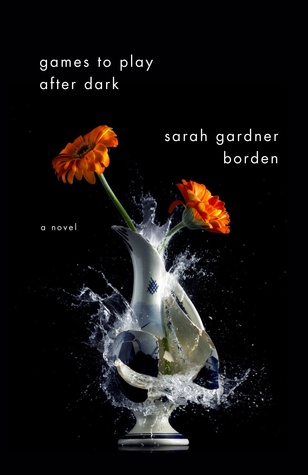
One of the awesome benefits to quitting my TV habit is that I’m finally tackling some of my backlogged reading list. I grabbed Sarah Gardner Borden’s Games to Play After Dark on a whim. It had a neat cover, and the back seemed suspenseful and vaguely reality-TVish.

You'd pick it up and read the back, too.

The novel chronicles the marriage of Kate and Colin, whose initial drunken encounter after a party turns into a whirlwind relationship, wedding, and suburban migration. The cracks start as mildly kinky sex games–she likes her hair pulled or her butt smacked.

From there, the story gets dark, but the gradations are so subtle that I almost didn’t catch what was happening. Kate’s father dies, for example. Colin wants her to talk about it, but she’s still in a state of shock and unwilling to talk. So instead she invents an elaborate story about taking the neighbor down to the laundry room and screwing his brains out while Colin is at work. So Colin, meaning to snap her out of it, throws her in the shower and turns the cold water on.

Even when she started volunteering at a shelter for domestic abuse victims, you are on her side, easily assuming their situation is completely different, black and white, while hers is justified as a rough patch, or an overreaction. It’s hauntingly subtle, and absolutely perfect. I was glad that Borden avoided the typical ending of having Spouse A (usually the woman) triumphantly walk out on Spouse B. I realize that’s the feel-good thing to do, but I can’t help feeling like it’s often a bit of a cop-out. Games to Play After Dark gives an ending that’s not quite happy, not quite dark, but honest.

Published!

31 Wednesday Aug 2011

Posted by jessicamjonas in Books, Goals, Poetry, Publishing, Reading, Writing

≈ 3 Comments

Tags

books, Dumb Little Man, published, publishing, reading, top-shelf, when the writing's going well, writing

I did it! Check out my article, “7 Simple Steps to Becoming Well-Read,” on Dumb Little Man (one of my favorite sites for quick, fun personal development articles).

Speaking of being well-read, this is going to be a great semester. I’m taking a Seminar on Literature and Writing with the scary Russian professor at my school (most of the time she’s really nice, but she does have a reputation for bringing a student to tears in class at least once a semester), and we are reading 11 books in 15 weeks. Expect my What I’m Reading section to get real highbrow, real fast, people. This week? Sophocles’ Oedipus the King, and a book of poetry called Supernatural Love. Stay tuned…

The Case for Slow Reading

29 Monday Aug 2011

Posted by jessicamjonas in Books

≈ 3 Comments

Tags

books, reading, taking it slow

It seems to me that often, when people talk about how much they read, they make a point to note how fast they can polish off a book. When the Harry Potter books came out, people got the most bragging rights for whizzing through a 400- or 600- or 700-page book in less than a day. Other times, friends use speed to try to convince me to take their recommendation.

“It’s such a quick read,” they say. “I finished it in a day. You’d probably finish it in a half hour.”

I’m no exception here. I do take some pride in the fact that I read fast (about 2-3 times the average adult pace). I can comfortably read 100-150 pages a day if I don’t have too many other obligations.

The problem is that sometimes we readers get so wrapped up in our own reading stats that I feel like we miss the point. Yes, there are thousands of books out there, and it can feel like we’ll never get the time to read everything we want to, but I checked out a new book a few weeks ago and only realized later that I’d read it before, and didn’t remember anything beyond the introduction.

My professors in the MFA program advocate a different approach: read widely, and often, but read slowly. Break away from the urge to devour a book and try to savor it. Let yourself read paragraphs over and over to figure out what it is about this set of words that makes the characters and emotions so wonderful. Stop. Reading. Fast.

It’s not easy. Like many others, I’ve got a competitive streak, and my impulse is to push my own limits. Plus, I’m reading a self-help book by this really insufferable man who claims to be able to speed-read 1,300 words a minute, and I bristle to think someone I can’t stand can finish more books than me.

Reading slowly, though, captures what reading is about. In the ideal scenario of curling up with a cup of tea, a fire, and thick book, do you imagine reading at a frenzied pace, fingers constantly itching to turn the next page? Or do you envision something more luxurious–reading particularly elegant sentences aloud to yourself, pausing for a few moments to form your own guesses about what will happen next? Reading slowly gives you more chance to befriend the author and make the story your own.

If you’re interested in writing, reading slowly becomes even more important. The ubiquitous advice to read is based on the assumption that writer/readers will pay attention to the structure of the story. That means reading closely enough to recognize what makes dialogue effective, what changes in style make a passage elegant or suspenseful or terrifying or romantic. You have to be in deep enough to see the abstract, fictional story and the concrete words and grammar simultaneously. You can’t do that when you’re speed-reading.

Anyone else share my struggle? Do you notice a change in quality of reading depending on how fast or slow you read?

Enter your email address to subscribe to this blog and receive notifications of new posts by email.

Join 355 other subscribers

The Latest

  • Prices to Pay
  • Why You Should Do NaNoWriMo This Year
  • Back in the US!
  • Hiatus
  • The Briefest of Check-Ins and Some Words About a Bride

Journal History

  • February 2015
  • October 2014
  • September 2014
  • January 2014
  • August 2013
  • July 2013
  • January 2013
  • December 2012
  • November 2012
  • October 2012
  • September 2012
  • August 2012
  • June 2012
  • May 2012
  • March 2012
  • February 2012
  • January 2012
  • December 2011
  • November 2011
  • October 2011
  • September 2011
  • August 2011
  • July 2011
  • June 2011
  • May 2011
  • April 2011
  • March 2011
  • February 2011
  • January 2011
  • December 2010
  • November 2010
  • October 2010

Recurring Thoughts

abandoning perfectionism annoying art Banned Books Week birthday blogging book design books canary review class criticism D.C. elephants engagement epic bosshood essay fiction flash fiction flash friday goals grad school Hunger Games inspiration italo calvino jose saramago judaism lauren winner literature love magazine writing making time to write memoir mfa mudhouse sabbath nanowrimo niche markets nobel prize novel obama oddities oedipus paul guest pie poetry politics progress publishing quarterly review reading religion reports resolutions short stories sometimes goals are hard steps back steps forward submissions substance tanya egan gibson the apartment The Book the elephant's journey top-shelf totally boss wedding what I'm reading when the writing's going well when the writing isn't happening word count work working my butt off writer's block writing writing life YA

Blog at WordPress.com.

  • Subscribe Subscribed
    • Jessica Jonas
    • Join 85 other subscribers
    • Already have a WordPress.com account? Log in now.
    • Jessica Jonas
    • Subscribe Subscribed
    • Sign up
    • Log in
    • Report this content
    • View site in Reader
    • Manage subscriptions
    • Collapse this bar
 

Loading Comments...