• Bio
  • Contact
  • Events and Resources
  • My Writing

Jessica Jonas

Jessica Jonas

Tag Archives: what I’m reading

What I’m Reading: Mr. Palomar

12 Friday Jul 2013

Posted by jessicamjonas in Books, Reading

≈ Leave a comment

Tags

italo calvino, Mr. Palomar, what I'm reading

An easy mistake readers and writers make is confounding serious literature with serious subject matter. Death, devastation, relationships torn apart–these are the meat of literature, right? A man overwhelmed by the selection in a cheese shop, or trying to figure out where to look when passing a woman tanning topless? Fluff.

Until, that is, you see how Italo Calvino does it. Mr. Palomar is a series of essays, stories, and meditations featuring the eponymous protagonist, a man with a deep internal life and a certain level of, shall we say, nervous intensity in his day-to-day habits. The book is divided into three sections, progressing from internal meditations to more narrative pieces featuring some interpersonal interaction and ending in a section that considers its subjects on a wider historical/metaphysical/sociological plane.

I thought all of the stories were lovely, although don’t expect even the narrative stories to stray too far from Mr. Palomar’s head. In any particular piece, Mr. Palomar doesn’t do all that much: he takes an evening swim, watches a gecko in his living room, runs an errand to the butcher. The beauty is in the way his interpretation of the grander meaning of an act or place transforms the ordinary, and in Calvino’s lightness.

When I say lightness, I do mean humor, but almost tangentially. The real “lightness” is more that Calvino has a way of saying things that may be profound or perfectly silly without working too hard to define how the reader should take it. It’s a “maybe this is so” approach–you’re not pressured into accepting its gravity, but you also don’t get the impression that nothing matters. Mr. Palomar approaches life with an open mind as far as that goes, ready to appreciate meaning anywhere. When he passes the topless woman over and over again, trying to determine which way is the most polite to look (staring at her may be intrusive, but perhaps not looking is an insult to feminism via a rejection of the worth of female physicality?), it’s hilarious. When he considers the other swimmers in the water, all of them reaching toward the reflection the setting sun casts and seeing it as directed at them alone, it’s more contemplative.

I’d love to try some of the techniques out for myself. My stories are typically dark, even when they’re funny in places, and I love dialogue as a way of moving a story forward. I’m trying to capture more lightness in the story I’m working on now, and to see potential to show beauty or meaning through characters’ thoughts and actions, or even the surrounding environment, rather than concentrating on dialogue.

Bossypants

07 Wednesday Mar 2012

Posted by jessicamjonas in Books, Reading, Reviews

≈ 2 Comments

Tags

bossypants, tina fey, what I'm reading

I fell right off the edge of the world for a while there, didn’t I? It’s been a busy stretch (and midterms hasn’t even hit yet, Lord help me). Anyway, I am ducking in to do more than announce that I am still alive: I have just finally now gotten around to reading Bossypants, by Tina Fey, and if you have not, it is time you did too, especially if you are too busy to read anything.

Bossypants is, largely, a memoir of the development of a comedian and lady boss who is (just a little) frustrated sometimes that people are still shocked that a woman can be in charge of something that is not the kitchen. It is gaspingly funny. Some favorite moments for me include the time in college she hiked a mountain in hopes of some light fondling and maybe some dry humping her partner at the top, the crappy receptionist job where her only joy was passive-aggressively cutting the unlock-door buzzer off too short so people would still be locked out when they pushed the door handle, and anything involving her dad.

Tina Fey, for those of you who (like me) climbed out from under your rock this morning and said, “Wait–she was the one who was Sarah Palin that one time, right?” manages to be bright and attractive and still take unabashed delight in being awkward. She’s the ugly duckling who grew up and then decided being the duckling was more interesting, anyway.

At any rate, I laughed a lot even though anytime I looked away from the book, I was stunned by how much homework I had left to do. Speaking of, I need to go read stories thoughtfully and slice fancy art-store paper into 5.5 x 7.75 pieces for my midterm book, but I will be back soon!

Poke the Box

06 Friday Jan 2012

Posted by jessicamjonas in Books, Goals

≈ Leave a comment

Tags

goals, ideas, inspiration, poke the box, seth godin, what I'm reading

The first week of 2012 is over, and I’m already glancing behind me to make sure I hit my resolutions (almost all of mine are incremental, do-this-x-times-per week things, which is good because baby steps, but it means I have to hold myself accountable all the time). Did I meet my gym goals? Cook enough new recipes? Spend enough time writing? Make time to see my friends? The answer’s yes, fortunately–the first week of a new year does wonders for discipline and optimism–but what if I didn’t look at my resolutions as a list of categories and boxes to check off? From what I can see, most resolutions boil down to a promise to start things.

Enter Seth Godin and his manifesto, Poke the Box. Godin’s main point in this book is that, while we may be talented in a variety of ways, one skill that never seems to be actively taught or even encouraged is that of initiating. It’s a pretty glaring omission, when you think about it. Without having the chutzpah to try something new, nothing would ever get invented, even in a room full of the brightest and most creative people around. Unfortunately, in many schools and workplaces, people fall back on safe and familiar. Godin urges the reader to commit to making initiative a way of life.

It’s a cool read. The book is slim and broken into neat mini-sections, so it would be easy to polish off in an hour, tops, but I’d suggest you don’t do that. Spacing it out will give you some time to percolate over things like the lizard brain (the fight-or-flight instinct that fears change), how to embrace things like risk and failure, and why you might be morally obligated to be as creative as possible. The book contains few, if any, how-to instructions. Godin’s whole point is that we need to be the mapmakers, not another handful of tourists looking for a route to follow. But even without concrete tips, the book has punch, and left me with a new sense of energy toward my job and writing.

It’s a new year, and you’re probably already charged to make it as great as possible. But maybe it’s a mistake to limit that resolve to things like, “eat healthier food,” or “reduce smoking by 50%.” Maybe it’s time for bigger adventures, and for making inspiration and innovation something we do every day. Read Poke the Box. At worst, it’ll fortify you to stick to your resolutions past January twenty-something this year. At best, it’ll make you rethink how you approach goals and prod you toward something even bigger and braver.

Madame Bovary’s Daughter

27 Tuesday Dec 2011

Posted by jessicamjonas in Books, Reading, Reviews

≈ Leave a comment

Tags

gustave flaubert, linda urbach, madame bovary, madame bovary's daughter, what I'm reading

The literature seminar that I loved last fall culminated with a translation thesis on Gustave Flaubert’s marvelous novel, Madame Bovary. Madame Bovary is one of those novels that gets put on the best-of-the-best lists; it’s been called unapproachable, the perfect novel. It’s amazing to read it–the characters (especially Emma Bovary) and their problems have carried remarkably well to present day, and the novel itself is a masterpiece of writing style. Nothing is wasted; it reads more like a poem in terms of its beauty and efficiency than a 300-page book.

So this is the mindset that I brought when I saw that Linda Urbach had picked up the thread of the story at the end of the novel, following the death of Emma and her husband, Charles, to tell the story of their forgotten daughter, Berthe. Sadly, even though I managed to talk myself out of expecting a masterpiece, I was still disappointed in the watered-down story and ugly interpretation Urbach takes of the selfish, tragic heroine of the original.

There’s a bit too much sex in Madame Bovary’s Daughter to describe it as a cross between Dickens and an American Girl story, but I’m going to go ahead and draw that comparison anyway. You can make the call later as to whether I was wrong. Berthe is orphaned at thirteen and sent to live with her grandmother, a cold, austere woman who makes Berthe take over all the household chores. Berthe, a spunky girl who dreams of being a fashion designer, chafes under both the manual labor and rough, homespun cloth she’s forced to wear. When Grand-mere catches Berthe fooling around with the stable boy in the barn, the shock is too great for the old woman to bear, and she dies of a heart attack, leaving Berthe penniless once again. She decides to move to the city, and ends up working in a cotton mill and living in a boarding house under the watch of a cruel woman who feeds the children the same disgusting slop of a soup every day.

Berthe’s dreams aren’t forgotten, however. She still cherishes the thought of designing the gowns her mother longed for, and hopes in some way to earn the love and attention her mother never showed her in life. She’s praised for her beauty, forthrightness, and eye for fashion, and soon makes her way to (say it with me) Paris. After some minor and some more serious obstacles, Berthe does become a respected fashion designer, partnering with one of the greats and earning piles of money, but the question remains of whether she will find the true treasure that her mother lacked–someone to love who loves her back.

And I wince a bit just typing all this out. The Cinderella story in place here is so overt that one of the parts is named “Rags.” (Mercifully, we are spared “Riches.”) Where Flaubert beautifully balanced description, plot, and insight into the inner workings of Emma’s mind and emotions, Urbach tries to cram everything into one passage, resulting in achingly obvious taglines to scenes in which we are told explicitly that Berthe doesn’t like work on the farm, or that she  wants to make beautiful gowns. Her sore muscles in the first case and the drool she all but leaves on the windows of fancy stores in the second is plenty of information, and those extra sentences feel like the author second-guessing either her own ability to tell a story or the reader’s intelligence.

Finally, I took issue with Urbach’s portrayal of Emma Bovary, Berthe’s mother. In the author interview in the back of the book, Urbach says her first impression of Emma was like mine–that her story was tragic, and that she was a relatable character in her desire to escape the boring life she led. It was only when Urbach became a mother, she said, that Emma’s neglect of her daughter became a demonizing trait. So perhaps, as a childless woman in my twenties, I’ll change my mind someday as well. In the meantime, though, Emma comes across as too mean. I remember her ignoring Berthe in the book, but I don’t remember the little jabs and barbs. I had understood Emma to be so preoccupied with trying to capture glimpses of luxury that she forgot her child, not that she resented her daughter so much. Emma was selfish, no question, but she wanted the same things Berthe does–to be surrounded by beauty, to choose a life for herself, to find love that is passionate and remarkable, instead of placid and convenient. That doesn’t sound like a monster to me, and if Berthe is fortunate enough to have the strength/courage/persistence/spunk that her mother lacked, I would have hoped that she would also have the sympathy to understand Emma.

It might have been a different case if I had been able to come to the book with an open mind, instead of having Flaubert’s masterpiece echoing in the back of my head. Then again, without being familiar with the original, I don’t know if I even would have picked up Madame Bovary’s Daughter.

What’s your take on reinterpretations/continuations of classic books?

What I’m Reading: The Kid

10 Monday Oct 2011

Posted by jessicamjonas in Books

≈ 2 Comments

Tags

don't waste your time, push, rape, rapefest, sapphire, the kid, what I'm reading, what the hell, word vomit

Important Note: The following post contains very mature (but not graphic) content, and MAJOR spoilers for The Kid by Sapphire. If you’re sensitive to rape or interested in reading The Kid, don’t read this post.


We all here? Braced yourselves? Good.


Dear Sapphire,

I have a bone to pick with you. It’s about The Kid. I know you’re edgy, and poetic, and that you like unflinching looks at poverty and abuse, but enough is enough.

Listen, I loved Push (even if I keep calling it Precious in my head, due to seeing the movie before reading the book). We all loved Push. You took an obese, illiterate girl, pregnant by her father and forgotten by the world around her, and demanded that we recognize how precious she was. Her journey to learn to read and write at Each One Teach One was one of independence and empowerment. We watched her confront racist and homophobic attitudes she had held, realize gracefully that she had been wrong about others, and find strength in the realization that many others had underestimated her as well. Precious was kind and brave, reflective and irrepressible. By the end of the book, we knew she was destined to die young of AIDS, but we also got to see her rescue her children, establish her own community/family, and claim her worth as a woman, student, mother, and friend. She was an inspiration.

Then, in the opening pages of The Kid, we saw her funeral, not realizing this was also the funeral of everything she had stood for. Listen, I understand that the “gritty reality” suggests that one success story won’t change a corrupt system or society, but I have to protest how you handled the story of this family. I was saddened when Abdul had to be placed into foster care, heartsick when an emotionally troubled child beat him badly enough to cause permanent damage, and devastated when Abdul is sexually abused in both the foster home and Catholic orphanage where he was supposed to be safe. I was disgusted, however, when he began molesting other children.

Here is the thing, Sapphire. I know that in reality, the abused often grow up to be abusers. It’s ugly, but it happens. I can understand that if you want to portray something “real,” you need to address this. However, we’re still in the realms of the literary, and the poetic. As your protagonist, Abdul is more than a person. He is the manifestation of what the story stands for. If you draw a connection between the woman who rose above her own abuse and the son who was raped and went on to rape children, over and over, with no sense of remorse, then you negate the literary idea that you had established in Push. You are telling me that there is no point in working to overcome abuse, because as soon as you are gone the cycle picks back up where it left off, with relish.

Also, I want to express that at a certain point, even something as terrible as rape takes on an element of parody. Abdul was raped by a priest. Tough? Well, Precious was raped by her father and pregnant at 12. Abdul’s great-grandmother sees the challenge and raises it by being raped and pregnant at 10. Precious gave birth to her first baby in the kitchen with her mother kicking her? Fine. Great-grandma gave birth to her first baby in a field with several people kicking her. It starts to feel like a matter of, “oh, you think you’ve got it bad? Wait ’til you hear this…” In a scene where Great-Grandmother Toosie is telling Abdul more than he wants to hear, he stands up and starts frantically masturbating over the kitchen table, and it feels more like a pornographic version of Dueling Banjos than anything “real.” You seem to assume any character in your book was raped, and it’s only a matter of time and pages before we get a vivid account, but by the time we hear Abdul’s adult friends confessing their molestation stories, our response is verging on “So what?”

Maybe your point is to desensitize us to it, but if that’s the case then I’m wondering again what you hope to achieve by doing so.

Okay, so then we’re supposed to regain our sympathy for Abdul the Unremorseful Child Rapist because now he can dance. African dance, ballet, he’s working hard and getting good at it. Whatever. I don’t care. Here’s why I don’t care, Sapphire: when Precious worked hard at writing, it went along with a change in her character. She transformed, becoming more self-confident and more tolerant. She had her tragedies and she had her flaws and education helped her face both of them. Precious learned about acceptance and real, trusting relationships while she learned to read and write. When Abdul learns to dance he’s still living with an abuser, still insisting he’s “a good kid,” still stunned and angry when one of the kids he raped comes back to confront him. When he thinks about the child whose face he had to press down into a pillow to get his way, he’s still imagining the child liked it. I do not care how good a dancer you are if the body that dances houses that kind of a monster.

Then there’s the ending. I’m a fairly traditionally-minded reader in that I like endings to feel like the natural, inevitable continuation/conclusion of the story. Surprise is lovely, but except in rare circumstances, finding out it was all a dream doesn’t cut it. Fantasy time travel definitely doesn’t cut it. What you’ve opted to do, Sapphire, is give us Door Number 3: The Insanity Plea, and spend the last sixty-some pages in a fugue state where Abdul is in an asylum for (what else? Come on, say it with me!) raping a kid. In the confusing final pages, what I understand to have happened is that the psychoanalyst hears Abdul’s confession of rape, decides he has a fighting spirit, and distracts the orderly to let him make a break for it.

What.

The.

Hell.

Sapphire, I don’t know what happened to change your work from poignant, devastating poetry about the reality of abuse and the power of humanity to a spewing, mouth-frothing rapefest, but please reverse it. Bring back transformation. Bring back meaning. Bring back the poetry of your characters, instead of wallowing in lavish detail over each instance of unforgivable, unrelenting abuse. Bring back the reason to read your work.

Until then, I remain,

Jessica

Games to Play After Dark

31 Wednesday Aug 2011

Posted by jessicamjonas in Books, Family, Reading

≈ 1 Comment

Tags

abuse, books, games to play after dark, love, reading, relationships, sarah gardner borden, what I'm reading

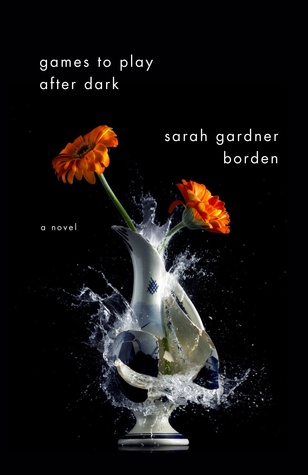
One of the awesome benefits to quitting my TV habit is that I’m finally tackling some of my backlogged reading list. I grabbed Sarah Gardner Borden’s Games to Play After Dark on a whim. It had a neat cover, and the back seemed suspenseful and vaguely reality-TVish.

You'd pick it up and read the back, too.

The novel chronicles the marriage of Kate and Colin, whose initial drunken encounter after a party turns into a whirlwind relationship, wedding, and suburban migration. The cracks start as mildly kinky sex games–she likes her hair pulled or her butt smacked.

From there, the story gets dark, but the gradations are so subtle that I almost didn’t catch what was happening. Kate’s father dies, for example. Colin wants her to talk about it, but she’s still in a state of shock and unwilling to talk. So instead she invents an elaborate story about taking the neighbor down to the laundry room and screwing his brains out while Colin is at work. So Colin, meaning to snap her out of it, throws her in the shower and turns the cold water on.

Even when she started volunteering at a shelter for domestic abuse victims, you are on her side, easily assuming their situation is completely different, black and white, while hers is justified as a rough patch, or an overreaction. It’s hauntingly subtle, and absolutely perfect. I was glad that Borden avoided the typical ending of having Spouse A (usually the woman) triumphantly walk out on Spouse B. I realize that’s the feel-good thing to do, but I can’t help feeling like it’s often a bit of a cop-out. Games to Play After Dark gives an ending that’s not quite happy, not quite dark, but honest.

The Help

10 Wednesday Aug 2011

Posted by jessicamjonas in Books, Uncategorized

≈ Leave a comment

Tags

canary review, guest posts, kathryn stockett, the help, what I'm reading

First off, I have exciting news: I’ve been invited to write my very first guest blog post! The Canary Review has just posted the first article in a series about the best and worst books people have read, written by yours truly. I’m completely thrilled, and I invite you to check out the Canaries and what they have to offer!

Conversely, should you happen to have made your way here from The Canary Review, I am happy you are here! I would put out cookies and juice for you, but I can’t, because we are on the Internet.

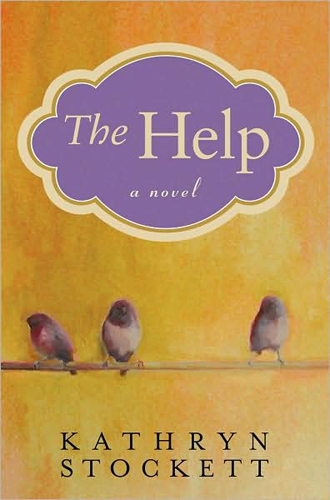
So instead, I will tell you about a book. I just finished The Help, by Kathryn Stockett, and I feel a little awkward about the timing of this announcement, since it’s pretty obvious that I’m reading it in order to go see the movie properly, but whatever. It’s an awesome book, and I want to tell you about it, so you can read it and see the movie properly.

The original cover of a book is always better than the movie cover.

The Help moves between the voices of three women living in Jackson, Mississippi in the 1960s: Aibileen, Minny, and Skeeter. Aibileen and Minny are both black maids–Aibileen is caring for her seventeenth white child, which sometimes slightly eases and sometimes amplifies the pain of losing her only child a few years before. Minny is working to support her own family, but has cycled through multiple jobs because she cannot be the calm, restrained, half-invisible person her employers want her to be (which, incidentally, makes her tremendous fun to read). Skeeter is white and newly returned to Jackson from college with dreams of being a writer. Distance has given her a little needed perspective, and she has come up with an idea.

Skeeter’s idea to write a tell-all book about the lives of black domestic help, interviewing maids to get her stories, doesn’t start out as an altruistic project. She has a vague idea that the book could change things, but sees this as a warm, positive benefit to the larger story of her own developing success. This isn’t so much because she is selfish as it is her continuing naivete, but it makes her transformation particularly interesting. As she realizes the possible consequences the maids face by helping her, even anonymously (various penalties either happen or are suggested, from being blacklisted from work and therefore forced into eventual homelessness, to having tongues cut out by racists), Skeeter begins to see herself as only playing a role in a larger issue of justice.

Minny and Aibileen deepen, too, of course. Telling their stories, seeing the effect of the project on other maids, and ultimately seeing the book published is a kind of liberation and a kind of danger that neither woman expected to experience in her life. There are moments of sacrifice and courage and a richer, more meaningful maturity in each of these adult women’s lives by the end of the book. Not because they were immature or complacent before–quite the opposite–but because for them, this story is about claiming power and justice directly, instead of using pranks (Minny) or secret attempts to teach equality and kindness (Aibileen) as substitutes for what they really need. Admittedly, as substitutes go, these are great ones to read–Minny’s revenge is a hair-raiser, and Aibileen’s interactions with Mae Mobley, the two-year-old daughter of her employer, are both tender and powerful.

The story is compelling, the characters are meaningful, but I always note the writing style. I am happy to report that The Help is solidly written, as well! One thing in particular was Stockett’s use of dialect. It is incredibly difficult to write eye dialect effectively, without it sounding hokey and condescending. Stockett has the ear, though, and the tact, and Aibileen and Minny get voices that are distinctive and authentic and respected by their author. Major kudos there.

In short, as always, I would recommend reading the book before seeing the movie. It’s not just a matter of principle here, though–I can’t speak to the film adaptation (yet) but The Help, the novel is a beautiful, masterful story and well worth every attention and award it can get.

Horns

15 Friday Jul 2011

Posted by jessicamjonas in Books

≈ 2 Comments

Tags

horns, joe hill, what I'm reading

In a few writing contests I’ve entered, the judges highlighted two criteria as the most important in how they evaluated fiction entries:

1. How good the story was (idea-wise)

2. How well it was told

In the last book I read, it became a lot clearer to me why they include that second criterion.

Horns opens with our hero, Ignatius Perrish (Ig to his friends), waking up after a black-out night of doing “terrible things” to discover he has sprouted devil horns. Worse, they are functional: anyone who sees them is compelled to confess to Ig the deepest secrets and worst deeds in their hearts, and to ask his permission to commit more sins. Ig realizes he can use his power to finally discover who raped and murdered his girlfriend, and avenge her death, and this becomes the driving plot of the book. To a lesser extent, he is concerned about how he developed the horns in the first place (the book takes a magical-realism approach for the most part, treating the horns as highly unusual phenomena, but not cause to really question sanity).

It’s an interesting premise, right? Here’s where it begins to fall apart for me: Joe Hill rams his elbow into your ribs on almost every page over the fact that his character is the Devil. Not only are there suddenly matches in Ig’s pocket, despite the fact that he doesn’t smoke, they are Lucifer brand. The girl he’s seeing leaves underwear on the floor? Devil-print. Hill takes every possible opportunity to have his character cast a shadow so he can point out yet again that the horns are the most distinguishing feature( well, obviously). By the time Ig finds himself in an old building and grabs a tool, you know it’s a pitchfork so long before Joe Hill gives his triumphant reveal that you wonder what took him so long to figure it out.

That’s the problem: Joe Hill doesn’t seem to believe in an intelligent reader (at least in this book—I’ve read Twentieth-Century Ghosts and Heart-Shaped Box and I don’t remember either of those being like this). He barely believes in an average reader. The narrative style feels like it’s going for clever, but the content is way too soaked in devil imagery and nudges that feel more like slams (Ig’s brother makes a living playing the horn. The HORN. Get it?)

Disclaimer: We’re going to get into some spoilers. If, for whatever reason, you really want to read this book and be surprised, stop here.

For the rest, Horns failed to surprise me where I wanted to be surprised, and then completely mystified me where I should have gotten a straighter answer. Here’s what’s going on:

Unsurprised: Re: the murder of Ig’s girlfriend. You find out who did it. Really early, considering the discovery and revenge takes up so much plot time. Basically the first person who’s named is your guy, and he is a pretty garden-variety sociopath. The kind you’d expect to see on a weeknight crime show: good-looking, flat emotional affect, delinquent childhood, charismatic, methodical, delusion of grandeur (he believes he once performed a miracle), yada yada. Joe Hill probably watched The Dark Knight at some point, because this villain is even a blonde with one side of his face messed up. Feels a lot more like the guy you’re sure is going to be the one all book long, and then it turns out to be someone else, right? Like a twist? Nope. Face value, right here.

Surprised: On and off throughout the book, Ig wonders why these horns have appeared in the first place (as one would). In the end, the answer we’re looking for appears to be:

*ahem*


Fantasy time travel.


Yes. That is how Joe Hill, apparently with a straight face, is going to answer that question for us. Almost at the end of the book, Hill seems to suddenly realize that he never answered that question with us, and goes, “Hey–um—remember that time when Ig and his girlfriend were snuggling in that treehouse they never found again? And something was bumping at the trapdoor and scared the bejesus out of them? Yeah, turns out that something was Ig from the future! That’s cool, right? Also the treehouse is owned by the Devil. That oughta explain everything.”

I’m as confused as you are. I’ve read books like this before, where things are at least relatively normal (or at least consistent), and copped out in the closing pages with, “And it was a ghost! or “And it was time travel!” or “And it was all a dream!” and it almost never feels satisfying to me (A Christmas Carol and The Sixth Sense are the only two works I can think of that pulled off something like that successfully.) (Also, spoiler alert.)

I mean, overall the story was still interesting enough to keep my attention, and wasn’t terribly written (if it was all-out terrible, I wouldn’t have finished it. I don’t have the time to waste on truly crappy stuff). But I have to say, between rubbing my nose in the Devil and leaving me with a bewildering time-travel episode when I thought I was going to be given a more grounded explanation, I’ll give Horns a resounding: eh.

How to Buy a Love of Reading

18 Wednesday May 2011

Posted by jessicamjonas in Books

≈ Leave a comment

Tags

how to buy a love of reading, tanya egan gibson, what I'm reading

You need to know about this book. I picked up How to Buy a Love of Reading by Tanya Egan Gibson on a whim the last time I was at the library, and it turned into one of those books. You know the ones. I had to have it near me (it’s tucked against my leg right now). I felt nervous if I left home without it. I’m an, ah, involved reader in general, but it doesn’t often happen that I regularly find myself talking out loud to a book–arguing with or cheering on characters, laughing, swearing, yelling. About half an hour after I finished it I started crying, partly due to the kickback from the emotional surge of the book, partly because it was over. I think I read nearly half the book twice in my attempts to delay the sad moment when there would be none left.

The book is about Carley Wells, who is a pretty average girl living in a neighborhood straight out of Gatsby (seriously–one mom “practices” her mannerisms by studying an old tape of Jackie Kennedy). Carley’s overweight, devoted to her best friend, Hunter (the ‘golden’ boy, who’s struggling with an increasing dependency on alcohol and painkillers and the frustration of living in an image other people created), but not particularly interested in the social climbing scene. She also dislikes reading. Normally I’d shudder in horror, but considering the teacher she has to deal with, I can actually see her point. She’s a sweet girl, but not outstanding. Her parents, naturally, decide that the way to make her stand out on her college applications is to concentrate on a passion for literature, and commission an author to write a book to Carley’s specifications, the Book that will make her love to read.

From there, How to Buy a Love of Reading hones in on relationships. There’s Carley’s interaction with Bree, the high-concept meta-fictionist hired to write The Book, and their process of realizing what stories are about. There’s Bree and Justin (aka Rock Star), the bestselling author she went to college with, who hopes to reconcile with her. Most importantly, though, it’s about Carley and Hunter.

Carley and Hunter’s friendship is the reason for the yelling and cursing and pleading. Words like “raw” and “heartbreaking” don’t feel deep enough. It is painful to read, painful to write about, painful to think about. There are times when unconditional love and insurmountable difference coexist. The times when friendship continues through irreparable hurt because there is no way to stop loving that person. Ever. Times of clinging to each moment of ease and joy because they need to be enough to weather longer stretches of doubt and pain.

Gibson knows this kind of friendship intimately. In different hands, it would be easy to call Hunter a jerk, to call Carley weak. It would be too easy to dismiss the whole relationship with a wave of the hand and tell Carley it’s time to cut her losses and move on. Gibson knows it’s about more than who the other person is. It’s about who you are, and what it means to believe in a person, a love, without demanding proof before offering forgiveness. She knows the question is how you define yourself and the other person at every stage of a friendship.

I know what it’s like to have a Hunter. My friendship was different, and so was the way it ended (less complicated, thankfully. Less devastating in terms of what was said and done), but the emotions hit home. That’s why it’s so painful to read, and so perfect. Everything’s stirred back up again, but she meets you in exactly the right place to understand.

And Gibson does come back to the Book that makes her book’s title relevant, and that feels right, too. She does not try to make the book-within-a-book parallel the main narrative. She does not play stupid tricks. She does use the Book as a yardstick for Carley, a place to ground her as she grows, and by the end the parts of the story feel like they are where they are supposed to be.

Mudhouse Sabbath

11 Friday Mar 2011

Posted by jessicamjonas in Books, God

≈ Leave a comment

Tags

books, christianity, god, judaism, lauren winner, memoir, mudhouse sabbath, religion, what I'm reading

I mentioned earlier that for a while I worked at a church at a job that sucked. What’s good is that, in addition to the awesome job at the literary journal, I also found myself working an equally awesome job at a church. I’m a youth director rather than a secretary this go-around, which is a much better fit – playing games and leading discussions with 6th to 12th graders is a lot more fun than folding bulletins. Also, the pastors at the new church are supportive and encouraging. One of them gave me Mudhouse Sabbath by Lauren Winner as a Christmas gift. It took me a few months to get around to it (I’ve always got a back-log on the ‘to read’ list), but I am fully in it now, and what a book it is.

I grew up with two religions myself. My father’s not an Orthodox Jew by any stretch of the imagination, and I don’t know much beyond the skeleton of Judaism, but I grew up fasting on Yom Kippur, dipping parsley in salt water at Passover Seders and lighting candles at least four or so of the eight nights of Hanukkah (my dance and my sister’s gymnastics inevitably ate up some of those evenings). My family’s way of resolving Judaism and Christianity is to concentrate on what the faiths share, which is wonderful because it leads to a lot of openness and tolerance when it’s done right, as I believe it is in my parents’ house.

Winner takes a different approach by focusing on the differences between the faiths, specifically the differences in rites and practices such as prayer, food, weddings, and the Sabbath. What is so wonderful is that while I would have expected a focus on differences to lead to judging, Winner clearly has tremendous respect and warmth toward both sides. She grew up in a mix household, too, practicing Reform Judaism for the most part and gleaning a bit of Baptist belief from her mom’s side. In Girl Meets God, which I have not read yet, ever-stronger spiritual yearnings led her first to devout Orthodox Judaism, and then to equally devout Christianity (Anglican, I believe? I had to read up on the Internet to check it out, since she doesn’t mention a denomination in Mudhouse). Leaving Judaism for her meant leaving all the practices she was accustomed to, from keeping kosher to the way she grieved or prayed. Some transitions were easier than others (being allowed to eat shellfish is apparently one of the big perks of converting), but she found herself missing the rhythm of her Jewish life, the way even the annoying rules she had to follow kept her feeling connected to God.

Mudhouse Sabbath looks at eleven aspects of life from both the Jewish and Christian perspective, explaining what rituals each religion brings to the table, what they mean to her, and how she’s adapted or created her own practices so she can keep the attentiveness to faith that she loved in Judaism, rewritten into a Christian context. The writing is engaging and approachable, with an easy openness and honesty that makes me wish I could run into this girl on the street and be friends with her. I like the way she takes it as a matter of course that spirituality is an everyday part of life. Even though I work at a church, I don’t always pray every day or make such an attentive practice of “being religious” during the week. This book makes me want to bring more of that into my life, because the way she tells it makes it seem like such a rewarding way to be present in the days between Sunday and Sunday.

← Older posts

Enter your email address to subscribe to this blog and receive notifications of new posts by email.

Join 355 other subscribers

The Latest

  • Prices to Pay
  • Why You Should Do NaNoWriMo This Year
  • Back in the US!
  • Hiatus
  • The Briefest of Check-Ins and Some Words About a Bride

Journal History

  • February 2015
  • October 2014
  • September 2014
  • January 2014
  • August 2013
  • July 2013
  • January 2013
  • December 2012
  • November 2012
  • October 2012
  • September 2012
  • August 2012
  • June 2012
  • May 2012
  • March 2012
  • February 2012
  • January 2012
  • December 2011
  • November 2011
  • October 2011
  • September 2011
  • August 2011
  • July 2011
  • June 2011
  • May 2011
  • April 2011
  • March 2011
  • February 2011
  • January 2011
  • December 2010
  • November 2010
  • October 2010

Recurring Thoughts

abandoning perfectionism annoying art Banned Books Week birthday blogging book design books canary review class criticism D.C. elephants engagement epic bosshood essay fiction flash fiction flash friday goals grad school Hunger Games inspiration italo calvino jose saramago judaism lauren winner literature love magazine writing making time to write memoir mfa mudhouse sabbath nanowrimo niche markets nobel prize novel obama oddities oedipus paul guest pie poetry politics progress publishing quarterly review reading religion reports resolutions short stories sometimes goals are hard steps back steps forward submissions substance tanya egan gibson the apartment The Book the elephant's journey top-shelf totally boss wedding what I'm reading when the writing's going well when the writing isn't happening word count work working my butt off writer's block writing writing life YA

Blog at WordPress.com.

  • Subscribe Subscribed
    • Jessica Jonas
    • Join 85 other subscribers
    • Already have a WordPress.com account? Log in now.
    • Jessica Jonas
    • Subscribe Subscribed
    • Sign up
    • Log in
    • Report this content
    • View site in Reader
    • Manage subscriptions
    • Collapse this bar
 

Loading Comments...